Magazine
How many watts does a 3000 frigories inverter air conditioner consume?
A 3,000 frigories split doesn’t always use the same amount of power: the inverter, SEER, and daily use greatly change the real figure.

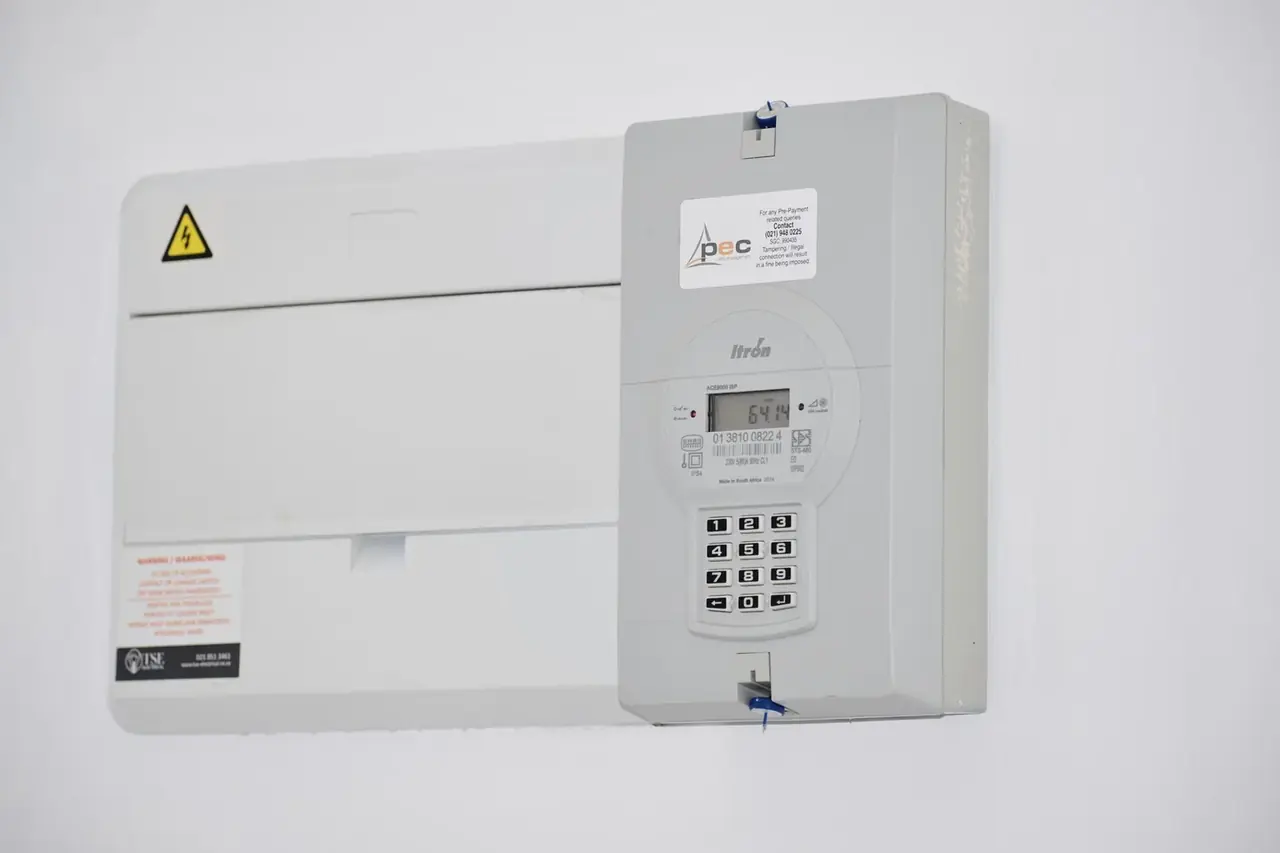
A 3,000 BTU air conditioner with inverter technology usually demands around 900 to 1,100 W of electrical power when running in cooling mode with medium-high efficiency, and in many well-rated home units the most useful practical reference is 1 kW of nominal consumption. That figure does not describe the entire runtime, but it does provide a realistic basis for calculating hourly cost and avoiding confusion between cooling capacity and electrical power.
On the bill, the difference between a correctly sized unit and one that is poorly sized is immediately noticeable: the first modulates, maintains the temperature, and lowers its speed; the second strains more than necessary and keeps pushing toward its limit without respite. In a 3,000 BTU inverter split, the key is not only how many watts the nameplate shows, but how long it stays near that level and how many hours it really works during a scorching day.
If you have a problem with your air conditioner, you can use our free error code finder. From there you can find out about and solve all errors easily and effectively.
From BTU to watts: the conversion that avoids mistakes
The 3,000 BTU figure describes cooling capacity, not electrical consumption. That is why it is common to see numbers that seem contradictory: an appliance capable of delivering about 3.5 kW of thermal output may consume only around 1 kW of electricity. The efficiency of the system explains that gap between what it delivers and what it draws from the outlet, especially in inverter units with a good SEER.
The safest reference for a modern split of that power is to think in a range of 900 to 1,100 W under normal cooling conditions. If the unit is very efficient, it may approach the lower end of that range; if it operates with a difficult installation, a poorly insulated room, or very high outdoor temperatures, it will move upward. In other words: 3,000 BTU is not equal to 3,000 watts, by a long shot.
The confusion appears because the user sees the size of the unit, but the technical plate speaks another language. In home cooling, cooling power is often expressed in BTU or BTU/h, while actual consumption is measured in watts or kilowatts. That difference is essential to understand why two appliances with the same capacity can have very different energy use if one has better seasonal performance than the other.
How much a 3000 BTU inverter split really consumes
In practice, a 3,000 BTU inverter split usually behaves like a unit with 1 kW nominal cooling consumption. Translated into cost, and using an indicative electricity price of 0.18 to 0.20 euros per kWh, that means approximately 0.18 to 0.20 euros per hour in sustained operation. In more efficient units or with slightly cheaper rates, the figure can drop; in more expensive markets, it rises quickly.
The important thing is that the inverter does not always consume at the same rate. During startup and until it reaches the set temperature, the compressor works harder. After that, it slows down and the consumption drops. That is why one hour of continuous use on a blistering afternoon is not the same as one hour of nighttime maintenance, when the home has already released part of the accumulated heat. Actual consumption depends both on the appliance and on the context.
A useful way to view it is this: a 3,000 BTU inverter unit can commonly move within a range of 0.6 to 1.1 kW of electrical power depending on the thermal load. Once the room is already stable, the compressor modulates downward and the consumption resembles that of an appliance providing constant support rather than a machine running at full blast. That elasticity is precisely the economic advantage of the inverter.
Why inverter technology changes the bill
Inverter technology avoids the classic on/off cycle. Instead of always starting at maximum power and stopping abruptly, the compressor adjusts its speed to maintain the temperature. This behavior reduces consumption spikes and improves efficiency, which in summer translates into fewer shocks on the bill and a more stable thermal sensation.
In older non-inverter units, startup is an expensive moment: the motor demands more from the electrical system and repeats that effort every time it turns back on. With inverter technology, the unit can spend much of its time in a kind of short, steady pace, like a car cruising without braking instead of one that stops and accelerates every few meters. That continuity is what can save between 40% and 60% compared with older systems, provided the usage is reasonable.
The energy label also matters. Two 3,000 BTU units may seem similar, yet consume differently because of differences in SEER, compressor, electronics, and heat exchange quality. An A+++ model does not just cool; it does so with less electricity throughout the entire season. In air conditioning, the label rating matters as much as nominal power.
The daily and monthly figure in normal household use
With a reference of 1 kW per hour, the calculation is simple. If the unit runs for 3 hours a day, consumption is about 3 kWh per day; if it is used for 6 hours, it rises to 6 kWh per day. At a cost of 0.18 euros per kWh, that translates to around 0.54 euros per day in the first case and 1.08 euros per day in the second. It is not a universal figure, but it is an honest basis for budgeting.
In a 30-day month, the same split can range roughly between 16 and 32 euros if use is moderate, and between 32 and 65 euros if it runs many hours or if the home makes the unit work harder because of outdoor heat, south-facing exposure, or poor insulation. In very hot areas, the compressor stays active longer and consumption rises even if the thermostat setting does not change. In those cases, the bill reflects the home’s thermal battle, not just the user’s intention.
It is also worth distinguishing between continuous and intermittent use. Turning it on for half an hour to cool down an overheated living room does not cost the same as keeping it on for four straight hours with doors closed and blinds lowered. The first requires more initial effort; the second spreads the expense. That is why, in many homes, monthly consumption ends up depending more on habits than on a small difference between brands.
SEER, energy efficiency, and real consumption
SEER measures seasonal cooling efficiency, that is, how much cooling capacity the unit produces for each unit of electricity it consumes over a season. The higher the value, the better it uses energy. In everyday terms: a unit with a high SEER does more with less. That is the key difference between an efficient unit and one that is merely powerful.
In a 3,000 BTU split, a high SEER can reduce consumption within the mentioned range and bring it closer to the lower end of 900 W, while a less refined unit or one subjected to demanding conditions will move closer to the full kilowatt or even slightly exceed it at certain moments. The figure that matters is not just the peak, but the average behavior throughout the day.
Energy efficiency, moreover, does not act in a vacuum. An A+++ unit in a home with poorly sealed windows may consume more than expected; an A+ unit in a well-protected room may perform better than theory suggests. The label helps, but the home’s envelope matters a lot. High ceilings, direct solar radiation, and lack of shade can turn a correct unit into a strained one.
Watts, amperes, and voltage: what people tend to look at too late
Many users only look at watts, but in the electrical installation the amperage also matters. In a single-phase 220 to 240 V unit, a consumption of 1,000 W usually corresponds to roughly 4.2 to 4.6 amperes, although the exact value changes with the power factor and the compressor’s real behavior. That information is useful for checking protection devices, dedicated lines, and possible voltage drops.
In Spain, most homes use single-phase power, and a 3,000 BTU domestic split normally does not pose problems if the installation is properly done. Even so, it is important not to mix concepts: watts are not amperes, and thermal kilowatts are not electrical kilowatts. A unit can provide a lot of cooling capacity without requiring a disproportionate current, precisely because the heat pump is designed to move energy, not generate it from scratch.
When the manufacturer’s technical plate indicates nominal consumption, startup, or maximum current, that reading should be taken as a design guide, not as a fixed sentence. The compressor modulates, the outdoor temperature changes, and the indoor fan also comes into play. That is why a watt figure helps guide the purchase, while the home’s hourly behavior determines the final expense.
What increases consumption even when the unit is good
There are homes that punish consumption almost invisibly. A south-facing orientation with large windows, for example, can push the system to work longer near its capacity. A flat with little shade receives a constant thermal load, like a pan left in the sun. In that scenario, even an efficient inverter cuts consumption less than expected because the cooling demand does not let up.
Thermal insulation changes the game. A room with old joinery, air leaks, or ineffective blinds requires more energy to maintain a comfortable temperature. The same is true for high ceilings: more volume means more air to cool. If the room is large and also accumulates heat from appliances, people, or nearby cooking, the unit speeds up and moves away from its most efficient zone.
The chosen temperature also matters. Setting 20 degrees in the middle of August forces the unit to work harder than maintaining 24 or 25. Each degree lower noticeably increases consumption. Reasonable comfort is usually between 24 and 25 degrees, not because it is an aesthetic rule, but because the thermal difference between indoors and outdoors is much more manageable for the compressor.
Comparison with other capacities and why it is not wise to undersize
A 3,000 BTU unit usually fits medium-sized rooms well, but falling short of the required power is not an energy-saving strategy. An undersized appliance can run longer at full capacity, fail to achieve a stable temperature, and end up with higher cumulative consumption. It is a common mistake: buying less to spend less and ending up paying more in the medium term.
On the other hand, oversizing is not ideal either. A unit that is too large can cool very quickly, shut off too soon, and lose part of the benefit of continuous, moderate operation. The sweet spot is a machine capable of covering the room’s thermal load without being overworked or oversized. That is where the inverter shows its best side: sufficient capacity, fine modulation, and less electrical stress.
In household terms, 3,000 BTU is usually a balanced size for large bedrooms or medium-sized living rooms, as long as the insulation is adequate. If the room is more demanding, a slightly larger unit may be more efficient than a small one running at maximum output. Power is not a badge; it is a fine adjustment between real need and seasonal performance.
When it is worth paying attention to the price per kWh
Technical consumption is not enough without the price of electricity. Two homes with the same unit can pay very different bills if they have different tariffs or if they concentrate usage in expensive hours. At a cost of 0.18 euros per kWh, a 1 kW unit is around 18 cents per hour; at 0.25 euros, the same use is already close to 25 cents. That difference, repeated every day, eventually adds up.
That is why a serious calculation combines three variables: the unit’s real power, hours of use, and the price of energy. The rest of the factors, such as filter cleanliness, orientation, or outdoor temperature, end up pushing one variable or another. In summer, the combination of heat, open windows, and a thermostat set too low is the scenario that makes everything most expensive.
The practical takeaway is clear: a 3,000 BTU inverter split is not an electricity hog by definition. It can be moderate, reasonable, or expensive depending on how it is used and in which home it operates. The same appliance may seem frugal in a well-insulated bedroom and much more demanding in a living room exposed to the afternoon sun.
What to keep in mind when looking at the technical plate
The most useful reference figure for a unit of these characteristics is an approximate 1 kW electrical power, with typical variations between 900 and 1,100 W depending on efficiency, thermal load, and operating stage. That is the short answer, but the real value for your wallet depends on how long it stays near that level and how much help the system has to avoid fighting the outdoor heat alone.
In an average home, a 3,000 BTU inverter split is usually a balanced solution if the room is properly sized. Its great advantage is not only cooling, but doing so with a more controlled and stable energy demand. When the unit is the right one, consumption stops being a surprise and becomes a comprehensible, almost domestic variable, like shower water or the oven being on for a while.
The best reading of consumption does not come from a single figure, but from the balance between power, efficiency, and real use. In air conditioning, that balance is worth more than any fixed table. And there, the inverter, well chosen and well installed, remains the most sensible starting point to avoid losing money every time the thermometer rises.
The bill is not decided by the unit alone, but by the house too
In the end, a 3,000 BTU inverter air conditioner consumes what the home needs to maintain comfort, no more and no less. In a house with shade, decent window frames, and prudent habits, spending can remain contained; in another with poor insulation, the same unit will act as a shield against a much harsher wall of heat. That difference explains why guideline tables are so useful and, at the same time, never tell the whole story.
The advantage of the inverter is that it avoids the waste of repeated starts and uses electricity more efficiently. But efficiency also depends on the home’s thermal discipline: blinds lowered during critical hours, clean filters, closed doors, and a sensible temperature. Consumption is less like a fixed figure and more like a tug-of-war between the outside and the inside.
That is why, when looking for a useful reference, the best answer is not a single rigid figure, but a clear range: between 900 and 1,100 W in normal operation, with an average value very close to 1,000 W for a 3,000 BTU inverter split. That is the most honest basis for calculating cost, comparing units, and understanding what will happen in the next heatwave.
Este artículo contiene enlaces de afiliado: si compras a través de ellos, se genera una pequeña comisión sin coste adicional para ti. Más información.


F8 error on a Balay ceramic hob: causes and solutions

F8 error on Balay hobs: causes and safe solutions

F8 error on a Balay cooktop: meaning and safe solution

F61 error on a Balay washing machine: causes and safe solutions

F59 error on a Balay washing machine: meaning and next steps

F43 error on a Balay washing machine: causes and safe fix

F43 error on Balay washing machines: causes and safe solution

F4 error on a Balay ceramic hob: causes and solution

F4 error on a Balay hob: causes and safe solution

F4 error in Balay washing machine: safe causes and solutions

 Appliance5 days ago
Smart appliances for a secure connected home
- Appliance5 days ago
Efficient appliances to save water at home
- Appliance6 days ago
Electrodomésticos con IA: funciones, límites y compra útil
- Balay7 days ago
E21 error on a Balay washing machine: causes and safe fixes
- Appliance6 days ago
Efficient appliances: how to cut energy bills
- Appliance6 days ago
Sustainable appliances with recycled materials that matter
- Kitchen plate6 days ago
E32 error on a Balay induction hob: causes and solution
- Appliance6 days ago
Smart appliances for a secure connected home
- Appliance6 days ago
Sustainable appliances: recycled materials that matter
- Appliance6 days ago
Efficient appliances that save water at home
- Balay6 days ago
E31 error on a Balay washing machine: meaning and action
- Ceramic hob7 days ago
E26 error on a Balay ceramic hob: causes and solutions