Magazine
Cointra water heater body: part, faults, and compatibility
The heater’s hydraulic part can cause leaks, pressure loss, and temperature failures if it wears out or cracks.

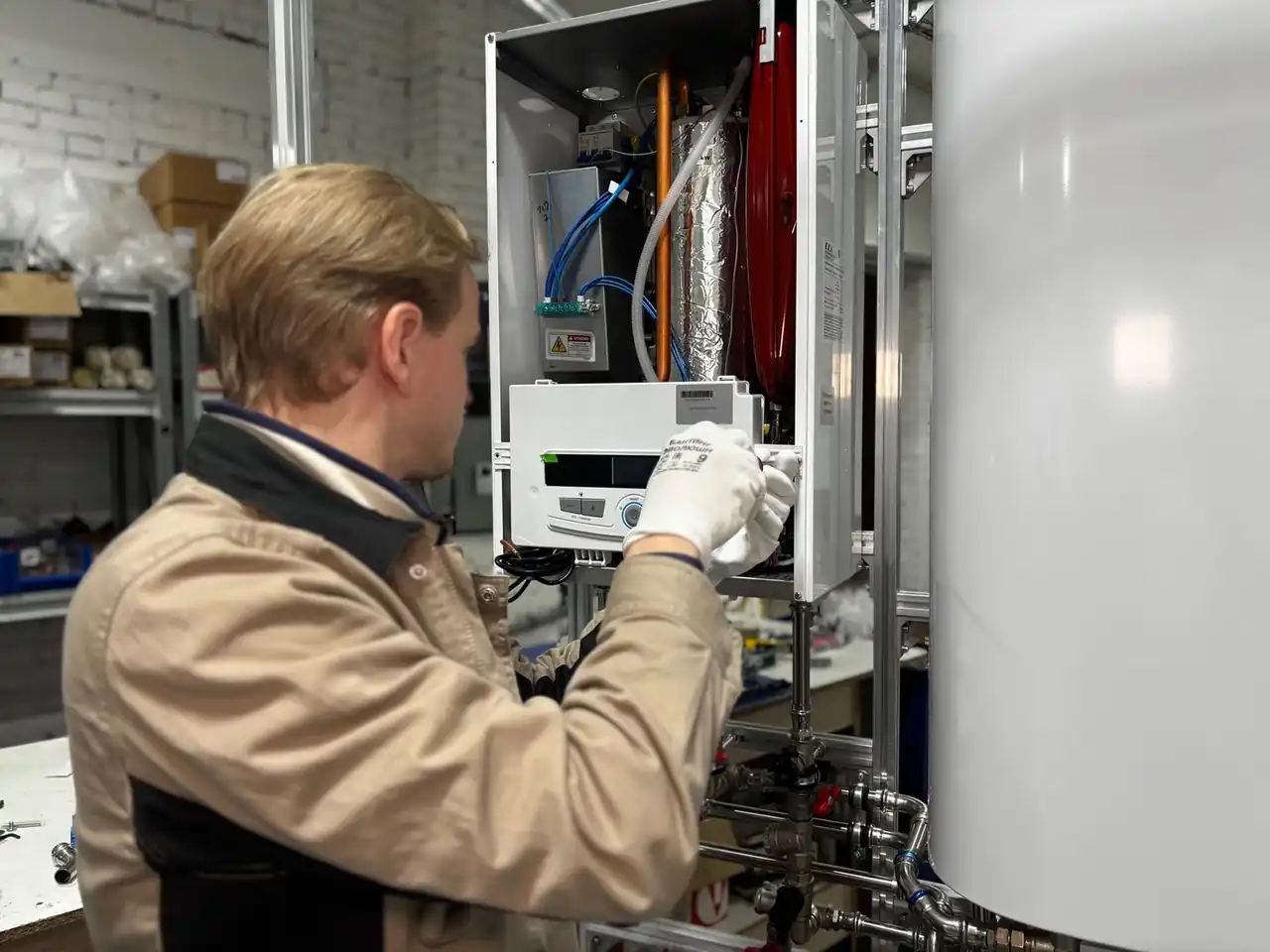
In a Cointra water heater, the water body is a part that may seem small at first glance, but it is decisive in how the unit behaves. A large part of the hydraulics that allow the gas to open, modulate the flow rate, and maintain a stable temperature without sudden changes is concentrated there. When that part fails, the symptom is rarely ambiguous: drips appear, ignition becomes erratic, sudden temperature swings occur, or there is a feeling that the appliance is working under strain, as if it were breathing with difficulty.
Its wear does not usually happen overnight. Corrosion, limescale, pressure changes, and continuous use leave their mark on the assembly until a seal gives way or the housing cracks. In Cointra models from the E-M-L-5 family and equivalent series references, the correct replacement part not only prevents water loss; it also helps restore system safety and keep the internal insulation in reasonable condition.
If you have a problem with your water heater, you can use our free error code finder. From there, you will be able to identify and solve all errors easily and effectively.
What role does the water body play in a Cointra water heater
The water body acts as the hydraulic core of the water heater. Its job is to detect the flow of water and transform that movement into a mechanical signal that activates the unit’s operation. It is not a decorative part or a simple support: it is the point where cold water enters, pressure is organized, and the mechanism responds. When the user opens the tap, the appliance’s reaction depends largely on that small internal block.
In practice, this means that an anomaly in that area alters the entire sequence. The water may take longer to heat up, the burner may not respond with the same smoothness, or the unit may start and stop with an irregular rhythm. The fault is most noticeable in daily use, when the flow stops being constant and the temperature becomes a broken line instead of a steady curve.
The cover or lid of the water body serves a protective and sealing function. In many cases, the part being sought is not the entire mechanism, but that lid that seals, protects, and helps maintain the integrity of the assembly. Its deterioration may seem minor, but a small leak in that area eventually contaminates the overall operation and accelerates wear on other nearby parts.
Cointra has used different configurations depending on the model, but in the E-M-L-5 series and references linked to code C.O. 5240, the logic is similar: the correct fit between body, cover, and seals determines whether the water heater retains its original behavior or enters a spiral of issues. A replacement part with the right geometry makes the difference between a clean repair and a fix that only hides the problem for a few weeks.
Signs of wear you should not overlook
Water leaks are the most obvious warning, but not always the first. Before seeing a drop fall, the user may notice traces of moisture at the base of the water heater, whitish limescale stains, or slight rust on screws and joints. Those signs, almost domestic and silent, usually reveal that the part has lost its sealing capacity and that the interior is no longer insulated as it should be.
Changes in thermal response are also common. If the appliance takes longer to stabilize the temperature, if the water comes out too hot and then suddenly cools, or if ignition depends on repeated attempts, the water body may be sending a poor mechanical reading. The fault is not always in the gas or the ignition system; sometimes it is in a fatigued hydraulic part that no longer performs its function precisely.
Internal corrosion and limescale are two discreet enemies. The first attacks materials and joints; the second reduces tolerances, stiffens movement, and makes the part less sensitive. In homes with hard water, the problem can accelerate because the inside of the water heater works with mineral deposits that cling like a thin but persistent crust. Over time, that layer turns the mechanism into something clumsier and less reliable.
There is one detail that often goes unnoticed: a deformed part does not necessarily have to be visibly broken. A microcrack, looseness, or a dried-out seal is enough for the assembly to start leaking or becoming unbalanced. That is why, in these repairs, the eye helps, but it is not enough; it is wise to observe the appliance’s behavior during real use, not only when it is disassembled on the workbench.
Compatibility, codes, and models that often share a replacement part
The most important detail before buying is exact compatibility. In the spare parts market, a Cointra water body or cover may look similar at first glance and yet fail to fit properly by millimeters, due to the position of the connections or the housing design. Code C.O. 5240 is a useful reference because it reduces the margin for error and points to the appropriate part for the family of water heaters that use it.
In the technical information for this replacement part, common associations appear with models such as Cointra E-M-L-5, E-M-6, E-M-7, and E-M-8. That compatibility should not be interpreted automatically as universal, because each version may include subtle differences in the water body, in the cover, or in the way it is fixed to the rest of the system. Even so, it is a solid clue for identifying the correct replacement part when the exact model and code match.
Measurements matter too, and they matter a lot. In parts of this kind, a stated size of 7 cm wide by 7 cm deep may seem trivial, but a minimal mismatch is enough to make installation difficult or prevent the part from sealing properly. That is why the replacement is chosen not only by brand, but by model, factory code, and the physical design of the hydraulic block.
In journalistic terms, the big mistake is buying by visual intuition. The correct part must match the set of data that identifies the appliance: exact model, reference code, and, when available, the original part number. That combination avoids returns, downtime, and half-finished repairs, which are usually more expensive than choosing the right replacement from the start.
What a cover in good condition contributes to the unit’s operation
The water body cover does more than cover: it protects the internal circuit and helps maintain pressure where it should be. A water heater works with water, heat, and materials subject to expansion. In that environment, a weakened cover becomes a vulnerable point. A small loss of sealing is enough for the system to start aging faster than expected.
When the cover is in good condition, the interior is better protected from external moisture and from dirt that ends up getting in through vibration, condensation, or continuous use. It also improves the mechanical stability of the assembly, because the part helps keep in place elements that depend on a firm fit. In this kind of fault, the repair does not seek only to stop the drip; it seeks to restore coherence to the whole assembly.
Material resistant to corrosion and high temperatures is a decisive advantage. In a water heater, the environment does not forgive weak materials. There are thermal changes, variable pressure, and constant contact with water. A cover designed for that context withstands the passage of time better than an improvised solution or a generic part without the right rigidity.
That is why an original or high-quality equivalent replacement part is not a technical whim, but a way to avoid the classic cycle of recurring faults. A solid repair restores user confidence and reduces the risk of having to open the appliance again for the same leak point. In these units, the difference between a reliable fix and a fragile one is measured in seasons, not days.
How the fault shows up in everyday use
A water heater with a damaged water body usually warns through irregular behavior. Sometimes the symptom is delayed startup; other times, ignition depends on opening more flow than necessary. It may also happen that the water comes out hot at first and then loses temperature without any apparent explanation. These are signs that, in a home, are often noticed before the technical fault itself.
In some faults, the user notices a strange noise when opening the tap, as if the internal mechanism were trying to activate but could not find balance. In others, the problem is more silent and is limited to a slight drip that appears on the front or at the base. That drip, however small, deserves attention because it rarely stays isolated; it is usually the first stage of a broader fault.
There can also be an impact on the system’s safety. If the insulation deteriorates, moisture reaches areas that should remain dry and stable. In an electric or gas appliance, that combination is not minor. Water never comes alone; it brings wear, oxidation, and, in the long run, operating failures that affect overall performance.
Repair experience shows that many of these cases begin with a modest sign and end with a complete replacement. That is why it is useful to read the appliance as one reads a crack in a wall: not by the visible size, but by the direction of the damage. A deformed cover or a fatigued water body indicates that the problem has already started moving toward other nearby parts.
Why the correct replacement prevents cascading faults
Replacing the right part cuts the chain of wear. When the water body loses its seal, the moisture does not stay still. It spreads, settles, oxidizes, dirties, and eventually affects seals, screws, and joining areas. Replacing the damaged part prevents the repair from becoming a kind of patch over an active fault.
In addition, the correct replacement preserves the mechanical logic of the water heater. If the part does not fit, the strain falls on the rest of the assembly. That extra strain can translate into slower response, less precise closing, or poorly distributed pressure. Domestic mechanics are a bit like an old clock: if one gear does not mesh properly, the rest starts to suffer even if it keeps moving.
A well-executed intervention also protects the user’s investment. Replacing a relatively inexpensive part before the damage reaches the entire assembly is usually far more sensible than waiting for the appliance to fail more broadly. In water heater spare parts, prevention does not sound heroic, but it is usually the smartest and cheapest option.
The key is not to confuse the symptom with the cause. A dripping water heater does not always have a simple tightening problem; sometimes the part has lost its shape and can no longer be adjusted. In those cases, insisting on tightening only prolongs the fault, it does not solve it. Replacement restores a clean, uniform surface that can seal again with precision.
What to check before installing the new part
Before installation, it is advisable to check the condition of the seals, the cleanliness of the area, and the absence of built-up limescale. A new cover on a dirty seat will not seal the same way. What seems like a fault in the part may actually be poor preparation of the housing. In this kind of repair, cleanliness matters as much as the replacement part.
It is also important to verify that the reference matches the water heater model and the family of water body it uses. In Cointra, series may share similar solutions, but not always identical ones. That difference explains why a seemingly close part may not fit properly or may not leave the circuit completely watertight. Precision avoids improvisation and reduces the margin for error during assembly.
Inspecting the appliance beforehand saves later problems. If there is visible corrosion inside, if the housing is deformed, or if the joining area is marked by an old leak, it is worth checking the assembly carefully. The aim is not to complicate the repair, but to make clear which elements can remain in service and which have reached the end of their useful life.
In this type of work, haste is usually a bad adviser. The water heater does not appreciate shortcuts or rushed installation. A well-chosen part, installed on a clean surface and accompanied by seals in good condition, restores more stable operation and extends the unit’s service life with a contained intervention.
A small replacement part that defines the heater’s reliability
The water body carries more responsibility than its size suggests. It is a discreet part, housed inside the appliance, but its influence is felt every time a tap is opened. The continuity of the flow, the response of the mechanism, and, to a large extent, the user’s peace of mind in the face of leaks and temperature faults depend on it.
In Cointra water heaters compatible with code C.O. 5240, the appropriate replacement part solves a very specific fault and, at the same time, protects the rest of the system. That explains why these parts remain in such high demand: because they act at the exact point where water, pressure, and sealing intersect. When one of those three factors becomes disordered, the entire appliance notices it.
The correct repair is not only about getting the heater to turn on again. It is about getting it to do so regularly, without leaks, without unnecessary strain, and with a thermal stability similar to what the appliance had when new. In a household appliance or hot water unit, that normality is almost always the best news: the kind you do not see, but feel in every use.
That is why, when talking about this part, it is not simply a matter of a cover or a catalog reference. It is about the boundary between a contained fault and a fault that keeps advancing. And in that territory, exact compatibility, the right material, and careful installation are worth more than any quick fix.
Este artículo contiene enlaces de afiliado: si compras a través de ellos, se genera una pequeña comisión sin coste adicional para ti. Más información.


F43 error on a Balay washing machine: causes and safe fix

F43 error on Balay washing machines: causes and safe solution

F4 error on a Balay ceramic hob: causes and solution

F4 error on a Balay hob: causes and safe solution

F4 error in Balay washing machine: safe causes and solutions

F4 Error on Balay Washing Machines: Causes and Safe Fixes

F37 error on a Balay washing machine: meaning and safe solutions

F26 error on a Balay washing machine: meaning and fix

Balay ceramic hob F2 error: causes and safe solution
F2 error on a Balay washing machine: causes and safe solutions

 Balay7 days ago
Balay washing machine E2 error: causes and safe solutions
- Appliance5 days ago
Smart appliances for a secure connected home
- Dishwasher7 days ago
Balay dishwasher E19: causes and safe solution
- Balay7 days ago
E19 error in Balay dishwasher: causes and solution
- Appliance5 days ago
Efficient appliances to save water at home
- Appliance5 days ago
Electrodomésticos con IA: funciones, límites y compra útil
- Balay6 days ago
E21 error on a Balay washing machine: causes and safe fixes
- Kitchen plate5 days ago
E32 error on a Balay induction hob: causes and solution
- Appliance5 days ago
Smart appliances for a secure connected home
- Appliance5 days ago
Efficient appliances: how to cut energy bills
- Appliance5 days ago
Sustainable appliances with recycled materials that matter
- Appliance5 days ago
Efficient appliances that save water at home