Magazine
Best 50-inch TV value for money 2026: guide and models
50-inch models that balance picture quality, smooth performance, and price in 2026, with tips for choosing wisely and not overspending.

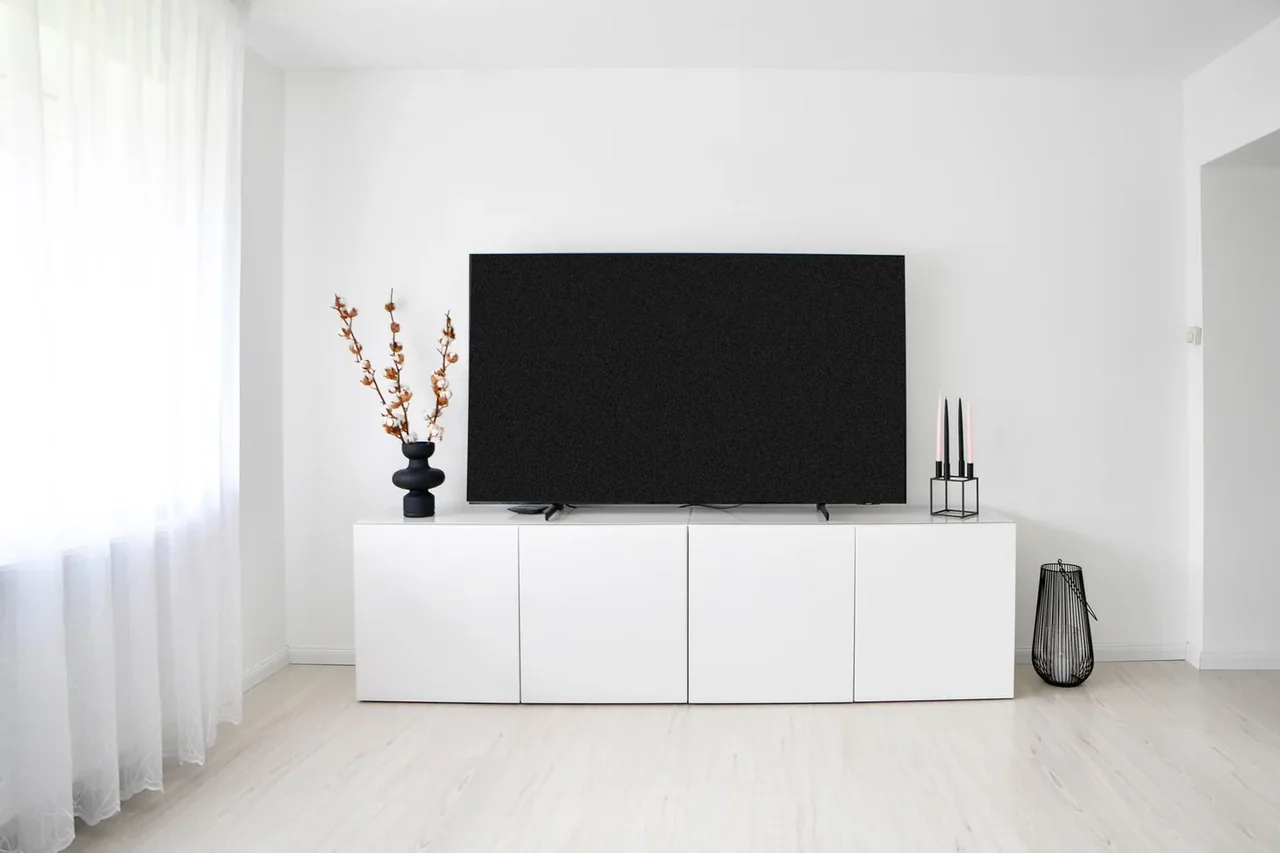
In 2026, the 50-inch segment has become the most sensible choice for many medium-sized living rooms: it offers a screen large enough for soccer, series, and video games without demanding an oversized cabinet or an excessive viewing distance. At that size, the jump between a basic panel and a well-tuned one is immediately noticeable in brightness, contrast, and the cleanliness of 4K upscaling, right where the real value for money is decided.
If you have a problem with your TV, you can use our free error code finder. From there, you can find out and solve all errors easily and effectively.
Why 50 inches concentrate the best balance in 2026
The 50-inch diagonal is not a lukewarm compromise; it is a size very well aligned with real home use. At an approximate distance of between 2 and 2.5 meters, the screen fills the field of view naturally and preserves the definition of 4K content without demanding too much from your eyes or your wallet. At a time when many platforms still mix 4K broadcasts with Full HD catalogs, that size lets you enjoy the good stuff without paying for a diagonal you may not fully take advantage of.
The market has also refined this segment a great deal. A few years ago, 50 inches almost always meant a basic LED panel, decent brightness, and little more; now, in that diagonal, QLED versions coexist with models featuring Google TV, AI-based enhancement systems, and even gaming-oriented offerings that once seemed reserved for higher-end ranges. The result is clear: buyers no longer choose by inches alone, but by how much each invested euro delivers.
In practice, that diagonal fits well in living rooms that don’t want to feel visually cluttered, in spacious bedrooms, and in second homes where the TV needs to be versatile, simple, and comfortable. It is also a very suitable size for those who want to watch sports with some immersion, but prefer to avoid the wall-filling effect that 55 or 65 inches can create in tight spaces.
What a good 50-inch model should offer
A good buy in 2026 is not judged by resolution alone. Almost all serious options already speak the language of 4K UHD, so the real difference shows up in the processor, the backlighting, and the way the TV handles motion. A panel that upscales the signal well, cleans up noise, and preserves color in dark scenes is worth more than one that only looks good on the spec sheet.
Brightness matters a lot too. In living rooms with windows or abundant natural light, a TV with better luminance control looks more vivid, more legible, and less gray. That is where technologies such as QLED or certain LED implementations with better processing gain an edge over modest panels. It’s not all nighttime cinema; many TVs live under daylight and must respond without fading out.
Fluidity matters more than it seems. For matches and video games, a real 120 Hz panel makes a clear difference compared with a 60 Hz panel, especially when there are fast movements, camera changes, or balls crossing the screen at full speed. On the other hand, if the main use will be broadcast TV, streaming platforms, and occasional movies, a good 60 Hz with competent processing can still be a very solid and cheaper purchase.
Sound is usually the first sacrifice in this range. Many 50-inch TVs are adequate, but few are impressive. That is why it is worth giving weight to voice clarity, compatibility with Dolby Atmos or DTS:X, and the presence of HDMI eARC if the plan is to add a soundbar later. The picture can be the entry point; audio is the hallway that completes the experience.
Models that best fit the value-for-money equation
Samsung Crystal UHD U8075F is one of the most sensible bets for anyone looking for a reliable, easy-to-use 50-inch TV with a mature system. Its 4K UHD panel, Crystal 4K processor, and Tizen offer a stable experience for streaming, broadcast TV, and everyday use. It does not try to impress with flashy numbers, but it does handle the important things well: fast startup, a clear interface, and compatibility with the Samsung ecosystem.
Its main virtue is consistency. The image is clean for series and sports, HD upscaling is correct, and the smart environment works with a fluidity that avoids many small daily annoyances. For a family that wants to turn it on, choose a platform, and keep watching the match without fighting slow menus, that kind of reliability matters more than marketing packed with acronyms.
Xiaomi A Pro 50 tends to stand out as one of the most aggressive options on price without giving up a broad range of features. Its QLED proposition, access to Google TV, and streaming-service integration make it a very appealing TV for anyone who wants a vivid, modern, and connected screen. It does not play in the same league as an OLED, but in its range it can deliver more intense colors and a more modern feel than many classic LEDs.
It is an especially interesting alternative for users who live inside the Google ecosystem and value the simplicity of sharing content from their phone or controlling the TV by voice. In a market where every euro counts, Xiaomi tends to move with a very precise logic: offer enough where the user truly notices it, and cut back where most people won’t miss anything important.
Hisense 50A6Q stands out as one of the most balanced purchases for those prioritizing a contained price and straightforward performance. Its UHD 4K HDR panels and VIDAA system are designed for users who want a direct TV, without unnecessary layers and with quick access to the most-used apps. In 50 inches, Hisense has learned to compete not only on cost, but also on fairly mature user experience.
The strength of this model lies in its overall balance. It does not try to seduce with excessive brightness or flashy design, but it does offer a sufficiently solid image for everyday use, with correct performance for soccer, movies, and general TV. For rational purchases, that profile often ends up being more useful than a TV that looks spectacular in a catalog but feels less complete at home.
TCL 50P7K is another reference well worth considering when the relationship between features and price really matters. TCL has gained ground with panels that combine good color handling, HDR format compatibility, and a very ambitious pricing policy. In 50 inches, the brand usually targets those who want more for less without entering overly premium territory.
Its appeal grows if versatility is valued. It can perform well for streaming sessions, support consoles without major complications, and maintain an attractive image in living rooms where the light is unforgiving. It is one of those purchases that doesn’t make noise, but fits well when you want a complete TV with no luxury pretensions.
What really changes between QLED, LED, and MiniLED
QLED has become a keyword in this size because it delivers wider color and, generally, better brightness than a basic LED. On a 50-inch TV, that translates into an image that feels more energetic, more vivid, and less dull, something especially useful for sports and daytime content. It does not replace OLED in blacks, but it does offer a clear advantage when the room gets a lot of light.
MiniLED, on the other hand, appears less often at 50 inches than in larger diagonals, but when it does exist it raises the bar in lighting control. The idea is simple: more dimming zones allow better management of highlights and shadows, reducing halos and giving HDR more presence. In practice, that means seeing dark scenes with more nuance and bright sequences with more punch.
Conventional LED still makes sense when the budget rules. Today it is no longer synonymous with a poor TV, but rather with a basic panel that is well finished, with software improvements and acceptable colors. The key is not to pay for technology that won’t truly be used. A small living room, a proper viewing distance, and a streaming-heavy use case can turn a well-calibrated LED into a smarter purchase than a flashy panel oversized for the space.
OLED does not dominate this diagonal because of price, but it is worth mentioning because it remains the reference for contrast. Its perfect blacks and very fast response make it extraordinary for movies and gaming, although at 50 inches the extra cost is rarely justified if the goal is pure value for money. At this size, money usually goes further in brightness, system, and connectivity than in chasing absolute contrast.
Distance, furniture, and light matter more than fashion
The placement in the living room defines the experience more than advertising does. A 50-inch TV works very well if the sofa is at the right distance and if the screen is not punished by reflections from a side window. There is little point in buying a bright panel if the TV ends up facing a midday window; in that case, placement matters as much as technology.
Height matters too. When the center of the screen is roughly at eye level while seated, viewing is more comfortable and less tiring. It seems like a minor detail, but over long sessions it makes a difference. A poorly placed TV can be more exhausting than another with a humble panel but well integrated into the room.
Ambient light is another decisive filter. If the living room is very bright, it is wise to prioritize brightness, anti-reflective treatment, and robust colors. If the main use is nighttime viewing, then contrast, uniformity, and image naturalness gain importance. That is one of the reasons the 50-inch range still makes so much sense: it adapts to very different homes without requiring radical changes to the space.
Which smart systems deserve more trust
Google TV usually stands out for its ability to organize content and its integration with Chromecast and voice assistants. For people who live between platforms, Android phones, and streaming services, it is especially convenient. It’s not just about the app catalog; it also matters how quickly it finds what you want to watch and how little it forces you to think about menus.
Tizen, on Samsung TVs, offers a very polished interface and a stability that is appreciated every day. It may seem less open than Google TV, but it usually responds quickly and without hiccups. In a home where the TV gets heavy use and you want to avoid the feeling of a capricious system, that operational refinement has real value.
VIDAA and webOS remain serious options, each with its own philosophy. VIDAA bets on lightness and direct access; webOS, on intuitive navigation and a very well-resolved sense of order. In a 50-inch TV, where the goal is usually balance rather than experimentation, either of these systems can be a good choice if the hardware is up to the task.
The practical conclusion is simple: software is no longer an add-on. In a connected TV, the fluidity of the system ends up influencing just as much as the panel, because it is the interface you use every day. An excellent picture loses appeal if opening an app feels too slow; a good picture with an agile system usually leaves a more satisfying impression.
Gaming, watching soccer, and everyday use: where the difference is most noticeable
For video games, the presence of HDMI 2.1, VRR, and ALLM changes the TV’s behavior in a tangible way. On 50 inches, that combination makes sense because it allows 4K gaming with less latency and smoother motion. Anyone using consoles like PS5 or Xbox Series X will immediately notice whether the TV responds smoothly or carries too much lag.
In sports, the priority is motion handling. A 120 Hz panel, or a very well-processed 60 Hz one, reduces the sense of streaking in balls and fast plays. Soccer, in particular, quickly reveals the quality of a screen: if the grass looks uniform, pans are clean, and tracking the ball doesn’t fall apart, the TV is doing its job well.
For everyday use, what is most appreciated is something else: that the image doesn’t fatigue, the remote responds well, apps open without drama, and the sound is intelligible. That is where TVs that shine for two minutes in a store are separated from those that live naturally in a home for years. The best purchase, many times, is the one that disappears as a problem.
Price ranges that really deserve attention in 2026
Between 300 and 450 euros, it is possible to find 50-inch TVs that already deliver 4K, HDR, and decent smart features. In that bracket, brands like Hisense, Xiaomi, or some TCL ranges offer a very reasonable base for anyone not looking for luxuries. The key here is to avoid panels that are too austere or slow systems, because saving money loses its meaning if the everyday experience suffers.
Between 450 and 650 euros, the sweet spot usually appears. This is the range where better brightness, more polished systems, and panels with a more convincing presentation intersect. If the budget allows you to enter there, it is worth scrutinizing not only the price, but also the refresh rate, the operating system version, and the physical connectivity. These are details that extend the perceived useful life of the device.
Above 650 euros, the purchase starts to make sense only if the TV offers something you will truly use: a better panel, more brightness, 120 Hz, a superior system, or a brand with better support. If the goal is still a balanced experience, it is not always worth crossing that threshold. In 50 inches, the line between a good buy and unnecessary spending becomes very thin.
Which purchase makes the most sense depending on the type of user
For a family that wants to watch streaming, broadcast TV, and soccer with a simple interface, Samsung and Hisense are usually very sensible choices. Their 50-inch TVs tend to offer a balanced combination of ease of use, correct performance, and simple maintenance. They are options designed to work, not to force you to learn them.
For those who live between platforms and mobile, Xiaomi fits very well. The integration with Google TV and the QLED focus in some models make the TV feel more connected to the user’s digital ecosystem. If the main use revolves around Netflix, YouTube, Prime Video, and casting from the phone, it is a very logical combination.
For those who prioritize a cool, rational purchase, TCL usually offers a very convincing balance between features and cost. It does not always lead in absolute refinement, but it does in overall balance. And that, in the 50-inch range, is often more valuable than an isolated specification that doesn’t end up changing the reader’s day-to-day life.
The best 50-inch TV value for money in 2026 is not a single fixed model for everyone, but there is a clear pattern: the winner is the model that combines true 4K, fluid software, sufficient brightness, good connectivity, and a contained price. In that intersection, the mid-range lines from Samsung, Xiaomi, Hisense, and TCL concentrate most of the real value, while OLED and MiniLED are reserved for those seeking an extra leap and willing to pay for it.
A very prudent size to buy without regretting it later
The 50-inch diagonal remains one of the most logical purchases of 2026 because it avoids two extremes: it is neither too small for a normal room nor does it force you to pay for a size that may not fit. Between improvements in processing, the leap in smart systems, and the maturity of current panels, this segment has stopped being the quiet category in the catalog and has become an area of very real value.
The final decision rarely depends on a single number. The sofa, the light, the habit of watching sports, console use, and one’s patience with menus all matter. That is why the best TV in this diagonal is not the most eye-catching on the box, but the one that behaves most coherently inside the home. And in 2026, that coherence is usually found in models that prioritize clean picture, agile software, and a price that doesn’t punish the budget.
Buying well at 50 inches means understanding that value is not always found in the loudest technology. Sometimes it is in a panel that responds, a system that doesn’t get in the way, and a price that leaves room for a soundbar or better usage habits. There, precisely there, lies the best relationship between cost and lasting satisfaction.


F8 error on a Balay ceramic hob: causes and solutions

F8 error on Balay hobs: causes and safe solutions

F8 error on a Balay cooktop: meaning and safe solution

F61 error on a Balay washing machine: causes and safe solutions

F59 error on a Balay washing machine: meaning and next steps

F43 error on a Balay washing machine: causes and safe fix

F43 error on Balay washing machines: causes and safe solution

F4 error on a Balay ceramic hob: causes and solution

F4 error on a Balay hob: causes and safe solution

F4 error in Balay washing machine: safe causes and solutions

 Appliance5 days ago
Smart appliances for a secure connected home
- Appliance6 days ago
Electrodomésticos con IA: funciones, límites y compra útil
- Appliance5 days ago
Efficient appliances to save water at home
- Balay7 days ago
E21 error on a Balay washing machine: causes and safe fixes
- Appliance6 days ago
Efficient appliances: how to cut energy bills
- Appliance6 days ago
Sustainable appliances with recycled materials that matter
- Kitchen plate6 days ago
E32 error on a Balay induction hob: causes and solution
- Appliance6 days ago
Smart appliances for a secure connected home
- Balay6 days ago
E31 error on a Balay washing machine: meaning and action
- Appliance6 days ago
Sustainable appliances: recycled materials that matter
- Appliance6 days ago
Efficient appliances that save water at home
- Balay7 days ago
Balay dishwasher E21 error: causes and solution