Magazine
Russell Hobbs Adventure 2 long and wide slots: complete guide
We analyze its capacity for large loaves, key functions, price, and the details that make the purchase.

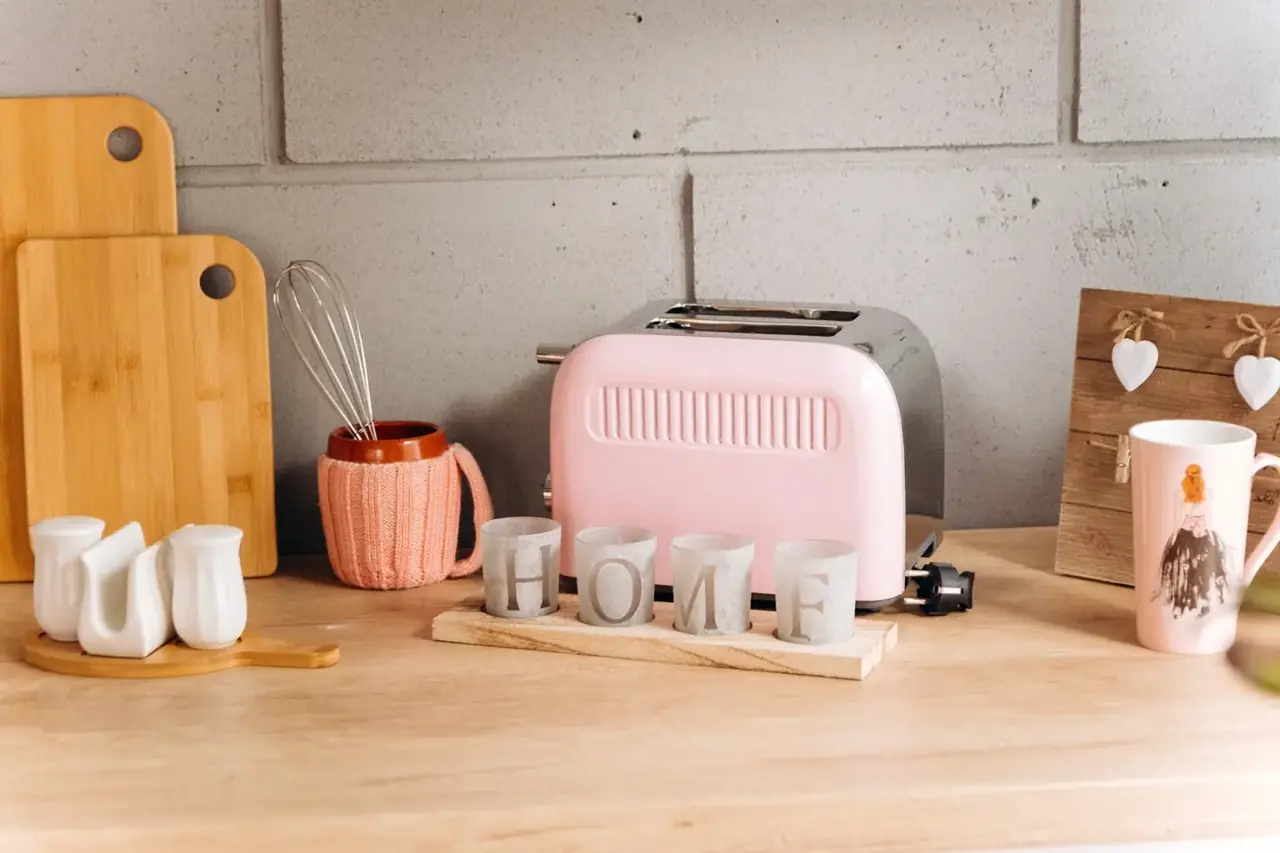
The Russell Hobbs Adventure with two long and wide slots has earned a place among family toasters for a simple reason: it solves the big-bread problem without fuss. Its elongated slots allow you to toast generous slices, country bread, rolls, and artisan loaves with less struggle than a conventional toaster, while its brushed stainless steel body brings a sober, durable presence to the countertop.
With 1600 watts of power, capacity for four slices and a set of functions designed for the daily breakfast routine, this model is not trying to decorate the kitchen, but to work efficiently. It is also backed by an average rating of 4.2 out of 5 from more than 2,700 reviews, plus a usual price of around 50.20 euros and a manufacturer’s recommended price of 67.99 euros, figures that place it in the mid-range within the long-slot toaster catalog.
If you have a problem with your toaster, you can use our free error code finder. From there you can find out and solve all errors easily and effectively.
A toaster designed for breads that do not fit the standard
The great virtue of this model lies in its format. The long and wide slots are not a decorative detail, but the central feature of its proposal. In practice, that means less need to cut the bread, more room for thick pieces, and a layout that makes it easier to toast two elongated slices or various formats that often clash with short-mouth toasters.
Russell Hobbs has designed this piece with a fairly clear idea: fast breakfasts, but without sacrificing versatility. Anyone who uses bread loaves, buns, artisan breads, or larger slices will find a more sensible appliance here than a compact toaster. Also important in the decision is that the four-slice format allows several people to be served with less waiting, something useful in homes where breakfast is not made one by one.
The design also follows the brand’s Adventure aesthetic, with a combination of brushed stainless steel and a silver finish that recalls appliances with a clean, almost industrial look. It does not try to be discreet by hiding away; on the contrary, it takes up visual space, but does so with a robust and timeless image.
What it offers in daily use and why that matters
Beyond appearance, the real value of a toaster is decided in everyday routine. Here several functions appear that, without being extravagant, make sense: adjustable browning control, defrost function, cancel button, high-lift function, removable crumb tray, and an integrated bun warmer. The set is designed so the machine can handle both frozen bread and pastries, with simple operation and without much of a learning curve.
The browning control is especially relevant, because user reviews show a very repeated pattern: the toaster can heat quite strongly and it is worth finding the right setting. This is neither an isolated defect nor a rarity; it is a characteristic that calls for familiarity. First-time users often discover that a low setting may be enough to get golden toast, while raising it too much can leave the bread more done than intended. In other words, it responds quickly and demands precision.
The high-lift function, for its part, adds safety and convenience. It lets you remove small pieces without bringing your fingers too close to the slots, which is useful when toasting rolls or slices that shrink a little during the process. It is not the kind of function that stands out on a spec sheet, but it is one you appreciate every morning when the bread sits too low and you do not feel like improvising with forks or knife tips.
Power, size and consumption: what its figures reveal
The combination of 1600 W and a four-slice format explains its behavior quite well. We are not looking at a small toaster or a low-consumption appliance for occasional use. It is a kitchen machine designed to work briskly, and that is also reflected in its dimensions: 40.1 cm wide, 19.3 cm deep and 18.7 cm high, with a weight of 2.2 kg. On a small countertop, its presence is noticeable; in a family kitchen, it fits naturally.
The size is not a drawback in itself, though it does mean you need to be clear about where it will live. A user expecting a compact appliance may find it large, but that extra room is what allows for long slots and a more comfortable system for varied bread. In this kind of product, the shape conditions the use: small toasters save centimeters, yes, but force you to trim your habits; this one, by contrast, adapts better to less uniform breakfasts.
It is also worth looking at the voltage figure, which in this case is 230 volts, in line with what is standard for the European market. There are no surprises here. The choice is for a recognizable structure, with the addition of a bun rack that broadens the range of use without making handling more complicated. The product logic is conservative, and that, in a toaster, can be a virtue.
The best things about its design: sturdiness, cleanliness and convenience
One of the most repeated points from buyers is the feeling of solidness. The brushed stainless steel conveys a more serious image than glossy plastics that age worse or show marks easily. In the kitchen, materials matter not only for looks; they also affect how they stand up to time, fingerprints, steam, and frequent cleaning. This toaster sits in that product line that seems made to last longer than one season.
The removable crumb tray makes everyday cleaning much easier. It does not solve the universal mystery of crumbs, but it does prevent them from building up under the base or near the heating elements. Emptying it takes seconds, and that makes the difference between keeping the appliance reasonably clean or resigning yourself to breadcrumbs hidden in the corners. Added to this is the bun warmer, which keeps croissants or small pieces warm without resorting to improvised solutions.
In everyday use, these details create a more orderly experience. It does not seem like a toaster that is hard to understand or especially sensitive during the first uses. In fact, several reviews highlight that it toasts quickly and that it is easy to adapt to the control, as long as you accept that the setting requires some practice. In products like this, convenience does not always mean automating everything; sometimes it simply means that each part does its job well.
The price and the position it holds in the market
The Russell Hobbs Adventure with long and wide slots usually sits in a price segment that does not compete with the cheapest basics or with premium-design toasters. Its usual price of 50.20 euros and the recommended price of 67.99 euros place it in a fairly recognizable middle ground. In addition, different retailers have shown variations, with offers that have also placed it below that reference figure, something common in small appliances with high turnover.
That positioning makes sense given what it offers. It is not a simple entry-level toaster, nor a machine packed with advanced functions. Its proposal is closer to practical efficiency than to technological showmanship. Those who pay for it are looking for capacity, versatility and a well-known brand, not a display or a complex menu. In that sense, the price should be read alongside the size, power and metal finish, not in isolation.
It also helps that Russell Hobbs maintains a broad range within the Adventure collection, with long-slot versions for two slices and other short-slot versions. The price difference between models is not only due to the number of slots, but also to the intended use. The four-slice version presents itself as the more capable option for shared breakfasts, while the two-short-slot version is aimed at smaller kitchens or less intensive routines.
What real reviews say and where the nuances appear
Customer ratings paint a fairly clear picture. There are plenty of positive comments about capacity, design and functionality, but there are also warnings about two aspects that deserve attention: the browning control and the cord length. On a product sheet, these objections do not always stand out; in real life, they do. The first affects the exact toast level, and the second determines where the machine can be placed in the kitchen.
Some users describe it as a very attractive, roomy and efficient toaster, capable of handling large bread and different formats without problems. Others, however, point out that the power can feel too aggressive if you do not learn to adjust it carefully. That divergence does not invalidate the product, but it does mean you need to read it with realistic expectations: this is not a toaster that forgives carelessness very well. If it is left on too long, the bread can come out too done.
The short cord also comes up frequently in reviews. It is not a minor detail, because a real kitchen rarely has the outlet where you expect it. A short cord forces you to place the toaster close to the power point or use an extension cord, something some buyers consider inconvenient. Against that, the toasting quality, ease of cleaning, and capacity for large pieces usually tip the balance in favor of the model.
Who it suits and who may find it lacking
This model works well in homes that prepare breakfast for several people, use generously sized breads, or value having a single machine capable of toasting and warming pastries. It is also suitable for those who prioritize a metallic aesthetic and an appliance with a sturdy look over lighter, more minimalist options. In kitchens where breakfast is part of a small daily choreography, its format makes a lot of sense.
On the other hand, it may fall short for anyone looking for a very compact toaster, one that is extremely quiet, or one with very fine heat adjustment from the very first minute. Nor is it the ideal candidate for tables or countertops where space is measured to the millimeter. And if the user prefers to plug it in and forget about it, without touching the control much, they may find it a bit more temperamental than desired.
The honest reading is this: it is an effective toaster for large breads and shared breakfasts, with a reasonable price within its range and a build that inspires confidence, but also with a pronounced thermal personality. Those who go into it knowing they will need a couple of uses to dial in the right toasting point usually come away satisfied. Those expecting a soft, uniform, characterless machine may end up more divided.
An appliance that makes sense when used with judgment
The Russell Hobbs Adventure with 2 long and wide slots does not try to dazzle with gimmicks. Its appeal lies in the combination of capacity, design and useful functions, three elements that usually matter more on a kitchen counter than in a sales sheet. It toasts large bread, accommodates varied pieces, includes a bun rack and is easy to clean, all with an aesthetic that does not age badly.
Its Achilles’ heel, according to some users, is the need to learn how to control the browning level properly. But that trait also defines it as a machine with a lively response, not as an indifferent object. In the small universe of toasters, that has more value than it seems: a machine capable of adapting to different breads, as long as the user gives it a bit of attention, ends up becoming part of the domestic rhythm as a reliable tool and not as a plugged-in ornament.
In the final balance, it stands out for offering more space, more variety and a more serious presence than average. And that is precisely its identity: a toaster designed for real breakfasts, with crumbs, rush, irregular breads and different tastes at the same table. It is not trying to complicate breakfast; it is trying to make it fit.
Este artículo contiene enlaces de afiliado: si compras a través de ellos, se genera una pequeña comisión sin coste adicional para ti. Más información.


E18 error in Balay washing machine: drain causes and fix

Balay washing machine F4 error: how to restore drainage

Error in a 2013 Balay A++ refrigerator: causes and fixes

Balay induction hob error 22: how to fix it

E17 error in the Balay 3TS60107 washer: causes and fix

Balay washing machine E93 error: causes and safe solution
E9 error on a Balay induction hob: causes and solution
E9 error on a Balay induction hob: causes and solution

Balay E9 error on a freezer: causes and solution

E80 error on a Balay washing machine: meaning and solution

 Kitchen plate7 days ago
Balay induction hob E error: causes and solutions
- Balay6 days ago
E05-32 error on a Balay oven: causes and safe solution
- Washing machine6 days ago
Hotpoint washing machine F09 error: what it means and what to do
- Balay5 days ago
E09 error in Balay dishwasher: causes and safe solution
- Dishwasher5 days ago
E09 error in Balay dishwashers: causes and safe solution
- Dishwasher5 days ago
E15 error on Balay dishwasher: do not tilt it
- Dishwasher4 days ago
Balay dishwasher E15 error: warranty coverage and solution
- Balay5 days ago
Balay washing machine E12 error: causes and safe solution
- Balay5 days ago
E09 error in Balay dishwasher 3VS503IA: causes and fix
- Dishwasher4 days ago
Balay dishwasher E16 error: causes and safe solution
- Balay6 days ago
E0 error on a Balay induction hob: causes and fixes
- Dishwasher5 days ago
E11 error in Balay dishwashers: causes and solutions