Magazine
Outdoor air conditioner unit makes noise: signs of a malfunction
What noises are normal, which ones indicate a fault, and how to reduce vibrations and annoyances with real solutions.

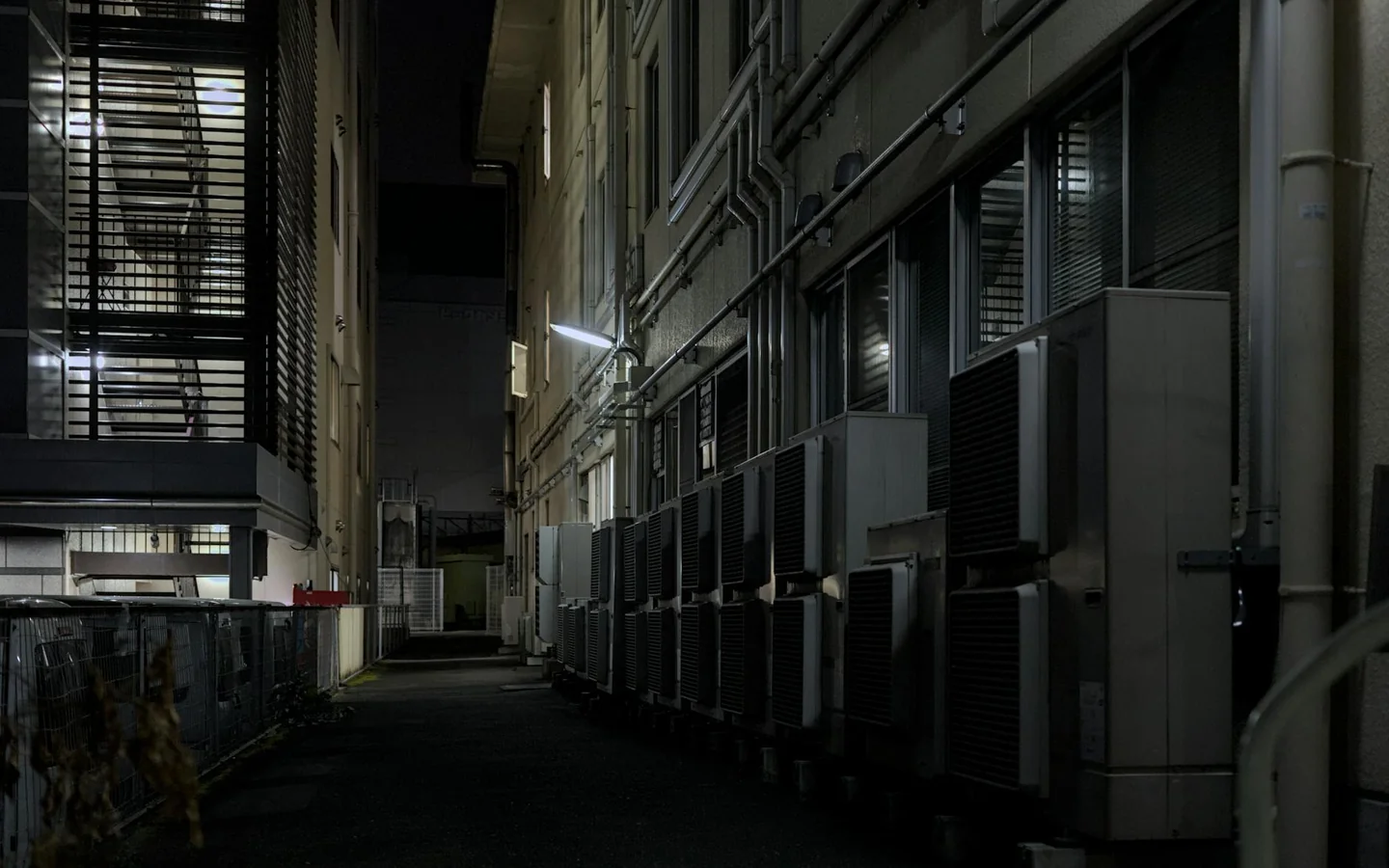
The outdoor unit of an air conditioner can sound louder than it should for causes as different as poorly transmitted vibration, a dirty fan, a loose mount, or a compressor working outside its optimal range. The key is not just how much noise is heard, but how that sound changes: a steady hum is usually normal, while rattling, squeaking, or a sharp knock point to an anomaly that should be checked as soon as possible.
In Spain, moreover, the noise from the outdoor unit is no minor issue. Municipalities regulate noise pollution and, although limits vary, it is common for the permitted level at night to be lower than during the day. In a home installation, the practical reference is usually between 50 and 65 dB(A) during the day and between 40 and 55 dB(A) at night, measured at 1.5 meters, although the specific rule depends on the municipality and the surroundings.
If you have a problem with your air conditioner, you can use our free error code search engine. From there, you will be able to identify and fix all errors easily and effectively.
When a sound is within normal range and when it is no longer
Not every noise from an outdoor unit is a bad sign. An HVAC system moves air, compresses refrigerant, and withstands mechanical vibrations; that is why it emits a background sound that, in modern models, usually feels like a continuous murmur. That sound may increase at certain moments, for example when the compressor speeds up to recover the set temperature or when the fan runs more intensely on extremely hot days.
What does deserve attention is a change in the character of the noise. A uniform hum, without knocks or vibrations transmitted to the structure, is usually within expectations. By contrast, an intermittent metallic noise, a vibration felt in the floor, or a kind of repeated scraping usually points to something more specific: a misaligned shaft, a loose screw, an unbalanced part, or a fan with accumulated dirt.
It also matters when the sound appears. If the unit sounds louder when starting up or when it slows down, it may simply be the behavior of the inverter compressor, which continuously adjusts its power so it is not constantly switching on and off in jumps. In systems of this type, the operating speed changes gradually; that is why the ear picks up small variations that are, in reality, part of normal operation.
Another essential nuance is distance. A noise perceived on a terrace may be acceptable for someone next to the unit, but annoying in an interior courtyard or near an open window. Location changes acoustic perception completely, especially in apartment buildings where façades and courtyards act like resonance chambers.
The most common causes behind outdoor noise
The fan is one of the first suspects. When the blades accumulate dirt, dry leaves, or small debris, the airflow becomes irregular and a harsh sound appears, as if something were rubbing on every turn. Sometimes there is no broken part, just a layer of dust enough to alter the balance. That kind of dirt can also strain the motor and create more vibration than desirable.
Mounts and anti-vibration pads matter too. If the outdoor unit is poorly anchored, vibration stops being dissipated and is transmitted to the wall, slab, or base. The result can be misleading: the unit itself does not seem excessively noisy, but the building amplifies the annoyance. In lightweight homes, interior courtyards, and façades with little mass, that effect multiplies easily.
The compressor occupies another central place. It is the component that bears the greatest mechanical workload and, therefore, the one most likely to reveal wear, misalignment, or forced operation. A high-pitched, sustained hum that is very localized in the casing often points to that heart of the system. It does not always mean a serious breakdown, but it does deserve inspection if it was not noticed before or if it has clearly increased.
Noises can also come from the refrigerant circuit. The refrigerant flow generates, at certain moments, slight hissing, gurgling, or small crackling sounds that are not necessarily alarming. However, if those sounds are accompanied by loss of performance, ice on the pipes, or very irregular operation, there may be a leak, an incorrect charge, or a gas expansion problem.
Sharp knocks and rattling are another story. They are usually related to loose parts, poorly fastened covers, a fan rubbing against something, or even objects trapped in the grille. These are not background noises, but sharper signals, similar to a door vibrating in the wind. If they appear repeatedly, the unit should be switched off until the source is found.
What noise level is usually acceptable in a home unit
Decibels are not easy to interpret at a glance, because the human ear does not perceive all sounds equally. A small increase on the scale can feel like a noticeable change when the environment is quiet. That is why, rather than comparing numbers alone, it is better to look at what value the manufacturer states, at what measurement point, and in which operating mode it was obtained.
In serious technical sheets, the sound pressure level of the indoor and outdoor units appears, often with two distance references. The most useful one for comparison is the one measured at 1.5 meters, because it is closer to real-world perception in a home installation. A unit that shows around 37 to 48 dB(A) outdoors, depending on power and mode, can be considered relatively discreet for a well-installed home.
But the isolated figure is not enough. A unit at 40 dB(A) placed in a narrow courtyard may be more annoying than another slightly louder one installed on an open roof with good decoupling. Real acoustics depend on location, the nearby wall, the courtyard reverberation, the height, and the type of fixing. That is why two identical units can be perceived very differently.
At night, the requirement is usually greater. Many municipalities tighten the criteria when environmental activity drops, and that makes a unit that is tolerable during the day become a problem at night. In densely populated residential areas, that difference between the city’s background noise and the noise added by the machine is what truly defines acoustic coexistence.
Location matters as much as the machine
Placing the outdoor unit in the right spot can reduce annoyance more than changing the entire model. That is one of the lessons repeated most often in well-executed installations. A quiet machine in the wrong place ends up sounding worse than a more modest one installed thoughtfully. The courtyard, façade, roof, or garage do not offer the same acoustic behavior or the same ventilation.
In a single-family home, a raised but well-ventilated area, or an isolated base in the garage, usually helps separate the unit from the living spaces. In an apartment or a condominium, the upper roof can be a cleaner solution than hanging it directly on the façade, provided the regulations allow it and the installation does not require forcing ducts or unreasonable distances.
Interior courtyards are especially delicate. They act like a funnel for sound. The waves bounce, add up, and return with more presence, just as a voice sounds louder in a closed space than in an open field. If there is no choice but to place the unit there, it is wise to maximize decoupling, orient the fan properly, and use silent mode if the manufacturer includes it.
Distance from windows and bedrooms also matters. Noise does not affect a blank wall the same way it affects a glazed opening. In a well-thought-out installation, the outdoor unit should never discharge airflow or direct noise toward a nearby window, because the difference in perception can be huge even if the measured decibels change very little.
Vibration, anchoring, and transmission to the structure
Many complaints about noise do not come from the unit itself, but from the way it is coupled to the building. A compressor may operate within normal limits and still make a light wall or poorly designed support vibrate. The sound is then not only heard: it is felt in the arm, on the railing, or in the nearby sheet metal itself. That mechanical vibration is one of the most common annoyances in home air conditioning.
Anti-vibration mounts, rubber isolators, and decoupled bases help precisely break that bridge between the machine and the structure. They do not eliminate airborne noise, but they do reduce structural transmission, which is often the most annoying part because it passes through walls and slabs with surprising ease. An installation mounted without insulation can turn a discreet hum into a persistent noise inside the home.
The fixing deserves periodic inspection. Screws loosen, supports suffer expansion and contraction, materials age, and the weather does its work. A unit exposed to sun, wind, and rain does not keep the same rigidity it had on day one forever. That is why, when a new vibration appears, the prudent first thought is the anchoring rather than assuming the compressor is damaged.
In older or poorly maintained installations, small looseness in the sheet metal or side covers can also come into play. That kind of noise is especially deceptive because it seems to come from inside, but in reality it starts at a tiny point that vibrates like the lid of a can. Sometimes the problem is solved with a minor correction; other times, the entire support and fixing assembly needs to be checked.
What maintenance reduces noise without complications
Cleaning changes far more than it seems. A clean fan moves air with less effort and less turbulence, and that translates into less noise. It also improves heat dissipation, so the compressor works less time at higher speed. In practical terms, an annual inspection is usually enough to keep accumulated dirt under control, especially in units exposed to dust, pollen, or plant debris.
The filters of the indoor unit do not generate the outdoor noise, but they do affect the system’s overall behavior. If the indoor unit is choked by dirt, the whole system can work under more load than necessary, and that is also noticeable outside. HVAC is a chain; when one link gets dirty, the others end up paying for it in the form of effort, consumption, and sometimes sound.
It is especially important to watch three signs. The first is a gradual increase in noise that was not there before. The second is a drop in cooling or heating performance. The third is the appearance of ice, frost, or unusual condensation in areas where it should not be. When these clues coincide, the noise stops being a comfort issue and becomes a possible technical warning.
In inverter units, moreover, acoustic behavior changes depending on demand. If the home reaches the set temperature and the unit modulates at low speed, the sound should soften. If, on the contrary, it keeps a louder roar constantly, there may be a calibration problem, refrigerant charge issue, or insufficient outdoor ventilation.
Which sounds usually warn of a real fault
There are noises you should not normalize. A continuous squeal is usually related to bearings, a persistent rubbing to deformed blades or hard dirt, and knocking to loose components. If the sound appears suddenly and repeats every few seconds, the likelihood that a mechanical part is affected increases quite a lot.
A prolonged whistle deserves attention for another reason. It may indicate a leak or abnormal gas passage in the circuit, especially if the unit has lost cooling capacity. It is not a sound that should be casually dismissed as normal operation. In air conditioning, when the sound is accompanied by poorer performance, it is always worth looking beyond mere acoustic comfort.
Changes in tone also help with diagnosis. A compressor does not usually sound the same throughout its operating curve. That is why, when an outdoor unit starts emitting a hum that rises and falls without a clear pattern, or that changes when the casing is touched, the problem may lie in vibration transmission, the cover fixing, or an internal element that no longer turns smoothly.
In some cases, the origin is a previous impact. A blow to the casing may seem merely cosmetic, but if it slightly shifted the structure or stressed a pipe, the noise may appear later. HVAC tolerates very little fine misalignment; a millimeter too much in a support or an awkward bend in a refrigerant line is enough to alter how the machine breathes and transmits sound.
How quiet a well-chosen air conditioner can be
Inverter technology has completely changed the sound landscape of home air conditioning. By avoiding abrupt compressor starts and stops, the unit works more continuously and steadily. That reduces noise peaks, lowers wear, and improves the feeling of calm. It does not eliminate sound, but it makes it much more like a murmur than a mechanical thud.
Compressor quality also matters. A well-designed set, with good tolerances and a casing meant to damp vibrations, can make very clear differences in noise-sensitive homes. In practice, two units of similar power can offer very different acoustic experiences because of engineering details the user does not see but hears every day.
Outdoor silent modes do not work miracles, but they help. They reduce rotational speed, soften air discharge, and limit effort at specific times. They are especially useful when the outdoor unit is close to neighbors or on a terrace where conversation and rest share space with the machine. They do not replace a good installation, but they do complement it.
The choice of a unit should not focus only on the energy label or the power rating. Noise level, how it modulates, and how easy it is to maintain matter just as much as consumption. A slightly more expensive unit at purchase can save years of discomfort if it is better engineered acoustically, and that difference is felt every summer night.
When the noise already affects coexistence
The noise problem does not end at the appliance; it often begins in the shared use of space. An outdoor unit that bothers a neighbor, an adjacent bedroom, or an interior courtyard is not only a technical issue, but also one of coexistence. That is why municipal ordinances usually regulate intensity, duration, and schedule, not just the maximum value measured in a laboratory.
In apartment buildings, the best solution rarely comes from improvisation. Reviewing the location, correcting vibration, checking the support, and measuring the unit’s real behavior over several hours is usually more useful than changing parts at random. A precise intervention avoids unnecessary costs and reduces the tension that noise creates once it has become a visible conflict.
The most sensible reading is this: a controlled hum may be normal, but a new, growing or clearly mechanical noise should never be ignored. The outdoor unit is designed to work outside, yes, but not to become the metronome of the house or the echo of the courtyard. When the machine talks too much, it is almost always asking for a check of its fixing, cleaning, or operation before the problem grows.
In HVAC, silence is never absolute. What is reasonable is something else: a contained, stable, unobtrusive sound that is consistent with the power being used. That balance, as simple to say as it is difficult to achieve, depends on three factors that are non-negotiable: a good unit, a correct installation, and maintenance that does not come too late.
Este artículo contiene enlaces de afiliado: si compras a través de ellos, se genera una pequeña comisión sin coste adicional para ti. Más información.


Balay washing machine E80 error: meaning and what to do

E80 Error in Balay Ovens: Safe Causes and Solutions

E63 error on a Balay dryer: causes and safe solutions
E63 error on a Balay washing machine: causes and safe fixes

Balay washing machine E61 error: meaning and what to do

E61 error on a Balay washing machine: meaning and action

E6 PUNP error on a Balay washing machine: meaning and next steps

E56 error on Balay dryer: causes and safe solutions

E56 error on Balay washing machines: meaning and safe solutions

E50 error on Balay dryers: causes and safe solution

 Kitchen plate6 days ago
E Error on Balay Series 900 Hob: Causes and Solutions
- Dishwasher6 days ago
E25 error in Balay dishwasher: causes and solutions
- Balay6 days ago
E16 Error on a Balay Washing Machine: Causes and Safe Fixes
- Kitchen plate6 days ago
Balay induction hob E error: causes and solutions
- Balay6 days ago
E21 error in Balay dishwashers: causes and solutions
- Balay4 days ago
E09 error in Balay dishwasher: causes and safe solution
- Balay5 days ago
E05-32 error on a Balay oven: causes and safe solution
- Washing machine5 days ago
Hotpoint washing machine F09 error: what it means and what to do
- Balay6 days ago
Balay washing machine E18 error: causes and safe fix
- Balay6 days ago
E61 error on a Balay washing machine: causes and safe fix
- Balay6 days ago
Error E on a Balay hob: what it means and what to do
- Dishwasher4 days ago
E09 error in Balay dishwashers: causes and safe solution