Magazine
It is dangerous for the boiler to make noise: causes and warning signs
The noises in the boiler can be mild or indicate a serious fault. This is how the real risk is distinguished.

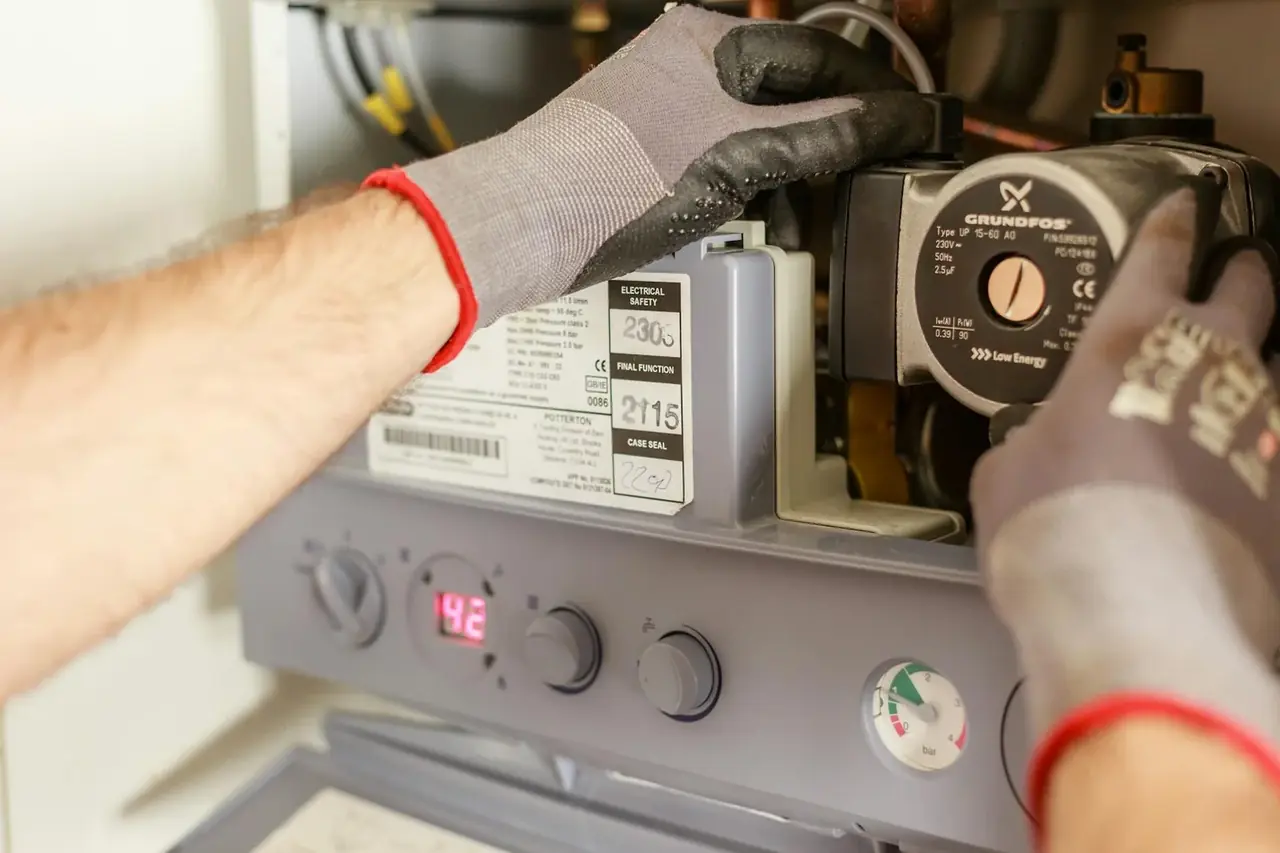
A metallic noise when starting up, a sharp whistle, or a persistent gurgling are not just simple household annoyances. In a boiler, those sounds usually reveal air in the circuit, dirt in the heat exchanger, a worn pump, pressure problems, or poorly adjusted combustion. The seriousness varies depending on the type of noise, its intensity, and how often it appears, but the underlying message is the same: the unit is operating outside its normal range.
The prudent response is not to normalize it. Some noises are solved with bleeding, a pressure check, or a basic cleaning; others require an authorized technician because they affect combustion, gas, or components that can worsen quickly. When the sound goes from occasional to constant, or is accompanied by a strange smell, water loss, shutdowns, or strong vibrations, safety stops being a hypothesis and becomes the priority.
If you have a problem with your boiler, you can use our free error code search tool (links to the error code search tool at: https://cde.enpruebas.es/buscador-de-codigos-de-error/). From there, you can find out and solve all errors easily and effectively.
What a noise in the boiler really means
A healthy boiler should not sound like a runaway coffee machine or a pipe banging against the wall. Under normal conditions, it should only make a faint hum, the flow of water, or the fan starting up. When the sound changes, there is almost always a mechanical, hydraulic, or combustion-related issue behind it. In that sense, noise works like an indicator light: it doesn’t fix anything by itself, but it warns you before the fault becomes visible.
The key is to distinguish between functional noises and abnormal noises. The former appears briefly and consistently, without vibration or loss of performance. The latter repeats, grows louder, or is accompanied by symptoms such as lack of heat, irregular hot water, pressure fluctuations, or unexpected shutdowns. In a properly tuned installation, the unit should not force you to live with bangs, whistles, or pops when it starts.
Context also matters. An old boiler, a home with hard water, or an installation that has gone years without maintenance is more likely to make noise. Dirt builds up, parts fall out of alignment, and water flow becomes less smooth. That’s why a new noise, even if it seems minor, deserves attention: many faults begin with a barely perceptible change in tone.
The most common sounds and what they usually mean
The type of noise gives more guidance than any hasty guess. A metallic knocking suggests part vibration, loose mounts, or a worn fan. A sound similar to small explosions at startup is usually related to irregular ignition and momentary gas buildup in the chamber. Gurgling, on the other hand, almost always points to trapped air or poor water circulation.
Whistling is often especially revealing. Sometimes it appears when gas passes at too much pressure or when there is a narrowing somewhere in the circuit. It can also be associated with limescale deposits, especially in areas with hard water, where heat exchange becomes abrupt and the boiler starts to sound like a poorly sealed pressure cooker. If the whistle becomes constant, inspection is no longer optional.
Vibrations and humming often point to the circulation pump, the fan, or poor hydraulic balancing. In these cases, the noise is not just annoying: it also suggests that the appliance is working harder than it should to move water or expel gases. That extra effort leads to more wear, worse performance, and consumption that often rises without warning.
There is also a group of less dramatic noises, but just as useful as a warning sign. A squeak when water enters, a click at startup, or a casing vibrating against the wall may seem minor, but they point to pressure, fasteners, screws, or thermal expansion. In older installations, these details are often the prelude to more expensive breakdowns.
When noise shifts from annoying to concerning
Not all noises imply the same level of risk, but there are patterns that raise the alarm. If the sound appears every time it starts, intensifies when the boiler calls for heat, or lasts longer than it should, it is worth stopping treating it as a household oddity. Repetition is one of the best indicators that the problem is not random.
The risk clearly increases when the noise is combined with unexpected shutdowns, gas odor, soot stains, irregular flames, or water leaks. These signs are no longer about comfort or efficiency, but about combustion, tightness, and wear. A boiler that sounds bad and also fails to heat or start properly may need immediate intervention.
There is another criterion that helps measure urgency: progression. A light hum that stays stable for weeks is less worrying than a bang that was occasional and is now daily. When the noise grows, the system is usually compensating for something. And what it compensates for today with effort can break tomorrow from exhaustion.
Why some noises can be dangerous
The danger is not in the noise itself, but in the fault causing it. A persistent whistle may hide incorrect pressure or a blockage; a pop at startup may reveal poor combustion; a prolonged hum may indicate a pump at its limit. If the problem affects ignition or gas evacuation, the issue directly concerns the safety of the home.
Poor combustion deserves special attention because it can produce carbon monoxide, a toxic gas that is invisible and odorless. Not all noises imply it, but some are associated with poorly regulated air-gas mixtures, dirty burners, or insufficient ventilation. That is why it is not enough for the boiler to keep working: the fact that it heats does not guarantee that it does so safely.
There are also less dramatic but very costly risks. A boiler operating with accumulated scale, air in the circuit, or pressure out of range consumes more, heats worse, and damages parts that should not suffer so much. What starts as a noise often ends in a damaged heat exchanger, a fatigued pump, or a repair that no longer allows simple solutions.
In homes with heavy use, persistent noise can act like a small hammer blow on the whole installation. By vibrating, loosening, and wearing down, it eventually affects supports, seals, and connections. It is not the kind of fault you see immediately, but it is the kind that bills you when you let it grow.
What can be checked without touching sensitive parts
There are basic checks that help clarify the origin of the problem without taking unnecessary risks. The first is to observe when the noise appears. Something that happens at startup does not sound the same as a continuous hum throughout the heating cycle. The timing of the sound offers valuable clues about whether the source is ignition, water circulation, or the fan.
Circuit pressure is another useful piece of data. When cold, many domestic boilers operate around 1 to 1.5 bar, although the manufacturer’s manual always takes precedence. Pressure that is too low can encourage noises caused by poor circulation; pressure that is too high also creates strange behavior and should not be corrected blindly if the installation is not responding as it should.
Bleeding radiators can be useful when there is gurgling or bubbling. That trapped air breaks the smooth circulation of water and creates cavity sounds, as if the system were breathing in fits and starts. It is also a good idea to check that there are no objects blocking grilles, ventilation, or visible outlets. Sometimes a noise problem starts with something as simple as accumulated dirt or a poorly secured casing.
If the noise disappears when you change the operating mode, close a tap, or turn off the heating, that information also matters. It doesn’t solve the problem, but it helps narrow down the source. Precision here is not advanced technical expertise; it is calmly observing before interfering where you shouldn’t.
Clear signs that a technician is needed
There are noises that should not be resolved with DIY attempts. Sharp bangs at startup, small explosions, persistent high-pitched whistles, intense vibrations, or any repetitive metallic sound require professional inspection. Any boiler that only starts making noise when heating or hot water demand increases also deserves attention, because that often indicates a more serious functional fault.
The technician does more than listen: they measure combustion, check pressure, analyze the heat exchanger, inspect the pump, fan, valves, and burner, and verify that gas evacuation is correct. That comprehensive view matters because many noises sound alike and, without proper tools, it is easy to confuse a mechanical cause with a gas or water issue.
There is also a very simple practical rule: if the noise persists after checking pressure and bleeding, it is not wise to keep testing by intuition. Each additional startup can worsen an already damaged part. In boilers, insisting without a diagnosis often costs more than asking for help in time.
What happens when the warning is ignored
Letting the noise go does not make it harmless. A small fault can grow silently while the boiler continues to provide partial service. The most common result is a gradual loss of efficiency: more consumption to get the same heat, longer startup time, and more wear on key components. Your wallet feels it before the breakdown becomes dramatic.
Then come the mechanical consequences. A pump vibrating abnormally can end up seizing, a loose fan can be damaged beyond repair, and a heat exchanger clogged with scale can deteriorate until it loses real transfer capacity. At that point, the repair is no longer a cleaning or adjustment and becomes a parts replacement, with the corresponding cost.
The most serious issue is safety. Irregular combustion or imperfect gas evacuation does not stop at a bad sound; it can affect indoor air quality. That is why a noisy appliance that also behaves erratically deserves respect, not acceptance. The boiler should not be a crackling box, but a stable and controlled installation.
How to reduce the chance of it happening again
Prevention matters more than any one-off fix. A properly done annual service greatly reduces the appearance of noises because it cleans residue, adjusts components, and detects worn parts before they start complaining. It is one of those invisible tasks that, nonetheless, make the difference between a peaceful winter and an urgent call to the technician.
It also helps to take care of water quality and the condition of the circuit. Limescale usually does not make noise at first, but it eventually leaves its mark on the heat exchanger and water flow. In hard-water areas, descaling or appropriate treatments become truly important. They are not decorative extras; they are a way to keep the system from becoming rough inside.
Cleaning filters, checking fasteners, and monitoring pressure complete that prevention picture. A well-adjusted boiler works almost in the background, like a tuned engine that barely makes itself known. When it starts becoming too audible, it is usually because something has lost that fine balance that you cannot see, but can feel at every startup.
In older installations, it is also worth checking the general condition of supports, casings, and anchors. Many vibrations do not come from a major breakdown, but from small gaps between parts that have slowly separated over time. It is a mundane problem, yes, but no less relevant for that.
A sound that deserves attention before it becomes a breakdown
The best way to read a boiler noise is neither alarmist nor complacent. Some sounds only indicate accumulated air or pressure out of adjustment, while others point to an urgent safety-related intervention. The difference is not the volume, but the pattern: how it sounds, when it appears, and whether it comes with other symptoms.
Treating noise as a clue, not background noise, allows you to act more intelligently. Sometimes a bleed or a basic adjustment will be enough; other times a professional inspection will be needed to rule out faults in combustion, the pump, ventilation, or the heat exchanger. In both cases, speed usually works in the user’s favor.
A boiler that warns you with noise is telling you it needs attention. Listening to it in time avoids trouble, reduces consumption, and protects the equipment. In a heating system, well-understood silence is worth as much as the heat it delivers: both are signs that everything is working as it should.
Este artículo contiene enlaces de afiliado: si compras a través de ellos, se genera una pequeña comisión sin coste adicional para ti. Más información.


Balay washing machine E80 error: meaning and what to do

E80 Error in Balay Ovens: Safe Causes and Solutions

E63 error on a Balay dryer: causes and safe solutions
E63 error on a Balay washing machine: causes and safe fixes

Balay washing machine E61 error: meaning and what to do

E61 error on a Balay washing machine: meaning and action

E6 PUNP error on a Balay washing machine: meaning and next steps

E56 error on Balay dryer: causes and safe solutions

E56 error on Balay washing machines: meaning and safe solutions

E50 error on Balay dryers: causes and safe solution

 Kitchen plate6 days ago
E Error on Balay Series 900 Hob: Causes and Solutions
- Dishwasher6 days ago
E25 error in Balay dishwasher: causes and solutions
- Balay7 days ago
E16 Error on a Balay Washing Machine: Causes and Safe Fixes
- Kitchen plate6 days ago
Balay induction hob E error: causes and solutions
- Balay5 days ago
E05-32 error on a Balay oven: causes and safe solution
- Washing machine5 days ago
Hotpoint washing machine F09 error: what it means and what to do
- Balay6 days ago
E21 error in Balay dishwashers: causes and solutions
- Balay5 days ago
E09 error in Balay dishwasher: causes and safe solution
- Dishwasher4 days ago
E15 error on Balay dishwasher: do not tilt it
- Balay6 days ago
Balay washing machine E18 error: causes and safe fix
- Balay6 days ago
E61 error on a Balay washing machine: causes and safe fix
- Balay6 days ago
Error E on a Balay hob: what it means and what to do