Magazine
Mitsubishi air conditioner not cooling: signs before the code
Common causes, signs of failure, and what to check before requesting assistance to restore the equipment’s performance.

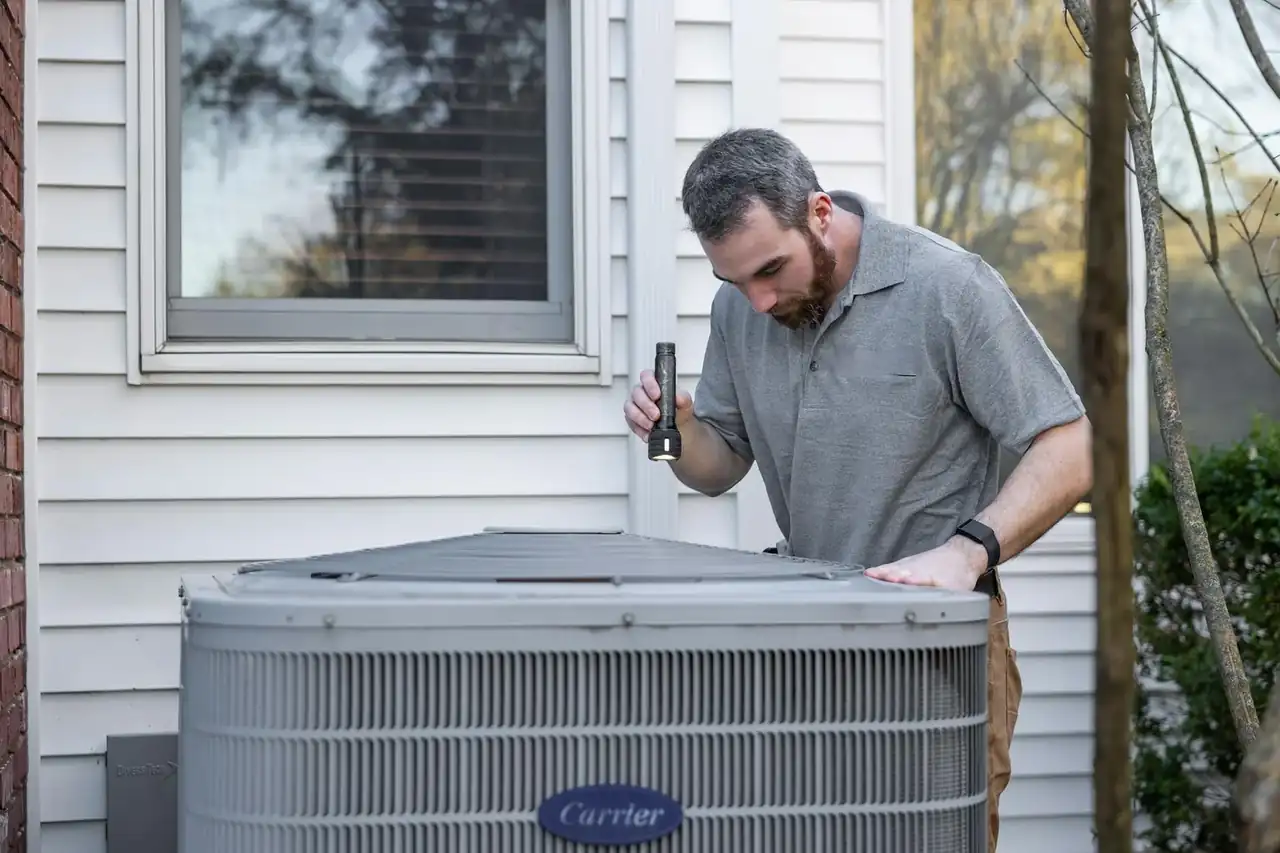
A Mitsubishi unit that turns on but does not lower the temperature is usually warning of something specific: lack of maintenance, a configuration problem, a refrigerant leak, or a fault in key components such as the sensor, the compressor, or the electronic board. In practice, the most misleading symptom is not that the appliance stops working, but that it keeps blowing air normally while the room remains just as warm, as if the system were running idle.
Most cases do not begin with a serious breakdown, but with a progressive loss of performance. The air comes out warmer, the unit takes too long to react, consumption rises, and the equipment seems to struggle without results. In Mitsubishi, as in other home air conditioning brands, the cause can be as simple as a clogged filter or as serious as a leak in the refrigeration circuit. What matters is reading the signs correctly so you do not keep forcing the machine unnecessarily.
If you have a problem with your air conditioner, you can use our free error code search tool. From there, you can find out and solve all errors easily and effectively.
When the cold disappears, the unit keeps talking
The first sign is usually a very specific sensation: the indoor unit blows air, but that air has no weight, does not cool the skin, and does not produce the thermal change expected after a few minutes of operation. On a very hot day, that detail becomes obvious quickly. The remote control shows a low temperature, the machine responds, but the room remains trapped in a kind of mechanical sluggishness.
Before thinking about an expensive breakdown, it is worth looking at the whole system and not just the panel. Air conditioning depends on a complete circuit: indoor unit, outdoor unit, sensors, ventilation, cleaning, and refrigerant. When one part fails, the rest tries to compensate. That is why a unit can sound normal, consume electricity, and still not deliver enough cooling. It is not a paradox; it is a partial fault disguised as proper operation.
The usage context also matters. A very sunny living room, a space with poorly insulated windows, an oversized or badly calculated installation, and an outdoor unit affected by dust or direct sun can turn a minor problem into a real inability to cool the room. In summer, the line between normal performance and failure becomes thin, and that is where many people confuse lack of power with a fault.
The most common faults in a Mitsubishi that does not cool
The most repeated cause is still accumulated dirt in filters and coils. When air does not circulate freely, heat exchange drops sharply. The appliance needs to move a large amount of air to cool efficiently, and any obstruction acts like a half-open door in the middle of a wind tunnel. The result is weak airflow, higher-than-normal temperatures, and a feeling of strain that should not occur in a properly functioning unit.
Next comes the lack of refrigerant. There is an important nuance here: gas is not used up like fuel; if it is missing, there is almost always a leak. This explains why the machine may have worked well for months or years and then suddenly lose capacity. Small leaks are tricky because they do not always leave obvious stains and are often detected only with specific tools, pressure measurements, or inspection by an experienced technician.
Another sensitive point is the outdoor unit. If the condenser does not dissipate heat properly, the whole system works at half capacity. Leaves, dust, very closed grilles, poorly placed awnings, or an installation with poor ventilation around it can suffocate performance. The outdoor part is not there for decoration: it is the system’s main heat exchanger, the place where heat leaves the home. If it cannot expel it, the cold will not reach the inside.
The temperature sensor, thermistor, and control electronics should also be checked. When one of these elements measures incorrectly or sends erroneous data, the unit makes the wrong decisions: it shuts off too early, cools intermittently, or interprets that it has already reached the setpoint when it has not. It is a less visible fault than a leak, but it can leave the appliance behaving erratically and very frustratingly.
Finally, the compressor deserves respect. It is the heart of the refrigeration cycle. If it does not start properly, loses performance, or suffers an electrical or mechanical fault, the unit may remain in an intermediate state: it seems alive, but it does not pump cold as it should. When the compressor fails, the problem is no longer one of comfort and becomes technical in the strict sense, because we are no longer talking about cleaning or configuration, but about a more complex repair.
What to check before calling the technician
The remote control is the first control point and also the most underestimated. It may seem obvious, but it is not. The mode must be set to cooling, the temperature has to be consistent with what you want, and the fan speed should not be set too low if you are trying to verify real response. An accidental setting on dehumidification, ventilation, or heating can make you think the machine is failing when it is actually obeying a poorly given command.
Then it is worth checking the condition of the indoor unit filters. If they are gray, full of dust, or with a visible layer of dirt, the unit is already losing airflow. Cleaning them not only improves the immediate sensation, it also helps protect the indoor heat exchanger and prevents the coil from turning into a blanket of dust. Regular cleaning can make the difference between an agile unit and one that works in fits and starts.
The area around the outdoor unit also deserves attention. It must breathe. If it is pressed against a wall, surrounded by objects, or enclosed in a recess where hot air is recirculated, the machine is punishing itself. In summer, poor outdoor placement can make the unit behave like a runner forced to finish a race with a backpack. It keeps moving forward, yes, but with the engine suffocated.
There is an additional detail that often goes unnoticed: the waiting time. Many units do not start the compressor instantly. A few minutes of delay may be normal. But if after that margin the air is still coming out lukewarm, the problem is no longer patience but performance. When the supply air temperature barely changes after a while of steady operation, the fault already deserves serious inspection.
When the lack of cooling points to a gas leak
The refrigerant leak leaves a very particular trace: the appliance starts to lose cooling capacity gradually or suddenly, electrical consumption may rise, and in some cases the pipe or coil develops ice or frost where it should not. The explanation is simple: if the circuit does not contain the proper amount of gas, pressure drops and heat exchange becomes disordered. Without correct pressure, there is no efficient cycle.
A common symptom is that air comes out, but it never really feels cold. Another clue is that the outdoor unit does not work with its usual firmness or that the equipment stops early for protection. In home installations, leaks are usually found in joints, welds, connections, or sections damaged by vibration, corrosion, or a faulty installation. In a sealed system, any loss indicates a real issue; it is not normal and should not be treated as routine maintenance.
Handling refrigerant requires training and proper tools. In addition, fluorinated gases are currently subject to specific regulations in the European Union, so refilling without diagnosis is not a responsible solution. If there is a leak, it must first be located, repaired, and then the correct charge restored. Any shortcut usually does not last long and ends up being expensive. In cooling, as in almost everything, order matters.
Filters, coils, and ventilation: maintenance that sustains performance
Preventive cleaning remains the most effective defense against loss of cooling. It is not glamorous, but it works. The indoor unit filters usually collect dust, pollen, lint, and airborne particles. When that layer thickens, airflow becomes poor, the unit works longer to achieve less effect, and the feeling of stuffiness persists even with the machine on. In homes with pets or in very urban areas, that dirt appears much sooner than it seems.
The outdoor unit also needs care. It is not enough for it to be plugged in and make background noise. The grille, the coil, and the outdoor fan must be kept clear. An accumulation of leaves or dust can raise operating temperature and trigger protection shutdowns. The appliance does not cool itself; it expels heat outward, and if that heat is trapped, the system becomes thermally blocked. It is a simple mechanism, but very sensitive to its environment.
In heavily used installations, annual maintenance can prevent breakdowns that seem sudden but are not. Dirt does not fall all at once; it deposits little by little, like a thin film that thickens silently. By the time the user notices, performance has already dropped several levels. That is why a clean unit not only cools better, it also protects the compressor, sensors, and electronics from unnecessary strain.
Installation problems that take their toll over time
Not all performance losses originate in the unit itself. Sometimes the cause lies in the installation. Incorrect sizing, a poorly ventilated location, or a placement that does not account for the real size of the room can create a system that never works comfortably. There are units that perform acceptably in spring and fall short in July because they were designed for a lower thermal load than the real one.
Air distribution in the room also matters. If the split’s airflow hits an obstacle, a wall, a tall piece of furniture, or a poorly resolved layout, the sensor may read misleading temperatures and stop cooling too early. Air conditioning depends as much on the air that enters as on the air that leaves. Poor circulation in the room can simulate a fault when, in reality, the unit is measuring a distorted environment.
The outdoor unit should also not be subjected to constant thermal punishment. Direct sun does not always break anything, but it can make heat dissipation more difficult if the rest of the conditions are already tight. On extremely hot days, a poorly placed unit can lose a significant part of its operating margin. What looks like a temperamental machine is often simply a machine placed where it should not be.
Signs that help distinguish a minor fault from a serious breakdown
Some symptoms point to pending cleaning and others reveal an urgent repair. If the air comes out weak, the unit takes a long time to respond, and dirt is visible, the problem may still be at an acceptable stage. If, on the other hand, the unit blows room-temperature air, the outdoor unit does not start properly, strange ice appears on the pipes, or consumption skyrockets, the situation already requires technical diagnosis. The unit’s behavior is usually more reliable than any intuition.
A smell of dampness or occasional dripping does not by itself explain the lack of cooling, but it can accompany a dirty system or one with drainage issues. The fault rarely travels alone: loss of performance may come with unusual noises, vibration, intermittent shutdowns, or error messages on the display. Taken together, those signs paint the full picture of the problem.
It is advisable not to keep insisting for hours on a unit that does not cool. Continuing to force it to operate, especially when there is suspicion of a leak or a stressed compressor, only adds heat to the wear. An air conditioning unit does not win by emotional endurance; it wins by balance. When that balance breaks, switching it off in time usually saves additional damage.
Why the right diagnosis changes the cost and the result
The difference between a cleaning, a recharge, and a component repair is enormous, both in price and in scope. That is why diagnosis matters more than haste. A serious technician does not just say that gas is missing or that the machine is dirty; they measure pressures, check consumption, inspect sensors, verify fans, and confirm whether the symptoms match the detected fault. That approach avoids unnecessary interventions and rushed decisions.
In current Mitsubishi units, electronics play a central role. That improves efficiency, but it also multiplies the possible failure variables. A sensor reading incorrectly can make the compressor seem faulty; a slowed outdoor fan can mimic a lack of gas; intense dirt can trigger protections that look like major breakdowns. Good diagnosis does not seek to confirm a suspicion, but to rule it out methodically.
From the user’s point of view, this translates into something simple: not every unit that does not cool needs the same solution. Sometimes it is enough to restore airflow and cleanliness; other times, the problem is inside the circuit and requires specialized repair. Knowing how to distinguish it saves time, money, and a long summer with the living room turned into a greenhouse.
A Mitsubishi that does not cool is not always broken, but it does need attention
Loss of cooling is a fault with many faces and an easy one to misread. It can come from clogged filters, a bad remote-control setting, a blocked outdoor unit, a refrigerant leak, a faulty thermistor, or a tired compressor. The key is not to look only at the symptom, but at the system’s overall behavior. An air conditioner rarely fails all at once; it fades away in layers.
That is why, before resigning yourself to the heat or forcing the unit for hours, it is worth checking the basics and observing the signs calmly. If the Mitsubishi air conditioner still does not cool after those elementary checks, the next step is no longer to insist, but to diagnose. In air conditioning, speed without precision usually comes at a high cost, and precision almost always begins by listening to how the machine is working, not by guessing.
Este artículo contiene enlaces de afiliado: si compras a través de ellos, se genera una pequeña comisión sin coste adicional para ti. Más información.


Balay hob error: causes and safe solutions

E18 error in Balay washing machine: drain causes and fix

Balay washing machine F4 error: how to restore drainage

Error in a 2013 Balay A++ refrigerator: causes and fixes

Balay induction hob error 22: how to fix it

E17 error in the Balay 3TS60107 washer: causes and fix

Balay washing machine E93 error: causes and safe solution
E9 error on a Balay induction hob: causes and solution
E9 error on a Balay induction hob: causes and solution

Balay E9 error on a freezer: causes and solution

 Balay6 days ago
E05-32 error on a Balay oven: causes and safe solution
- Washing machine6 days ago
Hotpoint washing machine F09 error: what it means and what to do
- Balay5 days ago
E09 error in Balay dishwasher: causes and safe solution
- Dishwasher5 days ago
E15 error on Balay dishwasher: do not tilt it
- Dishwasher5 days ago
E09 error in Balay dishwashers: causes and safe solution
- Balay5 days ago
Balay washing machine E12 error: causes and safe solution
- Dishwasher4 days ago
Balay dishwasher E15 error: warranty coverage and solution
- Dishwasher4 days ago
Balay dishwasher E16 error: causes and safe solution
- Balay6 days ago
E0 error on a Balay induction hob: causes and fixes
- Dishwasher5 days ago
E11 error in Balay dishwashers: causes and solutions
- Balay4 days ago
Balay washing machine E2 error: causes and safe solutions
- Balay5 days ago
E09 error in Balay dishwasher 3VS503IA: causes and fix