Magazine
Hermann MicraCom Condens 24 boiler manual
Useful guide to locate, interpret, and make the most of the MicraCom Condens 24 manual with practical, clear information.

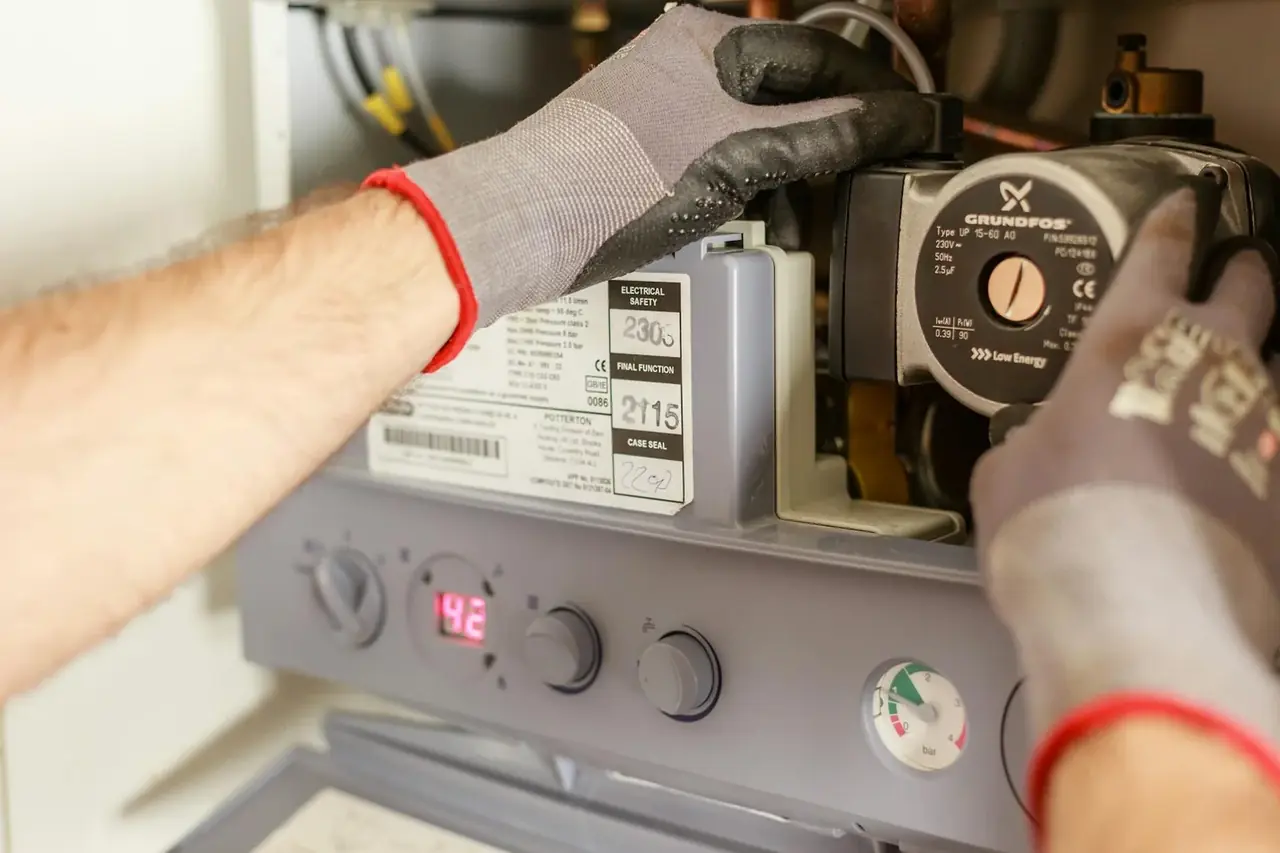
The Hermann MicraCom Condens 24 belongs to a generation of condensing boilers designed to work efficiently, but also with a very specific operating logic: control panel, status codes, service functions, and maintenance routines that should not be improvised. In the technical documentation for the 24-AS/1 model, the product reference appears as 0010026120 for the version intended for the Spanish market, and the unit shares a manual with the 28-AS/1 version in several sections, although the behavior differs in flow rate, domestic hot water limitation, and hydraulic curve.
If you have a problem with your boiler, you can use our free error code finder. From there you can find out and solve all errors easily and effectively.
The documentation that comes with this boiler and what it really solves
The manual for this boiler is not just a simple user leaflet. It brings together the installation and maintenance instructions, the operating document, and a technical appendix with diagnostic codes, statuses, errors, and test programs. That combination matters because this range cannot be fully understood without separating three levels: what the user sees, what the authorized technician adjusts, and what belongs to the periodic inspection. The 24-AS/1 model is designed as a heat generator for closed systems and for domestic hot water production, so reading the manual correctly avoids mistakes during commissioning, bleeding, and maintenance.
In practice, the most valuable thing about the manual is that it allows you to interpret precisely when the boiler is waiting for a heat demand, when the fan starts, when the burner ignites, and what the system does if it detects an anomaly. The manufacturer’s documentation also includes very specific data: the maximum volumetric flow rate of natural gas for the 24-AS/1 is 1.99 m³/h, the flow limiter for cold water is 10.0 l/min, and the permitted operating pressure reaches 10 bar. These figures help explain why this unit works well in ordinary homes, but also why it requires a carefully tuned installation.
The manual also makes it clear that not everything comes down to turning it on and off. There are references to the gas type, condensate drainage, connection of the air intake and flue gas duct, and internal electronics. That level of detail responds to a very practical reality: a modern condensing boiler performs well when it is supplied, vented, and regulated properly. If not, lockouts, failed ignitions, or alerts appear that the user cannot always identify at first glance.
How to identify the exact model and why the reference matters
One of the first key points in the manual is the precise identification of the appliance. The rating plate is factory-installed, and the serial number contains useful information about the production date and the product reference. In this case, the MicraCom Condens 24-AS/1 shares a family with the 28-AS/1, but they should not be treated as identical. The technical text distinguishes parameters specific to each version, from flow rate to certain pump operating curves.
The exact reference matters for a basic reason: factory settings, code tables, and certain maintenance sections depend on the model. The manufacturer also warns that some codes are not shown on all appliances because the table is shared among several products. That means you have to read carefully, especially when an error message appears or a light sequence that, without context, seems more confusing than it really is.
The original documentation also states the issue date of some manual versions, such as the revision of May 28, 2020 for the installation and maintenance section. That is not anecdotal: in gas appliances, the manual version and update date are a useful reference for technicians and users because the instructions, the inspection order, or the code catalog may vary between editions. Working with an outdated copy usually creates more questions than answers.
What the manual teaches about daily use and panel access
The MicraCom Condens 24 has a panel with access to user functions and an authorized professional level. In the reference document, access to diagnostic codes, status codes, and test programs is described, a very typical structure in current condensing boilers. The average user does not need to enter that area every day, but it is useful to know that the unit distinguishes between heat demand, fan start-up, burner ignition, and waiting phases.
That approach explains why the manual reserves specific sections for code consultation and for exiting the authorized level. The logic is simple: the user manages heating and domestic hot water temperatures; the technician, on the other hand, works on parameters, gas, pump, and diagnostics. Mixing both levels can throw the installation out of adjustment and generate strange behavior, such as temperature swings, too short cycles, or unnecessary starts.
It is also worth paying attention to the panel layout and test programs. The manufacturer includes a purging function for the domestic hot water circuit and the heating circuit, in addition to checks for setting the power to maximum during commissioning. These routines are designed to leave the unit stable from the outset, not to be experimented with without proper judgment. In boilers of this type, a poor start-up sequence can feel like a small thermal imbalance: noise, delay, lack of comfort, or hot water that is less consistent than expected.
Commissioning, filling, and bleeding without shortcuts
Commissioning takes up a large part of the manual because that is where the appliance’s real behavior is decided. Before putting it into service, the installer must check the heating water, the filling water, and the presence of compatible additives. The document mentions, for example, the use of products such as Sentinel X 400 to prepare the filling and additional water, always in accordance with the applicable national regulations. This is not a minor detail: the water in a closed system affects the durability of heat exchangers, pumps, and valves.
Then comes the filling and bleeding of the heating circuit and the domestic hot water system. The manual insists on opening valves, allowing water to circulate, bleeding, and checking pressures before considering the start-up valid. The permitted operating pressure ranges from 0.03 to 1 MPa, that is, from 0.30 to 10 bar, and the recommended supply pressure is 0.3 MPa, or 3.0 bar. In a condensing boiler, operating outside these limits not only affects comfort: it can trigger protections or reading faults.
The manual also details the checking of gas connection pressure and the verification of CO₂ content during commissioning. That check must be carried out by qualified personnel because it affects combustion, emissions, and the overall safety of the unit. The boiler is not designed for the end user to adjust a screw by eye or change parameters without understanding what they are doing; on the contrary, the document emphasizes that electrical installation and internal interventions require specialists. It is a healthy boundary between everyday use and technical handling.
The language of status and error codes
One of the greatest values of the manual is its map of status codes and error codes. The documentation does not aim to impress with jargon: it translates what the machine is doing. Thus, code S.00 indicates that heating has no heat demand and the burner is off. S.01 indicates the fan starting for heating mode. From there on, the unit’s sequence stops being a mystery and becomes a useful reading for diagnostics.
In the fault table, there are common cases in gas and condensing boilers. F.22 is linked to a system pressure that is too low or to a wiring problem with the water pressure sensor. F.23 points to a blocked pump. F.28 is related to failed ignition and a possible blockage of the reference pressure tube choke coil insert. And F.61 or F.62 refer to faults in the electronic board or the gas valve assembly. They are different messages, with different causes and different responses.
The manual also includes alerts that require more attention, such as F.76, associated with a defective thermal fuse and the inspection of the heat exchanger in case of leaks. In those cases, the repair is not solved with a quick reset. The boiler’s logic is protective: if it detects an abnormal condition, it locks out or delays shutdown. That internal caution is an advantage because it prevents greater damage, but it also requires diagnosis to be followed methodically and not by intuition.
Periodic maintenance and parts worth monitoring
Maintenance is the quiet heart of the MicraCom Condens 24. The manual lists inspections of CO₂ content, the pre-charge pressure of the expansion vessel, cleaning of the heating filter, the condition of the condensate trap, and inspection of the burner and insulation mat. These are operations that, from the outside, seem minor; from the inside, they sustain the stability of the appliance for years. A clean, properly adjusted boiler needs less effort to do the same work.
The condensate trap deserves special mention. In condensing appliances, condensate is not a secondary waste product: it is part of normal operation. That is why the manual insists on cleaning it, refilling it, and correctly reassembling the drain line. If that trap becomes blocked, the boiler can behave like a miniature clogged pipe: noise, buildup, preventive shutdown, and performance far below expectations. The same happens with the heating filter, which the document recommends cleaning when necessary.
The inspection also covers the compact thermal block, ignition electrode, and hydraulic block. The technical text is clear in stating that, in some cases, the expansion vessel must be set to maintenance position to access certain areas. This is not a mechanical metaphor, but a real workshop task. The manufacturer organizes maintenance like a precise choreography: remove, check, clean, adjust, assemble, and verify again. Skipping steps is the fastest way to end up back at the starting point.
Gas conversion, pump power, and settings that should not be improvised
The manual includes an installation adaptation section where gas conversion, burner lockout time, pump power, and the pump characteristic curve appear. These are parameters that define the boiler’s personality once installed. In the 24-AS/1, the manufacturer offers operating tables that change according to lockout time and heating demand, because not all circuits or homes have the same hydraulic response.
It also mentions the possibility of installing an optional solar kit with a temperature sensor. That shows that the boiler is conceived as part of a broader system and not as an isolated box. The main electronics, the control panel, the external eBUS, and the sensors work like a small network. In that context, changing one variable without reviewing the others can cause cascading imbalances: more frequent starts, a pump that does not work as it should, or less stable domestic hot water production.
Gas conversion and CO₂ adjustment are among the most delicate tasks. The manual reserves those actions for inspection and adaptation by qualified personnel. This is not a bureaucratic formality. Poorly regulated combustion is noticeable in comfort, consumption, and safety. That is why the document insists on checking tightness, adjusting the overpressure valve, and validating heating mode and domestic hot water production after each significant intervention.
Real capacity, flow rates, and limits that help interpret performance
The technical sheet, split between the installation manual and the appendix, provides useful numbers for anyone who needs to assess the boiler with criteria. The 10.0 l/min flow limiter explains part of the domestic hot water behavior. The operating capacity and recommended pressure indicate that the system tolerates a conventional domestic installation as long as the circuit is clean and correctly balanced. In addition, the reference to a maximum natural gas flow rate of 1.99 m³/h helps put consumption and burner demand under full load into context.
The comparison with the 28-AS/1 version is also useful to avoid overestimating or underestimating expectations. The family shares architecture, but not identical hydraulic response. In an ordinary home, the 24-AS/1 is designed to provide heat and hot water with a restrained logic, without increasing the size of the unit or gas demand beyond what is necessary. That moderation is a virtue when the system is properly sized and bad news when the installation asks for more than it can deliver.
In daily use, the most important thing is not to memorize figures, but to understand their consequences. A unit that works within its ranges sounds more stable, starts with fewer surprises, and maintains temperature with fewer swings. In a condensing boiler, the technical data is not decoration: it is the translation of how the machine breathes. And that breath, when properly cared for, is noticeable in the bill, in comfort, and in the lifespan of the components.
The practical usefulness of a manual that prevents unnecessary breakdowns
The manual for the Hermann MicraCom Condens 24 serves a function that goes beyond explaining buttons. It organizes the appliance’s behavior, separates what is safe from what is delicate, and spells out what each party should do: user, installer, and technical service. That clarity reduces breakdowns caused by improper use, insufficient pressure, poor bleeding, or lack of maintenance. In a condensing boiler, many faults begin as small oversights and end in lockouts that the panel turns into incomprehensible codes.
The combination of operating instructions, diagnostic codes, technical data, and inspection procedures turns this document into a real working tool. It does not replace professional intervention when needed, but it does prevent a simple alarm from becoming a bigger problem due to ignorance. The boiler alerts, the manual translates, and the technician decides. That chain, when followed properly, is the difference between a unit that remains stable for years and one that lives on resets and patches.
That is why the value of the manual lies not only in finding it, but in reading it with the seriousness that a gas appliance deserves. The MicraCom Condens 24 was designed to offer efficiency, control, and clean response in heating and domestic hot water. Its technical documentation makes it clear that this goal depends on something very simple and very demanding at the same time: install well, adjust well, and check on time.
Este artículo contiene enlaces de afiliado: si compras a través de ellos, se genera una pequeña comisión sin coste adicional para ti. Más información.


Balay hob error: causes and safe solutions

E18 error in Balay washing machine: drain causes and fix

Balay washing machine F4 error: how to restore drainage

Error in a 2013 Balay A++ refrigerator: causes and fixes

Balay induction hob error 22: how to fix it

E17 error in the Balay 3TS60107 washer: causes and fix

Balay washing machine E93 error: causes and safe solution
E9 error on a Balay induction hob: causes and solution
E9 error on a Balay induction hob: causes and solution

Balay E9 error on a freezer: causes and solution

 Balay6 days ago
E05-32 error on a Balay oven: causes and safe solution
- Washing machine6 days ago
Hotpoint washing machine F09 error: what it means and what to do
- Balay6 days ago
E09 error in Balay dishwasher: causes and safe solution
- Dishwasher5 days ago
E15 error on Balay dishwasher: do not tilt it
- Dishwasher6 days ago
E09 error in Balay dishwashers: causes and safe solution
- Balay5 days ago
Balay washing machine E12 error: causes and safe solution
- Dishwasher5 days ago
Balay dishwasher E15 error: warranty coverage and solution
- Balay6 days ago
E09 error in Balay dishwasher 3VS503IA: causes and fix
- Dishwasher5 days ago
Balay dishwasher E16 error: causes and safe solution
- Balay6 days ago
E0 error on a Balay induction hob: causes and fixes
- Dishwasher5 days ago
E11 error in Balay dishwashers: causes and solutions
- Balay4 days ago
Balay washing machine E2 error: causes and safe solutions