Magazine
Boiler operator in the Andalusian Regional Government: requirements and exam
Requirements, exam and official pathways to work with industrial boilers in Andalusia, with clear and up-to-date information.

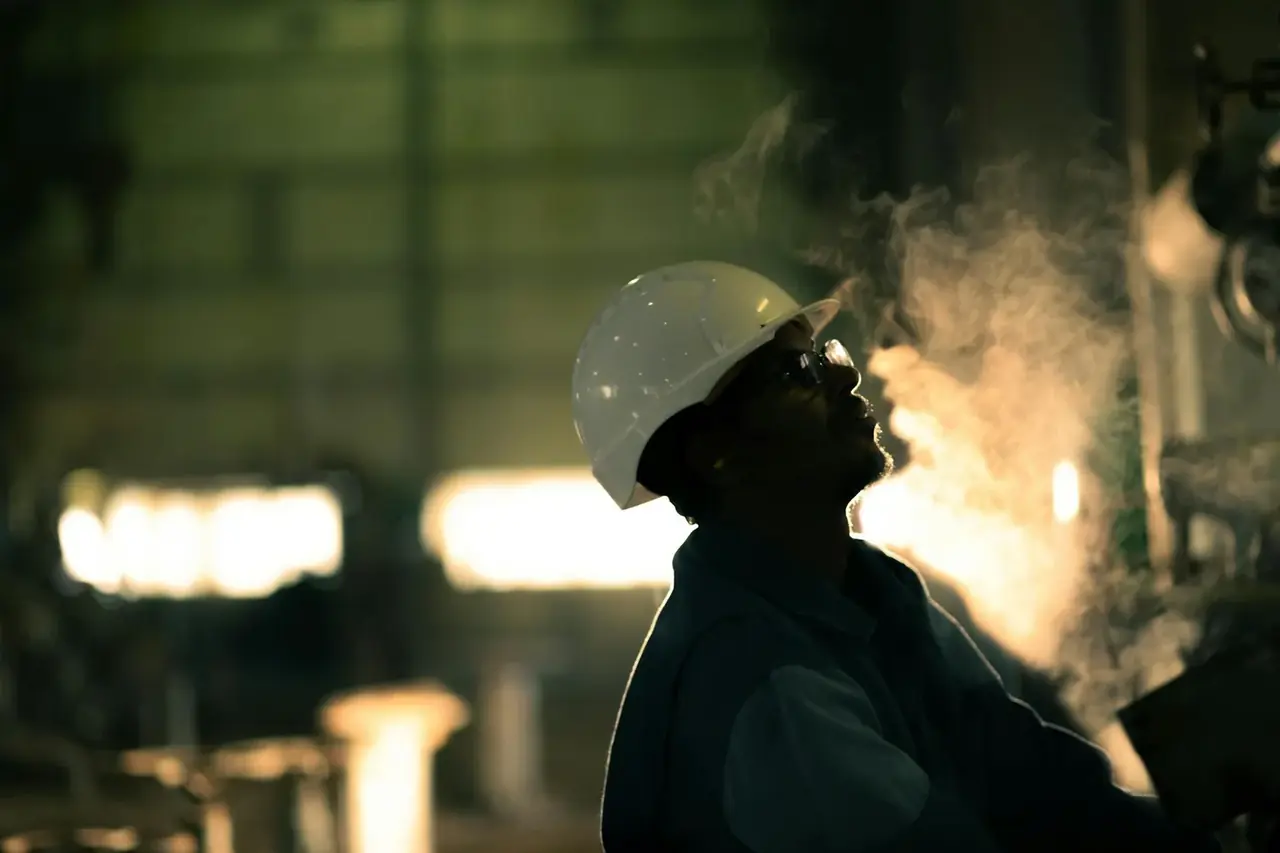
In the Andalusian industrial sector, boiler control leaves no room for improvisation: pressure, temperature, fuel, and safety must fit together precisely to sustain continuous processes in factories, hospitals, laundries, food plants, and other thermal installations. The Regional Government of Andalusia regulates this activity through the qualification of personnel who operate second-class industrial boilers, a technical role that requires accredited training, experience, or an official exam, depending on the case.
Access to this qualification is not limited to a single route. The regulations allow entry through a related university degree, vocational training or a professional certificate, recognized work experience, a qualification obtained in another European Union country, certification issued by an accredited entity, or a valid previous license. The key is to demonstrate real competence to operate equipment that works with steam or superheated water and that, by its very nature, requires constant monitoring.
If you have a problem with your boiler, you can use our free error code finder. From there you can find out and solve all errors easily and effectively.
The qualification required by the administration to operate boilers
The reference used by the Department of Industry, Energy and Mines is that of industrial boiler operator personnel. Its role is linked to the second-class boilers covered by Complementary Technical Instruction EP-01, within the framework of the Pressure Equipment Regulation. This is not an empty bureaucratic label: behind it lies concrete responsibility for equipment that can store energy intensely and therefore requires vigilant and methodical operation.
The Andalusian administration makes it clear that, in order to practice, the worker must be able to prove any of the situations provided for when required during inspection, verification, or control tasks. That proof is not decorative. It serves to demonstrate that the person knows how to act with sound judgment during startups, shutdowns, blowdowns, load changes, and minor incidents that, in an industrial setting, can escalate quickly if poorly managed.
The qualification, moreover, has nationwide validity. Law 17/2009 recognizes that an operator qualified by a regional government can carry out this activity throughout Spain, without other administrations requiring additional conditions merely for changing province or region. For labor mobility, that detail matters a great deal: it turns a regional license into a credential useful far beyond the Andalusian map.
The official ways to prove competence
The Regional Government of Andalusia sets out several entry routes. The first is academic: holding a university degree whose curriculum, professional powers, or competency scope covers the subjects linked to the technical instruction. The second also relies on regulated education, through a vocational training qualification or a professional certificate included in the national catalog and related to those subjects. Both routes rest on a prior technical foundation and are often especially valuable for those already working in maintenance, energy, or industrial production.
The third route is probably the best known among those seeking to regularize their professional profile: passing an exam before the regional government on the minimum contents of Annex II. This exam is not designed to filter at random, but to verify that the candidate understands the operating logic of the boiler, its safety devices, fuels, combustion, feedwater, and the risks that arise when something moves out of range. The official assessment, in this respect, acts as a technical snapshot of actual knowledge.
It is also possible to prove professional competence acquired through work experience, in accordance with Royal Decree 1224/2009, or to demonstrate a qualification recognized in another EU Member State in accordance with Royal Decree 581/2017. Added to this is certification issued by entities accredited by ENAC or by another national accreditation body designated under Regulation 765/2008, always in accordance with UNE-EN ISO/IEC 17024. The rule is not based only on the certificate; it is based on verifiable ability to work safely.
Lastly, licenses issued previously and aligned with the former 1979 Pressure Equipment Regulation or with ITC EP 1 approved by Royal Decree 2060/2008 remain valid. This transitional recognition prevents established professional careers from being left in limbo because of a regulatory change. In practice, the administration seeks to organize access without erasing the past of those who had already been practicing.
What the exam requires and why it does not ask for specific prior requirements
The call for industrial boiler operator tests has an important peculiarity: to sit the exam, no additional specific requirement is demanded. In other words, the person may register without first proving a specific qualification to access the test. That is a different matter from later passing the exam and becoming qualified, which then depends on performance in the assessment and the corresponding documentation in the subsequent procedure.
That exam is based on minimum contents published by the Regional Government, which the candidate must master with practical judgment, not by memorization. The syllabus focuses on understanding the equipment and its risks: the role of water, steam generation, safety valves, measuring instruments, combustion control, water treatment, blowdown, prevention of scaling, and response to anomalies. Safety is the guiding thread, because a poorly monitored boiler not only loses efficiency; it can compromise the integrity of the installation and the people in it.
This approach explains why the official tests are not reduced to an administrative formality. The goal is for the operator to know the equipment as someone knows the sound of a well-tuned engine and the smell of a circuit working out of range. In an industrial plant, distinguishing normal behavior from a dangerous drift can prevent costly breakdowns, production stoppages, or more serious incidents.
The Regional Government also refers to annual call documentation, where the tests for obtaining licenses and professional certificates are detailed. In 2024, public information continues to be organized around those processes, with lists of successful candidates by province and access to the procedure for participating in the tests. The administrative path exists and is mapped out, but it is worth reading carefully so as not to confuse an informational publication with actual enrollment in a specific call.
What lies behind the official syllabus
The training and the exam revolve around a very specific technical foundation. An industrial boiler is not just a vessel that heats water; it is a system where pressure, heat transfer, combustion, feedwater, burners, valves, blowdowns, and controls interact. When any of those elements fails, the problem rarely remains isolated. It often drags the others with it, like parts of a mechanism that gradually falls out of adjustment.
That is why the content of Annex II emphasizes subjects that may seem basic but are decisive in daily practice: physical principles, general equipment operation, types of boilers, fuels, efficiency, water treatment, preventive maintenance, and safety measures. The culture of the serious operator is preventive. They do not wait for an alarm to start checking indicators; they interpret them beforehand, while they are still warning in a low voice.
There is also a part closely related to plant routine. The operator must record data, observe trends, detect efficiency losses, and report incidents accurately. This documentation discipline is not an office whim. In environments where operational continuity matters, records make it possible to reconstruct what happened, compare readings, and justify technical decisions to maintenance or inspection managers.
In steam installations, the margin between clean operation and problematic operation often depends on small details: a poorly executed blowdown, an irregular water level, inefficient combustion, or insufficient water treatment. The craft is sustained by sustained attention, almost like the work of a watchmaker who cannot afford a sudden movement because the entire system depends on the accuracy of each piece.
Where this professional profile fits in the Andalusian economy
The role of the boiler operator is present in very different sectors, from the food industry to chemical, pharmaceutical, textile, or energy services in large buildings. Andalusia, with its diversified agri-food, logistics, and industrial fabric, needs profiles capable of keeping thermal equipment stable during intense production shifts and under variable thermal demands.
In a cannery, an industrial laundry, or a food processing plant, a boiler is not an accessory element. It is infrastructure that powers cooking, sterilization, washing, drying, or climate control processes. Thermal continuity sustains the production chain, and that is why the operator occupies a discreet but strategic position. Their work rarely appears in the photo, even though many photos depend on them having done their shift well.
This practical importance explains why companies value the combination of training, experience, and preventive judgment so highly. A good operator does not merely watch gauges. They understand the dynamics of the whole system, know how to detect early symptoms, and know when a variation is due to a temporary load or to a problem that requires technical intervention. In business terms, that translates into fewer stoppages, less unnecessary consumption, and lower operational risk.
The energy transition also plays a role. Although every plant has its particularities, the pressure to improve efficiency and reduce emissions forces equipment reviews, combustion adjustments, and better consumption control. The industrial boiler remains a thermal heart, but one that today is subject to more exacting demands than years ago. Whoever operates it needs to know as much about safety as about performance.
The validity of old licenses and the value of professional recognition
Andalusian regulations do not leave out those who were already working before the regulatory changes. Licenses issued under the former Pressure Equipment Regulation or the previous ITC EP 1 remain valid if they meet the required conditions and were issued before the new regulation took effect. This bridge between regulatory stages is important because it protects established careers and prevents accumulated experience from suddenly losing its recognition.
At the same time, the system also makes room for demonstrable work experience and recognition of competences acquired through non-academic routes. The administration rewards proven competence, not only academic schooling. This combination of pathways responds to a very industrial reality: in many workshops and plants there are professionals who have learned for years at the machine side, with a level of competence that an objective test must be able to recognize.
Recognition of qualifications obtained in other European Union countries broadens the framework even further. This is no small matter in an increasingly mobile labor market. An installation in Andalusia can incorporate talent trained outside Spain as long as the qualification is recognized under current legislation. In such a technical sector, equivalency does not lower the bar; it makes it comparable.
All of this leads to a central idea: the license or qualification is not just a paper to file away. It functions as a credential of trust between administration, company, and worker. It indicates that there is a minimum level of technical competence behind each shift, each startup, and each shutdown.
How to interpret the call and the lists of successful candidates
The Regional Government’s public information usually includes calls, lists of successful candidates, and access to the procedure for taking part in the tests to obtain professional certificates or licenses. In practice, this allows the administrative trail of the process to be followed, from preparation to the publication of results. Province-by-province lists are useful not only statistically but also organizationally, because they show how demand and pass rates are distributed in each edition.
It is worth paying attention to two things. The first is the date of each call, because informational content can become outdated if consulted outside the campaign period. The second is the difference between being informed and being enrolled. A call notice is not the same as the formal procedure. The candidate must distinguish between guidance documents, reference syllabus, and actual access to participation.
The evolution of the calls also shows a continuing professional interest in this qualification. Year after year, demand for information remains because the license still opens doors in industry, maintenance, and energy. It is not a flashy certification, but it is one of those credentials that carry a lot of weight when a company needs to fill a technical position with guarantees.
The result is a very specific profile: a professional who knows how to operate, monitor, and respond to a critical thermal installation, with a foundation that may come from several routes but must always translate into practical competence. The industry does not need hands alone; it needs judgment, method, and reaction capacity.
A technical trade that still makes the difference on the plant floor
The role of the boiler operator has not lost relevance; on the contrary, it has become more demanding. Today’s installations require more control, more traceability, and greater rigor in safety. The Regional Government of Andalusia, by organizing its qualification, brings order to a trade that lives between physical pressure and human responsibility. That combination explains why access is clearly defined and why the exam is not taken lightly.
In a context where many professions are becoming blurred, this profile keeps a very clear identity. Operating an industrial boiler remains a task of precision, observation, and discipline. There are few shortcuts: either you master the equipment, or the equipment notices. And when a thermal installation depends on that mastery, the difference between a good shift and a mediocre one shows up in consumption, safety, and production continuity.
That is why the Andalusian qualification retains real value. It sums up a simple yet demanding idea: anyone listed as an operator is prepared to assume a technical responsibility that leaves no room for carelessness. That is, in the end, why this license continues to carry weight in industry and why it keeps appearing in searches by those who want to give legal and professional shape to a job as quiet as it is decisive.
Este artículo contiene enlaces de afiliado: si compras a través de ellos, se genera una pequeña comisión sin coste adicional para ti. Más información.


Balay hob error: causes and safe solutions

E18 error in Balay washing machine: drain causes and fix

Balay washing machine F4 error: how to restore drainage

Error in a 2013 Balay A++ refrigerator: causes and fixes

Balay induction hob error 22: how to fix it

E17 error in the Balay 3TS60107 washer: causes and fix

Balay washing machine E93 error: causes and safe solution
E9 error on a Balay induction hob: causes and solution
E9 error on a Balay induction hob: causes and solution

Balay E9 error on a freezer: causes and solution

 Balay6 days ago
E05-32 error on a Balay oven: causes and safe solution
- Washing machine6 days ago
Hotpoint washing machine F09 error: what it means and what to do
- Balay6 days ago
E09 error in Balay dishwasher: causes and safe solution
- Dishwasher5 days ago
E15 error on Balay dishwasher: do not tilt it
- Dishwasher6 days ago
E09 error in Balay dishwashers: causes and safe solution
- Balay5 days ago
Balay washing machine E12 error: causes and safe solution
- Dishwasher5 days ago
Balay dishwasher E15 error: warranty coverage and solution
- Balay4 days ago
Balay washing machine E2 error: causes and safe solutions
- Balay6 days ago
E09 error in Balay dishwasher 3VS503IA: causes and fix
- Dishwasher5 days ago
Balay dishwasher E16 error: causes and safe solution
- Balay6 days ago
E0 error on a Balay induction hob: causes and fixes
- Dishwasher5 days ago
E11 error in Balay dishwashers: causes and solutions