Washing machine
Washing Machines with Automatic Detergent Dosing: A Complete Guide
How it works, actual savings, maintenance, and key factors for choosing a model that suits the way you do laundry.

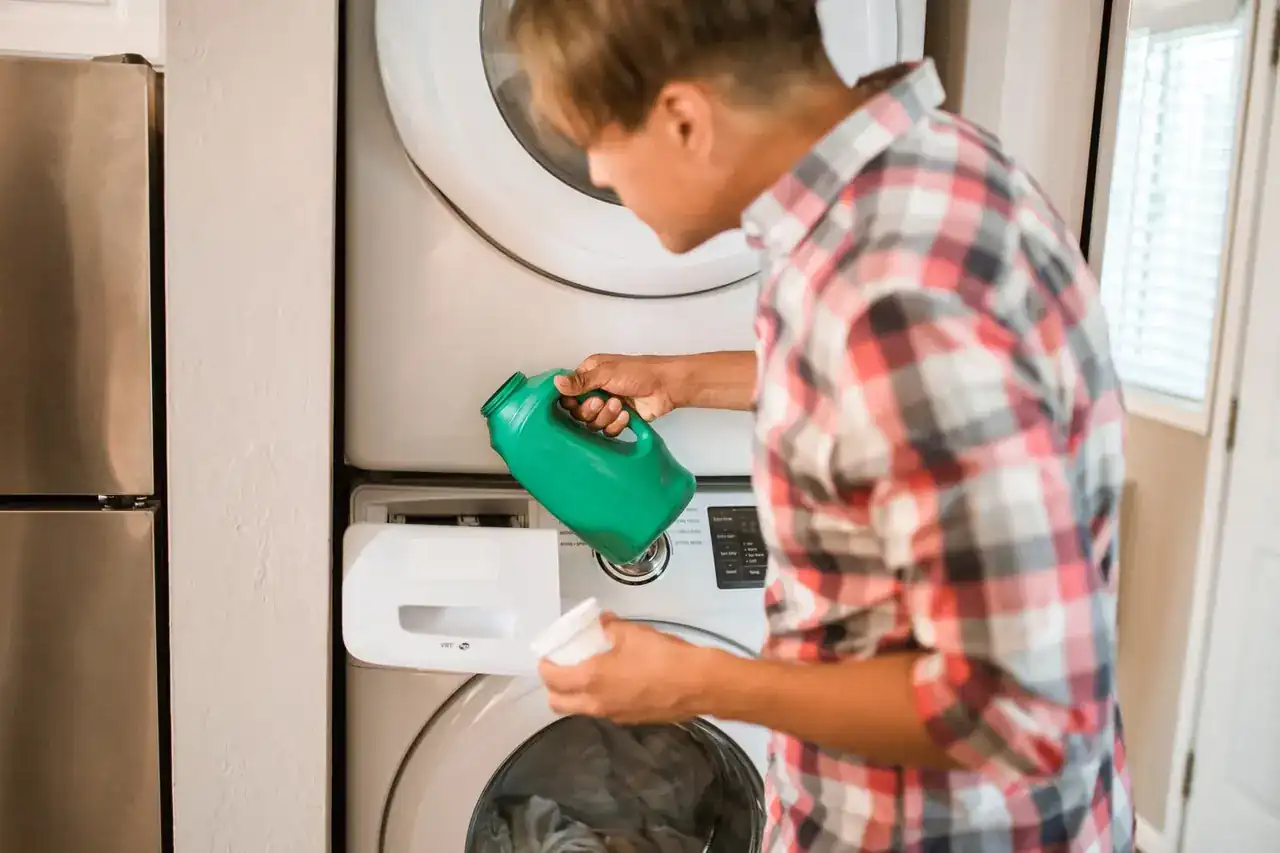
A washing machine that automatically dispenses detergent and fabric softener can simplify a repetitive task and reduce one of the most common laundry mistakes: using too much product. The machine stores the liquids in separate compartments and adjusts each dose according to the load, the program, and the manufacturer’s settings. The main advantage is not washing with more soap, but using a more controlled amount in each cycle.
This technology is particularly interesting for households that do several loads of laundry a week, although it does not automatically make every model a smart purchase. The initial price is usually higher, the system requires periodic cleaning, and not all detergents behave the same way in a compartment over several weeks. The decision depends on how often it is used, the budget, the possibility of using different products, and how important it is for each family to avoid dealing with the detergent drawer. Automatic dispensing provides convenience and precision, but it should be assessed alongside energy efficiency, capacity, and maintenance.
If you have a problem with your washing machine, you can use our free error code search tool. From there, you can find out about and solve all errors easily and effectively.
What it means for a washing machine to dispense detergent
A washing machine with automatic dosing has one or more internal compartments where liquid detergent and, usually, fabric softener are added. Instead of adding a measure before each wash, the user fills the compartment and the appliance extracts only part of it during the cycle. The amount may vary from one load to another, meaning the same dose is not applied to two T-shirts and to a drum full of towels.
The system should not be confused with a conventional detergent drawer that simply lets detergent through when water enters. In a traditional compartment, the person measures the amount and adds it manually. In an automatic model, a pump or dispensing mechanism administers the liquid from a reserve compartment. The essential difference is who decides the amount and when it is added to the wash: the user in the first case and the machine’s program in the second.
Most of these appliances also retain a compartment for manual use. This is important because it allows you to use powder detergent, products specifically designed for dark garments, formulas for delicate clothing, or treatments that should not be left in storage. Depending on the brand, there may be one compartment for detergent, another for fabric softener, or two compartments for different liquids. The presence of a manual option prevents automation from limiting all types of laundry.
How it calculates the right amount for each cycle
The calculation combines data obtained by the washing machine through sensors with settings previously defined by the user or the manufacturer. The load sensor estimates the weight of the garments, while the selected program provides information about the type of fabric and the temperature. Some models also allow you to indicate the level of soiling, while others analyze the water at the beginning of the cycle to estimate the amount of particles it contains.
Water hardness has an effect because calcium and magnesium reduce the detergent’s cleaning ability. In hard-water areas, a higher dose may be necessary than in soft-water regions. Certain models allow this to be configured manually; others estimate it based on the location entered in an app or from a measurement taken during installation. Water hardness is a real factor in consumption, although not all systems calculate it in the same way.
Detergent concentration also matters. A concentrated liquid may require less than a conventional formula, which is why some washing machines ask you to select the type of product or enter its characteristics. Connected versions may include detergent databases, but this function does not guarantee that every container will be recognized. The result depends on the appliance’s calibration, the product used, and whether the compartments are correctly identified.
Foam level is not a direct indicator of cleanliness. In fact, excess foam can make rinsing more difficult, leave residue, and cause the program to require more water or time. Automatic dispensing aims for a useful concentration to remove dirt, not a drum covered in foam. More detergent does not mean cleaner clothes and, in some cases, can produce the opposite effect.
Real benefits for consumption and clothing care
The first improvement is noticeable in the daily routine. You simply refill the compartments after a certain number of washes and select your usual program. Capacity varies depending on the model and dose size, but many manufacturers place the approximate autonomy between 20 and 30 cycles. A household that runs five washing machines a week might take around a month to refill the compartment, although large loads can shorten that period.
Controlled dispensing also limits waste caused by estimating amounts by eye. A consumer may add more liquid than necessary out of fear that stains will not disappear, especially when using the product cap as a reference. A properly configured machine reduces this variation and prevents detergent from accumulating in fabrics, seals, and pipes. The most tangible savings usually come from the laundry product and the time spent preparing each load.
Excess soap leaves a rough feeling, can dull colors, and encourages residue on thick garments. In sportswear, towels, and synthetic fabrics, this residue can retain odors. A moderate dose makes rinsing easier and treats fibers better, although the result will also depend on the temperature, program, load, and subsequent ventilation. Automatic dosing does not replace sorting garments or choosing the right cycle.
Savings in water and electricity require an important qualification. An automatic washing machine can adjust the water or duration according to the load if it has suitable sensors and programs, but automatic dosing alone does not guarantee a fixed reduction in energy consumption. The European label is based on the Eco program and should be compared between models with the same capacity. An A-rated washing machine is not more or less efficient because it has an automatic compartment; the energy rating should be consulted separately.
The savings figures of 30%, 38%, or 40% that appear in some commercial materials are not universal. They usually come from comparisons with manual dosing that exceeds the recommended amount, not from a promise valid for every household. The final savings will depend on the price of the detergent, the number of cycles, water hardness, load weights, and the amount previously used. The advertised percentage should be understood as a test result, not as guaranteed savings on the bill.
Drawbacks to know before buying
The higher price is the first barrier. In Spain, models with automatic dosing can be found for approximately €450 during promotions and in entry-level ranges, while an equivalent conventional washing machine may start at around €300. The mid-range usually falls between €550 and €900, while premium options from brands such as Miele can exceed €2,000. These are indicative prices: the cost changes according to capacity, spin speed, connectivity, and offers.
For the investment to pay off, the washing machine must be used with a certain frequency and the compartment must genuinely be taken advantage of. In a home where only one or two loads are done per week, the time saved will be limited and the detergent consumption may not justify the price difference. By contrast, a family with children, pets, or work clothes may place greater value on the convenience of not measuring product for each cycle. Value for money depends on habits, not just on the technology included.
Maintenance is another aspect that is not very visible in advertising. Liquid detergent can thicken or form residue if it remains in a pipe for a long time, especially with low temperatures, humidity, and a lack of cleaning. Fabric softener can also leave a sticky film. For this reason, it is advisable to follow the manual, empty the compartments when the appliance will remain unused, and run the cleaning program specified by the brand.
A failure in the pump, sensor, or distribution circuit may be more complex than a problem in a conventional detergent drawer. This does not mean that the system is fragile, but it does add components and therefore possible points requiring attention. Cleaning the drawer, seal, and filter is still necessary. Automation reduces a daily task, but it does not eliminate the need for periodic washing machine care.
Using only one regular detergent can be a limitation. If products for white clothes, colors, black garments, babies, or sensitive skin are alternated, the compartment may not be suitable for every load. The usual solution is to deactivate the automatic function and use the manual compartment. Appliances with two liquid compartments offer greater flexibility, but they are usually more expensive and do not make the system universal.
Which detergents it accepts and how to avoid mistakes
Automatic compartments are primarily designed for liquid detergents compatible with the system and for conventional fabric softener. Powder detergent, pods, and some very dense products should go in the manual compartment, never in a compartment designed for pumping. Adding a concentrated liquid without adjusting its settings can cause overdosing, while diluting it without the manufacturer’s authorization may affect operation.
The product label should be checked before filling the compartment. It is also advisable not to mix different detergents in the same compartment, even if they appear similar. A mixture can change the viscosity, separate, or create sediment. If you want to change formulas, it is best to empty the compartment, clean it according to the instructions, and complete the change without leaving traces of the previous product.
Fabric softener deserves special attention because it tends to leave residue when stored for a long time. It should not exceed the fill line, and it is not advisable to use it on technical garments, towels that need maximum absorbency, or fabrics whose label advises against the product. The washing machine can dispense precisely, but it cannot correct an incorrect choice of detergent or fabric softener.
Very stained clothing should not be dealt with by automatically increasing the amount of liquid either. It is preferable to treat the stain before washing, choose an appropriate program, and respect the temperature allowed by the fabric-care label. Loading the drum beyond its capacity prevents the garments from moving and reduces detergent effectiveness, even if the calculated dose is correct.
How to compare models without being swayed by features
Capacity should correspond to how frequently laundry is done. An 8- or 9-kilogram drum is usually sufficient for many households, while 10 or 11 kilograms may be useful when washing duvets, towels, or large volumes of clothing. Buying more capacity than necessary does not always save money: if many small loads are done, part of the benefit disappears. The most efficient choice is the one that allows you to fill the drum regularly without disrupting the household routine.
The European energy label allows you to compare weighted electricity consumption, capacity, Eco program duration, water consumption, and spin-cycle noise. The current scale runs from A to G. A difference of several kilowatt-hours per 100 cycles can be significant in the long term, but it should be considered alongside program duration and the household’s actual usage. Spin speed, usually between 1,200 and 1,600 revolutions per minute, affects how much moisture remains in the clothes, but not necessarily the overall washing quality.
Noise, leak protection, the ability to add garments, and drum cleaning have a greater daily impact for many users than mobile connectivity. App control can warn you when the compartment is running low, show the remaining time, or send notifications, but it is not essential for dispensing to work. Connected features should be considered an addition, not a substitute for the appliance’s basic specifications.
Brands available in Spain include Bosch and Siemens with i-DOS systems, Balay, Samsung with Auto Dispense, AEG with AutoDose, Miele with TwinDos, as well as offerings from LG, Whirlpool, Teka, Hisense, and other manufacturers. Commercial names should not be compared as if they were identical: each manufacturer may use different compartments, sensors, algorithms, and warranty conditions. The manual for the specific model provides more information than the name of the feature.
It is also worth checking the cost of the recommended detergent, whether replacement drawer parts are available, what coverage the warranty provides, and how technical service is provided in your area. A €600 machine with simple maintenance may be more practical than a €900 one with features that are never used. Installation should leave the appliance level, with the hoses correctly connected and enough space to open the drawer and clean its parts.
The energy label and long-term savings
The cost of a washing machine is not limited to its purchase price. To estimate it, you need to consider the electricity consumed per 100 cycles in the Eco program, the water used, the price of the detergent, and frequency of use. If a family runs 250 washes per year, a difference of 10 kilowatt-hours per 100 cycles equals 25 kilowatt-hours per year. The financial savings will depend on the electricity contract and tariff, so there is no single figure applicable to all households.
Automatic dosing can provide indirect savings when it prevents additional rinses caused by excess foam or reduces detergent consumption. However, it is not advisable to attribute all of the appliance’s performance to this feature. Efficient motors, the Eco program, full loads, and the use of moderate temperatures generally have a greater impact on the electricity bill. Most of a washing machine’s consumption is related to heating the water, not moving the detergent from the compartment.
The Eco program may seem slow, lasting more than three hours on some machines, but it is designed to clean using less water and energy. A longer duration does not necessarily mean a higher cost. Quick programs, on the other hand, are usually intended for small loads and lightly soiled clothes. Using them with a full drum or difficult stains may require washing again, canceling out the supposed savings.
From an environmental perspective, reducing detergent waste helps decrease packaging consumption and the amount of substances discharged, although the real impact depends on the formula, packaging, and number of washes. Choosing a repairable appliance, keeping it clean, and extending its useful life are also important. A durable, properly used washing machine is usually a stronger environmental choice than replacing an appliance for the sake of a single feature.
Is a washing machine with automatic dosing worth it?
The answer is favorable when many loads are done, a compatible liquid detergent is always used, and convenience is especially valued. The compartment eliminates the need to measure each time, maintains a more consistent dose, and may reduce product consumption compared with generous manual dosing. The feature is also practical for people who prefer to automate repetitive tasks or who need their laundry to be ready without monitoring every stage.
The purchase is less clear when the budget is limited, pods or powder are used, many detergents are alternated, or only a few loads are done. In these cases, a conventional washing machine with a good energy label, suitable capacity, and well-chosen programs may offer similar results with less complexity. There is no automatic difference between the cleaning performance of a washing machine with a compartment and that of a traditional model used correctly.
The most reasonable approach is to assess the whole package: price, capacity, consumption shown on the label, noise level, quality of technical service, ease of cleaning the compartments, and the possibility of manual dosing. It is also advisable to read the instructions before buying, especially when the manufacturer advertises soil sensors, app connectivity, or savings percentages. The best choice is not the one that promises to do more, but the one that fits the clothing, products, and pace of each household.
Automatic dosing represents a useful evolution in washing machines because it turns an approximate measurement into a more consistent process. Its benefit can be seen in the small repeated actions: filling the compartment, closing the door, and letting the appliance adjust the amount. But efficiency does not come from a single button. It is built through suitable loads, compatible detergent, appropriate programs, maintenance, and an honest comparison of the specifications. Technology can make laundry easier, as long as you understand what it can solve and also its limitations.
Este artículo contiene enlaces de afiliado: si compras a través de ellos, se genera una pequeña comisión sin coste adicional para ti. Más información.


Balay ceramic hob F2 error: causes and safe solution
F2 error on a Balay washing machine: causes and safe solutions

Balay F2 Error With the Hob Off: Causes and Fixes

F18 error on a Balay washer-dryer: causes and fixes

F11 error on a Balay dryer: meaning and safe solutions

F01 error on a Balay washing machine: meaning and action

F0 error on a Balay cooktop: causes and solutions

Balay F0 error on hobs: causes and safe solutions

F error on a Balay induction hob: causes and solution

F error on Balay Ceran 815 induction hob: causes and fixes

 Dishwasher7 days ago
E15 error on Balay dishwasher: do not tilt it
- Dishwasher6 days ago
Balay dishwasher E15 error: warranty coverage and solution
- Dishwasher6 days ago
Balay dishwasher E16 error: causes and safe solution
- Balay6 days ago
Balay washing machine E2 error: causes and safe solutions
- Dishwasher6 days ago
E17 error on a Balay dishwasher: causes and safe solution
- Balay6 days ago
E19 error in Balay dishwasher: causes and solution
- Appliance4 days ago
Smart appliances for a secure connected home
- Dishwasher6 days ago
E15 Error on Balay Dishwasher: Causes and Safe Solution
- Dishwasher6 days ago
Balay dishwasher E19: causes and safe solution
- Appliance4 days ago
Efficient appliances to save water at home
- Appliance4 days ago
Electrodomésticos con IA: funciones, límites y compra útil
- Balay7 days ago
E15 error on a Balay washing machine: causes and safe fixes