Dishwasher
Error 25 in Bosch dishwasher: causes and solution
The drain pump is usually behind this warning. Check the filter, cover, and impeller before thinking about a serious fault.

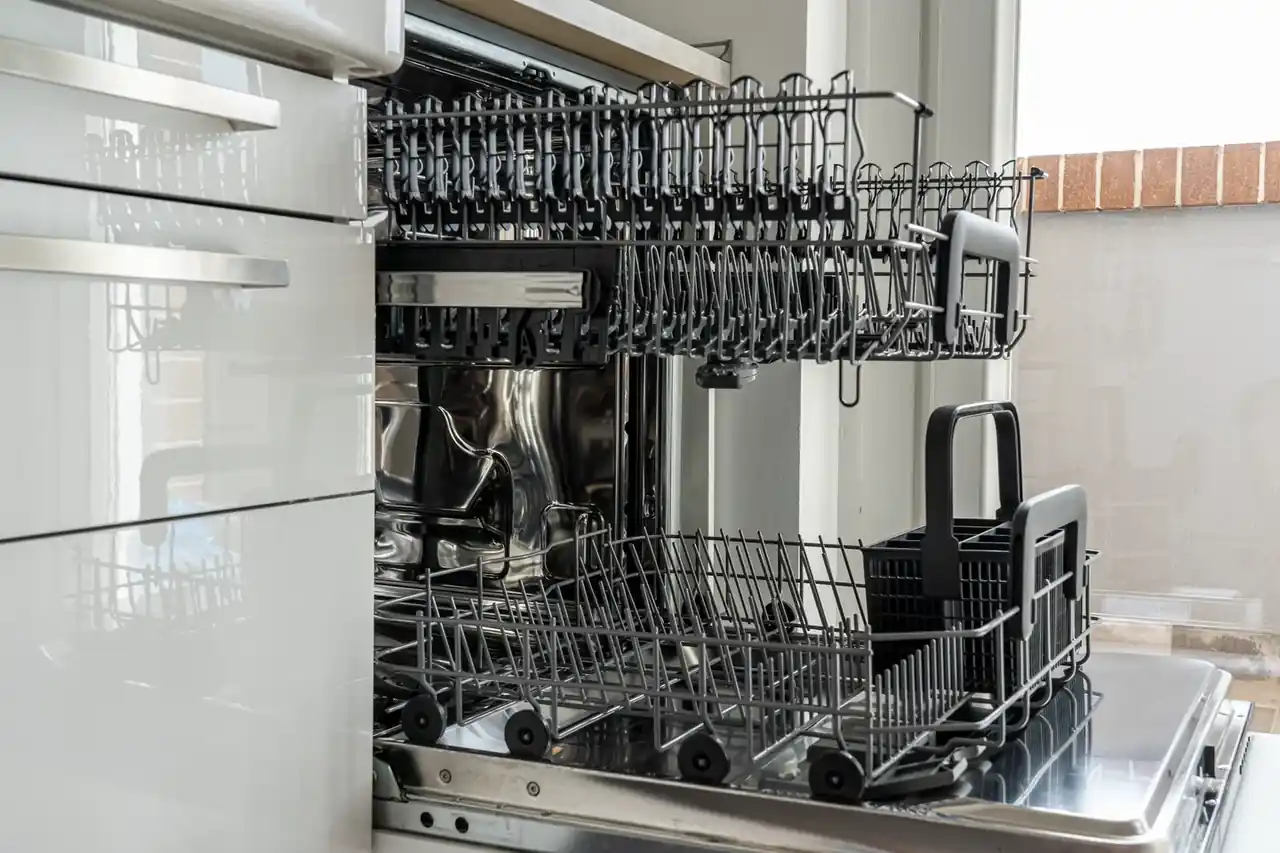
The warning for error 25 in a Bosch dishwasher usually points to a blockage in the drainage system, almost always in the pump or its housing. In most cases, it is not a complex electrical fault, but an obstruction caused by pieces of glass, bones, labels, food scraps, or even a poorly placed cap. The appliance tries to drain the water at the end of the cycle, cannot do so normally, and stops the program to avoid further damage.
The good news is that, with a careful check, the problem can often be solved without special tools. The bad news is that it is best to act methodically: disconnect the unit, access the filter, drain the accumulated water, and check that the pump impeller spins freely. In Bosch models, this code points more to a mechanical blockage than to a board failure, so visual inspection is usually the first useful step and also the most cost-effective.
If you have a problem with your dishwasher, you can use our free error code search tool. From there, you can find out about and solve all errors easily and effectively.
What the warning indicates and why it appears
When a Bosch dishwasher shows error E25, the message is linked to the water drainage system. The washing circuit depends on a pump that pushes the used liquid toward the drain, and that small motor works within a narrow margin. A hard fragment, a detached label, or a loose piece is enough for the pump to lose its ability to move the water. The appliance detects that draining is not progressing as it should and cuts the sequence.
In practice, the warning behaves like an alarm light on a narrow road: it does not always mean the vehicle is broken, but it does mean something is blocking the way. The problem may be inside the pump, in the cover that protects it, in the filter that is not seated properly, or in the immobilized impeller. That is why it is not enough to restart the program and expect it to disappear. If the obstruction is still there, the message returns as soon as the appliance tries to drain again.
It is also worth remembering that dishwashing is not a clean environment in the mechanical sense. Between grease residue, food grounds, seeds, small bones, and little objects forgotten in the pockets of glasses or cups, the bottom of the dishwasher acts as a silent trap. The pump works in that setting, just a few centimeters from the filter, and any oversight becomes a blockage that shows up at the end of the cycle.
The signs that accompany the fault
The appliance’s behavior gives very clear clues. Often the cycle stops with water in the tub, the wash time does not advance, or the unit makes a brief hum and then remains paused. In some cases, the panel keeps the warning and does not allow the program to finish. The presence of standing water at the bottom is one of the most useful clues, because it indicates that draining was interrupted before completion.
Another common sign is an odd noise coming from the lower part, similar to a small scrape, rattling, or a strained motor. That usually happens when the pump impeller tries to turn and meets resistance. If the trapped object is rigid, such as a shard of glass, the symptom may be intermittent: one moment it seems to drain and the next it gets stuck again. That irregularity confuses whoever is looking at the panel, but the cause is still mechanical.
In Bosch dishwashers, the warning can also appear after normal use, without any prior signs. It is common in machines that run daily and receive heavy loads. The more small impurities build up at the bottom, the greater the chance that the pump loses its freedom to turn. Irregular maintenance, filters that are not correctly placed, or a lack of cleaning in the drain area all favor the problem returning.
The safe check before touching anything
Before opening the dishwasher base, safety comes first. The appliance must be fully switched off and disconnected from power. It is not enough to leave the program paused. Unplugging the unit avoids accidents and protects your hands in an area where there may be standing water and sharp edges. If the bottom contains shards of glass, the risk of cuts increases and extra caution is needed.
After cutting the power, the door can be opened to access the interior. In many models, there is water retained in the tub because draining was not completed. That water can be removed with a container or an absorbent sponge, always calmly. There is no need to rush. The goal is to make the filter area and the pump cover visible so you can check whether there are trapped objects or compacted dirt.
At this stage, patience matters more than force. A sudden movement can break a plastic part or dislodge the pump cover incorrectly. The components in the lower section are designed to fit precisely, and any incorrect placement causes new faults. That is why the initial inspection should be visual and meticulous, not a quick attempt at disassembly.
How to clean the pump area
The first useful intervention is to remove the filters. Once they are out, the lower access where the pump cover is usually located becomes visible. In many Bosch dishwashers, that cover is removed with a small twist, although in some models it may require an additional fastening. When lifted, the debris preventing water flow appears: seeds, plastic fragments, bones, labels, or pieces of glass. Cleaning that housing thoroughly usually resolves a significant share of cases.
Then the pump impeller needs to be checked. This component should move smoothly, without rubbing or jumping. If it is immobile or feels slowed down, the most likely cause is that a particle is still trapped. At that point, the main tool remains the eye and, if necessary, careful handling with gloves. It is never a good idea to force the impeller, because the goal is not to overcome a mechanical resistance, but to free the passage.
When the cavity is clear, the cover must be put back exactly as it was. A poorly seated closure can reproduce the same problem or cause an internal leak. After that, the filters are reinstalled in their correct position and checked to make sure there is no looseness. If the base is properly closed, the dishwasher regains its drainage logic and can be tested again with a short cycle.
Which objects usually cause the blockage
The list of usual culprits is more mundane than it seems. Shards of glass from a broken glass, small bones, hard shells, seeds, toothpicks, paper clips, tiny wrappers, or even a sticker that came off a jar can end up in the drainage area. The pump is not designed to process solid waste, so any element that does not dissolve in water becomes a wedge.
Sometimes the source of the problem is outside the tub, but its effect reaches the same point. A poorly cleaned filter lets debris pass through, and it ends up accumulating at the bottom. And when the mesh loses effectiveness, the user notices the fault after several washes, not necessarily the moment the object entered. That delay makes the diagnosis seem confusing, even though the mechanism is quite simple.
Something less visible also happens: some small parts do not block immediately, but position themselves in a way that rubs against the impeller each time it turns. Instead of a total blockage, a gradual slowdown occurs. The result is similar: the appliance does not drain properly and the program stops. The symptom is not always a sudden cut-off; sometimes it is a loss of efficiency that drags on for days.
When cleaning is enough and when it is no longer enough
If the dishwasher drains again after the trapped object is removed, the case is usually solved. In those situations, the code was a warning, not a sentence. However, there are cases where the warning returns even after a thorough cleaning. That can indicate pump wear, a damaged impeller, a warped cover, or an internal component that no longer turns with the required precision. When the problem persists after a proper inspection, it is no longer a simple blockage.
Another sign that technical help is needed is the fault repeating in several consecutive cycles. If the water still does not drain, if the drain motor sounds strained, or if there is a constant loss of power, the pump may be damaged. It is also wise to distrust an immediate return of the message right after having secured the filters properly. In that case, we are no longer dealing with an isolated residue, but with a deeper fault.
Modern dishwashers are quite tolerant, but not invulnerable. A fatigued pump can keep working partially for a while, like a hinge that still gives way but no longer opens smoothly. The risk is allowing repeated strain to end up damaging other parts of the system. If draining fails again without any visible obstruction, professional repair makes sense.
Common mistakes when trying to fix it
One of the most common mistakes is taking things apart before properly emptying the water. That makes cleaning harder and increases splashes. Another mistake is removing the pump cover too quickly and then putting it back incorrectly. The appliance may keep showing the same warning because the part does not seal as it should. A poorly fitted cover is almost as problematic as a real blockage.
It is also common to remove the filters, clean them, and stop there. The bottom of the dishwasher looks clean at first glance, but the blockage may be a few centimeters lower, in the pump chamber. That difference in height is small to the eye but decisive for the water. That is why the inspection does not end at the filter surface; the lower access deserves specific attention.
One last mistake, less visible but very frequent, is confusing the symptom with the cause. The message does not necessarily mean the electronics have failed. In most cases, the source is a physical blockage, and treating it like a software fault wastes time. Restarting the appliance can help after cleaning, but not before it. First you must clear the passage; then check that the system responds.
How to reduce the risk of it happening again
Prevention is not mysterious, although it does require consistency. Cleaning the filters regularly, checking dishes before loading them, and avoiding large solid leftovers in the lower basket greatly reduces the risk of blockage. Plates with stickers, bones, seeds, and hard pieces should go inside as clean as possible. The less dirty work the pump receives, the more stable the drainage will be.
It also helps not to overload the machine. When the dishes are packed too tightly, debris circulates less well and dirt ends up in places where it should not be. Proper loading promotes water flow and prevents certain items from breaking under pressure. It is a simple matter of space, but one with a direct impact on internal operation.
Periodic cleaning of the bottom is another sensible measure. There is no need to obsess, but it is wise to check the pump area from time to time, especially if the dishwasher is used daily. Brief, regular maintenance costs less than a prolonged breakdown. That logic, as domestic as it is effective, often makes the difference between a reliable appliance and one that accumulates warnings.
When it is advisable to call for technical help
If the drain still does not respond after cleaning, the next step should not be blind persistence. There may be a fault in the pump, a wiring problem, a broken part, or internal wear that is not visible at first glance. In that territory, checking with instruments and the experience of a technician brings more value than repeating the same disassembly. The signal becomes technical when the blockage no longer explains the appliance’s behavior.
It is also wise to ask for help if water appears on the floor, if the cover does not fit properly, or if a shard of glass is suspected in a hard-to-reach area. Glass fragments, in addition to causing a blockage, create a real risk of cuts. In those cases, forcing the cleaning is usually not a good idea. The dishwasher may seem simple on the outside, but its base contains delicate parts, and a handling mistake ends up costing more than the correct intervention.
For a persistent fault, professional diagnosis provides something very concrete: it rules out the obvious and confirms what can no longer be seen. In a repeated drainage fault, the line between cleaning and repair is very thin. Knowing when to cross it in time avoids prolonging the problem and protects the rest of the appliance, which will continue depending on a pump capable of moving water without obstacles, like a small clean and precise artery inside the machine.
Este artículo contiene enlaces de afiliado: si compras a través de ellos, se genera una pequeña comisión sin coste adicional para ti. Más información.


Balay ceramic hob F2 error: causes and safe solution
F2 error on a Balay washing machine: causes and safe solutions

Balay F2 Error With the Hob Off: Causes and Fixes

F18 error on a Balay washer-dryer: causes and fixes

F11 error on a Balay dryer: meaning and safe solutions

F01 error on a Balay washing machine: meaning and action

F0 error on a Balay cooktop: causes and solutions

Balay F0 error on hobs: causes and safe solutions

F error on a Balay induction hob: causes and solution

F error on Balay Ceran 815 induction hob: causes and fixes

 Dishwasher6 days ago
Balay dishwasher E15 error: warranty coverage and solution
- Dishwasher6 days ago
Balay dishwasher E16 error: causes and safe solution
- Dishwasher7 days ago
E15 error on Balay dishwasher: do not tilt it
- Dishwasher6 days ago
E17 error on a Balay dishwasher: causes and safe solution
- Balay6 days ago
Balay washing machine E2 error: causes and safe solutions
- Appliance4 days ago
Smart appliances for a secure connected home
- Dishwasher6 days ago
E15 Error on Balay Dishwasher: Causes and Safe Solution
- Dishwasher6 days ago
Balay dishwasher E19: causes and safe solution
- Balay6 days ago
E19 error in Balay dishwasher: causes and solution
- Appliance4 days ago
Electrodomésticos con IA: funciones, límites y compra útil
- Appliance4 days ago
Efficient appliances to save water at home
- Balay7 days ago
E15 error on a Balay washing machine: causes and safe fixes