Appliance
Built-In Warming Drawer: A Guide to Choosing the Right One
Everything needed to compare dimensions, functions, energy consumption, and prices before integrating this appliance into the kitchen.

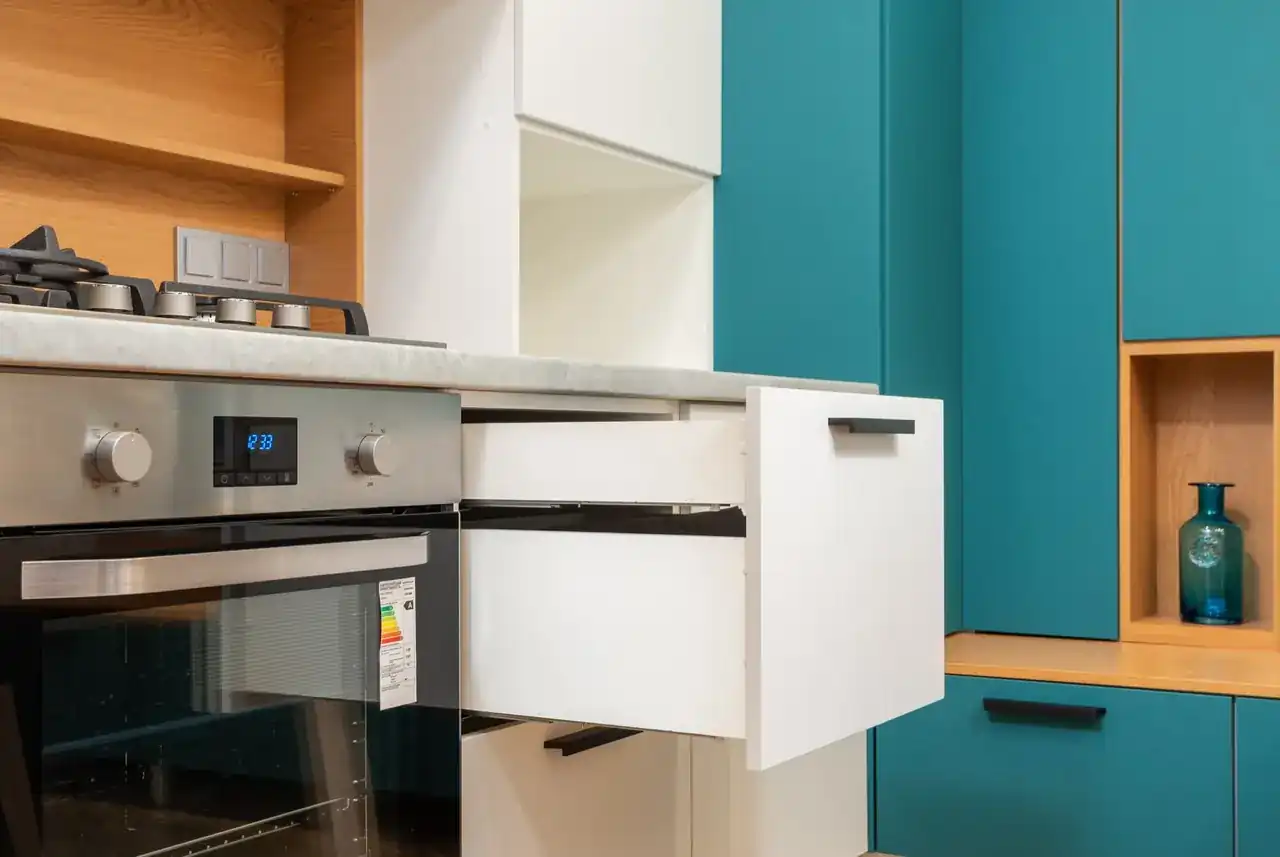
An integrated warming drawer solves a very specific problem: it prevents cold dishes from drawing heat away from food just before serving. Installed beneath the oven or next to a built-in coffee machine, it keeps plates, cups, and some preparations at a stable temperature without taking up counter space or disrupting the visual continuity of the cabinetry. Current domestic models generally operate between 30 and 80 °C, offer approximate capacity for six place settings, and typically cost between 220 and 650 euros.
If you have a problem with your oven, you can use our free error code finder. From there, you can identify and solve all errors easily and effectively.
What this appliance is and what it really does
The appliance is a low-profile heating module that operates using a heating element and, in many cases, an air circulation system. Its interior heats gently and evenly, while the thermostat limits the temperature so that porcelain, glass, and food do not experience the thermal shock of a conventional oven. The difference is particularly noticeable when plating: a cream soup, sauce, or rice dish retains its temperature better when it comes into contact with a previously warmed surface.
Its main function is to preheat dishes before serving, although it is not limited to heating plates. It can also keep a finished preparation warm for a short period, warm cups for coffee, gently defrost delicate foods, and, in certain models, slow-cook or proof dough and yogurt. It does not replace an oven, cooktop, or refrigerator, nor is it designed to store food for hours. It is a supporting appliance that helps better organize the timing of a domestic kitchen.
Its usefulness increases when several people eat at the same time, when dishes with different cooking times are being prepared, or when a recipe requires plating in batches. In a small kitchen, the drawer works as a discreet thermal chamber: while the oven finishes a side dish, the tableware waits warm and protected. This coordination avoids reheating food repeatedly, which can dry out meat, cause a sauce to separate, or soften a crispy crust.
Advantages over ovens and countertop models
An oven can keep food warm, but it usually has a much larger cavity and more power than necessary to warm six plates. In addition, when used to keep food warm, its ventilation and minimum temperature are not always suitable for delicate preparations. The dedicated module works with a smaller volume and lower temperature settings, offering more controlled and less aggressive heating.
The difference compared with a countertop model is mainly practical. A portable unit requires free space, remains visible, and must be connected to a power outlet whenever it is used. The integrated model disappears inside the cabinet column, aligns with the oven, and does not add objects to the countertop. In return, it requires planning the opening, checking the electrical installation, and accepting a higher cost. It is not necessarily better for every household; it is more suitable when the kitchen is being renovated or already has a configuration of built-in appliances.
Capacity also differs. A portable device usually accommodates between four and eight plates, while 60-centimeter-wide modules can hold six complete place settings and, depending on the interior layout, up to 12 plates measuring approximately 26 or 28 centimeters. Commercial figures are not always calculated in the same way: some manufacturers count stacked plates, while others express capacity in place settings, cups, or containers. Therefore, the actual interior dimensions matter more than the advertised figure.
Dimensions and compatibility with kitchen cabinetry
The most common external width is 59.5 or 60 centimeters, designed to match a standard oven. Depth is usually between 54 and 56 centimeters, although the cabinet opening may require a little more space to accommodate the wiring and allow proper ventilation. The most common height is 14 centimeters, but 28- or 29-centimeter versions are available with greater capacity and more room for containers.
A 14-centimeter opening does not correspond exactly to a 14-centimeter aperture. The manufacturer specifies installation tolerances and may require a minimum clearance from other components. The dimensions of the appliance, niche, and decorative front should be compared in the technical specifications rather than estimated by eye. Measuring the opening before buying avoids one of the costliest mistakes associated with this type of installation.
Aesthetic compatibility does not guarantee technical compatibility either. A drawer from one brand can be installed beneath an oven from another, but the width, depth, ventilation, and fastening system must match. In some configurations, the oven door and drawer front require specific alignment to prevent rubbing. Push-open models without handles also require sufficient frontal pressure and a properly leveled mechanism.
Installation should be carried out by a professional when the cabinetry needs to be modified, the appliance must be connected to the mains, or the column needs adapting. The unit normally operates on a domestic 220-240-volt supply, but the outlet must not be crushed behind the appliance or share an improvised connection with other high-power equipment. A clean installation facilitates maintenance and reduces the risk of the cable overheating.
Temperature, programs, and uses that make sense
The usual temperature range starts at 30 °C and reaches between 70 and 80 °C. To warm cups or plates, a medium temperature and 20 to 40 minutes are generally sufficient, depending on the material and quantity. Thick porcelain takes longer than a thin plate, while a very tall stack requires an interior layout that allows air to circulate. The goal is to warm the tableware, not burn it.
The keep-warm function is useful for freshly cooked food, although it should be used sensibly. A low temperature can preserve texture for a while, but it does not replace food-safety rules or allow a preparation to be forgotten for the entire afternoon. Rice, sauces, meats, and dairy products require particular attention. The manufacturer’s manual should specify which uses are permitted and for how long.
The more complete models include programs for heating cups, tableware, and containers, as well as a slow-cooking option. Higher-end ranges offer functions for proofing dough, dehydrating herbs, gently defrosting food, or setting yogurt. These possibilities turn the drawer into an additional culinary tool, although not all of them are equally important in everyday use. Stable temperature control and a well-distributed interior usually provide more value than a long list of programs.
Push-open operation is common in minimalist kitchens and makes it possible to do without a handle. The control may be mechanical, with a simple dial, or touch-operated, with illuminated indicators and preset programs. The touch system provides more precise readings, but a dial may be faster when your hands are wet or when you are cooking in a hurry. Some high-end units connect to an app for scheduling times, saving settings, and receiving alerts, although connectivity is not essential for the basic function.
Interior capacity and manufacturing materials
A 14-centimeter drawer usually advertises capacity for six place settings. In practice, it can accommodate stacked dinner and soup plates, several cups, or a low serving dish, provided the pieces do not block air circulation. Some manufacturers state that up to 20 plates measuring 28 centimeters fit inside, while others prefer a more conservative figure. The difference depends on the thickness of the tableware, the height of the stack, and the space occupied by the heating element.
Tall models, close to 28 centimeters, allow larger containers to be inserted and provide a useful area for low-temperature cooking. They are more appealing to large families or people who prepare several dishes at once. However, they occupy space that could otherwise be used for a conventional drawer, and their price is usually higher. The extra capacity is only worthwhile if it is used frequently; otherwise, a low module performs the same function with less impact on the cabinet column.
The interior may be made of stainless steel, tempered glass, or a combination of both. Steel withstands daily use well and is easy to clean, while a non-slip base prevents plates from moving when the drawer is opened and closed. A black glass front offers an elegant integration with modern ovens, but shows fingerprints more clearly. Fingerprint-resistant steel is more practical in homes where the appliance is opened many times a day.
Electricity consumption and operating costs
The rated power of these appliances is usually between 250 and 470 watts, although models with somewhat lower or higher figures also exist. This power does not mean that the unit consumes the same amount throughout the entire session: the thermostat disconnects the heating element when it reaches the selected temperature and switches it back on to compensate for heat loss. Actual consumption depends on the time, temperature, and quantity of tableware.
As a reference, a 30-minute session may consume approximately 0.10 to 0.20 kWh, while an hour of use may approach 0.20-0.35 kWh. With an electricity price of 0.20 euros per kWh, the cost of a one-hour session would be around 4 to 7 cents. These are indicative values and do not replace the figure in the manual or a measurement with a consumption meter, but they show that energy consumption is low compared with that of a conventional oven.
Savings should not be measured solely by the appliance’s power rating. If the drawer allows food to be kept ready without turning the oven on again, it can prevent additional heating cycles. On the other hand, leaving it on for long periods when unnecessary eliminates that advantage. The best practice is to program enough time to warm the tableware and switch it off when serving is complete.
Indicative prices and differences between ranges
The market offers a broad price range. Entry-level models may cost around 220-300 euros, with basic controls, capacity for six place settings, and temperatures from 30 to 80 °C. In the mid-range, between 350 and 500 euros, there are better finishes, push-open operation, electronic controls, and a more carefully designed interior layout. Models from brands such as Bosch, Siemens, AEG, Electrolux, Hisense, or equivalent mid-range brands are generally found within this range, although prices vary according to promotions and availability.
Units costing more than 550 euros generally add culinary functions, connectivity, greater temperature precision, or specific integration with a range of ovens and coffee machines. In luxury ranges, the cost can exceed 1,000 euros by a considerable margin, especially when combined with premium finishes and advanced programs. This price is not justified solely by the ability to heat plates: it reflects the design, construction, service network, and slow-cooking or remote-control functions.
It is worth distinguishing between the price of the appliance and the installation cost. If the opening is already prepared, installation may be straightforward; if a cabinet column must be adapted, a front replaced, or an outlet installed, the budget increases. Transport, removal of the old appliance, and cabinet modifications may also be charged separately. An attractive price stops being attractive if it does not include the work required to install the appliance.
Brands and features worth comparing
AEG and Electrolux offer modules with a broad temperature range, handleless opening, and capacity for several place settings, with particular attention to front design. Bosch and Siemens have models that generally integrate visually with their ovens and may include touch controls, keep-warm functions, and slow cooking. Hisense has expanded its presence with black-glass designs, digital controls, and programs for keeping food warm or proofing.
The differences between brands are not always found in the maximum temperature, which is usually similar, but rather in the drawer’s construction, insulation, opening mechanism, and after-sales service. A smooth telescopic guide, an easy-to-remove base, and a front that does not transmit excessive heat may be more valuable than a function used once a year. The reliability of the opening mechanism deserves as much attention as the control panel.
Integration with other appliances may also influence the decision. When the oven, coffee machine, and module share the same width, finish, and visual line, the column looks more balanced. Even so, it is not essential to buy the entire configuration from the same brand. What matters is that the dimensions, installation requirements, and ventilation are compatible.
Common mistakes when choosing one
The first mistake is buying based on the front color without checking the opening. Two black appliances measuring 60 centimeters can differ in height, usable depth, and fastening system. The second is assuming that all 14-centimeter drawers offer the same capacity. The position of the heating element, the shape of the base, and the insulation change the usable space.
It is also common to confuse a warming drawer with a storage drawer. The latter can be used to store trays, pans, or accessories, but it does not include a heating system. The exterior appearance may be almost identical, so the technical specifications should mention temperature control, power, and thermal functions. A drawer without a heating element cannot keep tableware warm, even if it fits perfectly beneath the oven.
Another mistake is using it as a substitute for equipment designed for prolonged food preservation. The cavity is intended to maintain temperature during serving, not to store perishable food without control. The base should not be covered with materials that block air outlets, nor should hermetically sealed containers be inserted if the manual does not allow them. Regular cleaning prevents grease residue from producing odors when heated.
Installation, cleaning, and everyday safety
Before installation, the cabinet must be level and the opening must comply with the tolerances specified by the manufacturer. The front should be aligned with the oven, and the door must open without touching the adjacent cabinets. The appliance does not require a flue like a range hood, but it does need ventilation space in accordance with the instructions. Air circulation is part of the design, not an optional detail.
Routine cleaning should be carried out when the interior is cold, using a soft cloth and a non-abrasive product. Stainless steel can be cleaned in the direction of the grain, while glass requires avoiding scouring pads and substances that may cause fine scratches. If the base is removable, it is advisable to take it out to clean crumbs, drops, and grease residue that could produce odors during the next cycle.
The exterior door usually remains warm rather than hot, but it should not be assumed to be completely cool in every program. Children should not use the appliance without supervision, and freshly heated cups or plates should be handled carefully. Glass and ceramic retain heat longer than they appear to. Keeping the area in front clear also prevents impacts against the open door.
Is it worthwhile in a domestic kitchen?
The answer depends on the pace of use and the stage of the kitchen project. In a full renovation, the module can make use of an opening beneath the oven that would otherwise become a conventional drawer. In an already finished kitchen, the construction work and adaptation costs may be disproportionate for a function that can also be performed partially with the oven or manually.
It is particularly reasonable for people who entertain guests, cook for several people, or prepare recipes that must be served in batches. It also makes sense in homes with built-in coffee machines where a cohesive appliance column is desired. For someone who rarely warms tableware and cooks simple dishes for one or two diners, the improvement will be more aesthetic than practical. Frequency of use is the decisive criterion.
The appliance does not transform a kitchen on its own, but it does organize a delicate moment: the transition from the saucepan to the table. Its advantages are discreet, cumulative, and very specific. Fewer dashes with plates, less reheating, and a more stable serving temperature. Choosing well requires looking beyond the black finish or brand name and checking dimensions, power, temperature control, capacity, installation, and technical support.
A small decision with an effect on the entire kitchen
A good integrated drawer takes up little space and can improve the coordination of an entire kitchen, but it should not be purchased as a decorative accessory. The 60-centimeter width, 14- or 28-centimeter heights, 30 to 80 °C range, and approximate consumption of 150 to 470 watts provide a clear reference for comparing actual models.
For many households, the most balanced option is a 14-centimeter model with capacity for six place settings, simple controls, reliable opening, and an approximate price of 250 to 450 euros. Advanced features make sense when they form part of a specific culinary routine. In this way, the module stops being an elegant space beneath the oven and becomes a tool that supports serving without demanding attention.
Este artículo contiene enlaces de afiliado: si compras a través de ellos, se genera una pequeña comisión sin coste adicional para ti. Más información.


Balay hob error: causes and safe solutions

E18 error in Balay washing machine: drain causes and fix

Balay washing machine F4 error: how to restore drainage

Error in a 2013 Balay A++ refrigerator: causes and fixes

Balay induction hob error 22: how to fix it

E17 error in the Balay 3TS60107 washer: causes and fix

Balay washing machine E93 error: causes and safe solution
E9 error on a Balay induction hob: causes and solution
E9 error on a Balay induction hob: causes and solution

Balay E9 error on a freezer: causes and solution

 Balay6 days ago
E05-32 error on a Balay oven: causes and safe solution
- Washing machine6 days ago
Hotpoint washing machine F09 error: what it means and what to do
- Balay6 days ago
E09 error in Balay dishwasher: causes and safe solution
- Dishwasher6 days ago
E09 error in Balay dishwashers: causes and safe solution
- Dishwasher5 days ago
E15 error on Balay dishwasher: do not tilt it
- Dishwasher5 days ago
Balay dishwasher E15 error: warranty coverage and solution
- Balay5 days ago
Balay washing machine E12 error: causes and safe solution
- Balay6 days ago
E09 error in Balay dishwasher 3VS503IA: causes and fix
- Dishwasher5 days ago
Balay dishwasher E16 error: causes and safe solution
- Balay7 days ago
E0 error on a Balay induction hob: causes and fixes
- Dishwasher6 days ago
E11 error in Balay dishwashers: causes and solutions
- Balay4 days ago
Balay washing machine E2 error: causes and safe solutions