Appliance
How do we clean today with modern appliances
Routines and useful products to keep each appliance clean, efficient, and safe for longer.

Household cleaning changed pace when appliances stopped being simple machines and became everyday allies. Refrigerator, washing machine, dishwasher, oven, and small appliances build up residue, grease, limescale, and moisture at a speed that is not always visible, but is noticeable in energy use, odors, and wear. Regular maintenance is not a household quirk: it is the difference between equipment that runs smoothly and one that strains, like an engine dragging sand.
Caring for these appliances also has a practical, very concrete side. Well-done cleaning reduces breakdowns, improves hygiene, and extends service life, something especially important in kitchens and laundry areas, where organic residue and moisture find the perfect place to stay. The visible result is easy to measure: fewer bad odors, better performance, and fewer surprises on the electricity bill or when calling technical service.
If you have a problem with your appliance, you can use our free error code search engine. From there, you can find out and solve all errors easily and effectively.
Cleaning that shows in energy use and hygiene
A dirty appliance uses more energy and lasts less. That is the idea that sums up much of today’s household maintenance. When a filter gets clogged, a seal traps moisture, or a duct is covered with residue, the appliance needs more effort to deliver the same result. This is not a distant theory: it happens in the fridge that forms too much ice, the dryer that takes forever, or the dishwasher that leaves residue on dishes even though the program is correct.
Hygiene adds another layer of urgency. In appliances that come into contact with food or water, dirt is not just about appearance. Seals, filters, and reservoirs can become breeding grounds for mold, bacteria, and stale odors. In a busy kitchen used every day, that translates into bread smelling like the fridge, coffee with a dull taste, steam that smells musty, or freshly washed clothes that never quite smell clean.
It is worth looking at each appliance as a closed system with sensitive areas. Wiping the outside is not enough. There are parts that work silently and collect what cannot be seen: filters, ducts, blades, seals, reservoirs, and trays. That is where the turning point usually lies between a superficial cleaning and one that truly changes the appliance’s behavior.
The battleground in the kitchen
The refrigerator usually takes the worst of it because it never fully turns off and because its interior mixes food, moisture, and temperature changes. A proper cleaning starts by emptying it, checking dates, and removing shelves and drawers. Warm water and white vinegar do a good job cleaning the inside surfaces; then, a dry cloth helps prevent marks and trapped moisture. The seals deserve separate attention because they are a perfect refuge for mold and sticky residue, especially at the bottom of the door.
In the freezer, the problem is often different: built-up ice. When it is not a no-frost model, defrosting every six months prevents frost from stealing space and forcing the system to work harder than necessary. Exterior cleaning also matters, especially on stainless-steel doors, where fingerprints and splashes show up immediately. A soft cloth with neutral soap or a product made specifically for that finish gives a better result than an abrasive cleaner that, although promising at first glance, ends up scratching the surface.
The oven and microwave play in another league, the one where grease sticks to surfaces. In the oven, a baking soda paste with water remains a useful solution for softening burnt-on residue, but it needs time and patience. Letting it sit for several hours makes a bigger difference than scrubbing hard. In the microwave, steam does part of the work: a container of water and lemon heated for a few minutes loosens splashes and neutralizes odors. After that, a soft cloth is enough to remove what has softened.
The dishwasher, ironically, also needs to be washed. The filter is usually the most delicate point, because crumbs, small bones, dried sauce, and solidified grease collect there. Cleaning it frequently prevents clogs and bad odors. The spray arms, for their part, can get blocked in the holes and lose washing power; a periodic check with hot water and a small brush usually solves the problem before dishes start coming out with residue.
Washing machine and dryer: the duo that suffers most from daily use
The washing machine works silently, but it leaves signs when it accumulates dirt. The drum, detergent drawer, filter, and door seal are its critical areas. An empty cycle with hot water and white vinegar helps flush out residue and clean the inside without taking anything apart. In practice, what matters most is consistency: monthly cleaning prevents mold and soap residue from becoming a persistent film.
The seal deserves a closer look because it gathers moisture, lint, and dirt residue. If water remains after each wash and the door stays closed, the washing machine turns into a damp box, perfect for that closed-up smell. Leaving the door open after use is a small gesture with a big effect. It is also advisable to check the filter regularly, especially if there are pets in the house, work clothes, or fabrics that shed a lot of fibers.
The dryer suffers a different, less visible kind of wear. Lint is its main enemy, because it clogs vents, increases the motor’s effort, and lengthens drying time. Basic maintenance includes emptying the filter after each use and checking the vent duct at reasonable intervals. When that step is neglected, clothes take longer to dry, the appliance overheats, and the risk of breakdown rises like the temperature on a shadowless afternoon.
The household rule here is simple and not very glamorous, but effective: cleaning a little and often works better than intervening late and in a hurry. In washers and dryers, residue buildup has memory; that is why preventive maintenance ends up being cheaper than repair, both in money and in time.
Small appliances, big sources of dirt
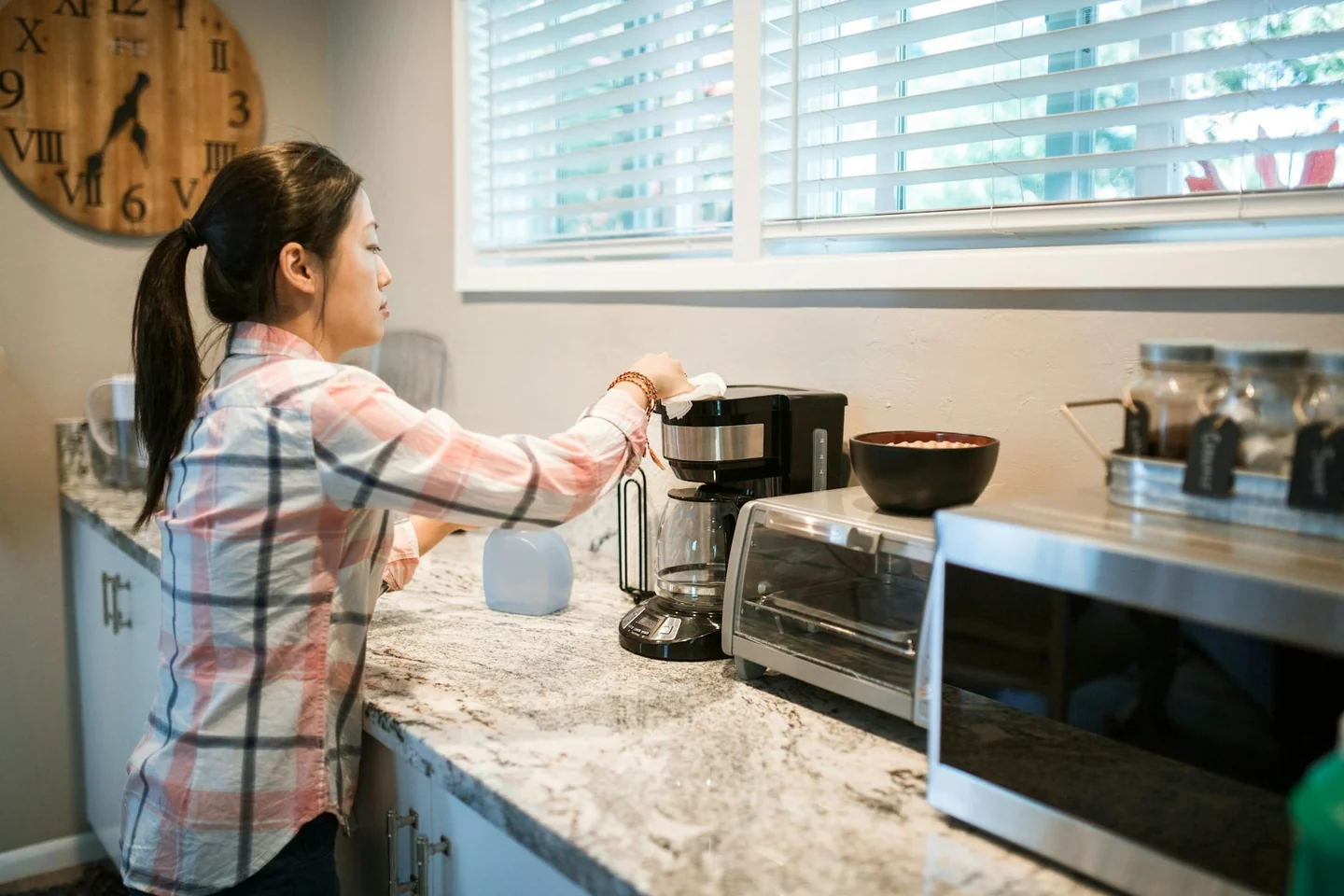
The coffee maker seems harmless until the coffee loses its aroma and the reservoir starts smelling like stale water. Limescale is its main enemy, especially in hard-water areas. White vinegar is still a useful aid for descaling some models, although you should always follow the manufacturer’s instructions. In capsule and espresso machines, specialized descalers usually protect the internal parts better and avoid residue that alters the flavor.
Blenders, mixers, and food processors trap residue in blades and containers. Cleaning is quick if done right after use, because then the fruit, vegetables, or sauce have not yet stuck like sweet cement. Warm water, a few drops of dish soap, and careful disassembly are usually enough to leave everything ready. Drying metal parts well also matters; moisture trapped between seals or blades does not take long to turn a good appliance into a source of odor.
The steam iron, on the other hand, shows the passage of time with stains on the soleplate and uneven bursts of steam. The tank should be emptied after each use to prevent mineral buildup, and the steam holes can be cleaned with a cotton swab or a thin tool, without forcing anything. A clean soleplate glides better and saves effort; a dirty soleplate drags on clothes, snags, and ends up leaving marks on the fabric.
In toasters, air fryers, citrus juicers, or similar appliances, the logic is the same: disassemble what the manufacturer allows, wash removable parts, and never wet the electrical section. The mix of crumbs, grease, and heat is a reminder that size does not determine dirt. Sometimes, a small appliance needs more attention than a large one because its interior is narrower and holds residue better.
Products that work without punishing the appliance
The most useful products are usually the least aggressive. White vinegar, baking soda, lemon, and hot water cover a huge part of household tasks when used wisely. Vinegar helps disinfect and descale; baking soda loosens grime and neutralizes odors; lemon adds freshness and shine, especially on stainless-steel surfaces. They do not work miracles, but they do help avoid reaching for harsher formulas right away.
That does not mean everything can be fixed with homemade recipes. Some appliances need specific products because their mechanisms are delicate. Descalers for coffee makers, oven cleaners, washing machine detergents, and dishwasher products are designed to attack specific residues without stressing pumps, heating elements, or ducts as much. The trick is to choose according to the problem, not by habit or intuition.
It is also wise to avoid overenthusiasm with abrasives. A sponge that is too rough, a paste that is too gritty, or an unsuitable scrubber can leave a cleaning job that looks fast but is technically poor. Scratches, however small, open the door to more dirt. On stainless steel, glass, or enamelled surfaces, a microscopic mark can become an anchor for grease and limescale.
Good household cleaning is more like precise surgery than a blind offensive. You do not need to fill the house with chemicals to keep it in shape. You need to understand which part is being cleaned, what material covers it, and what residue you want to remove. That fine-tuning saves trouble and helps preserve the appliance better.
Mistakes that shorten service life without being noticed much
There are maintenance mistakes that go unnoticed because they do not break anything immediately. A very common one is letting dirt build up until the appliance is already showing clear signs. When odor, visible limescale, or strange noise appears, the problem has already been growing for some time. Another common mistake is cleaning only the outside, as if appearance alone were enough to save functionality.
People also make the mistake of mixing products without care. Vinegar with some cleaners, for example, is not a good idea, just as overusing disinfectants on sensitive parts is not. The basic precaution is still the most sensible: unplug before cleaning, check the manual, and respect non-removable parts. It seems obvious, but many household accidents come precisely from that ignored obviousness.
Frequency matters as much as the product. A refrigerator may benefit from a biweekly check, while an oven or dishwasher works better with a monthly deep clean. Routine creates savings: less time spent scrubbing, less wear on materials, and less chance for dirt to harden until it looks painted on. That discipline does not require drama, only consistency.
In homes with heavy use, children, pets, or intensive cooking, dirt advances faster. In that case, occasional weekend cleaning is not enough. Small repeated gestures are needed, such as drying seals, emptying filters, wiping spills immediately, and airing out interiors. These are discreet actions, almost invisible, but they sustain the health of the whole.
A home that works better when every appliance can breathe
Behind a clean kitchen or a laundry room without odors there is more than visual order. There are machines working with less effort, surfaces aging better, and habits that protect the investment made in each appliance. Cleaning stops being a decorative task and becomes real maintenance, with effects on your wallet, your health, and your daily comfort.
Home technology has advanced a lot, yes, but it has not eliminated the need for care. On the contrary: the more sophisticated an appliance is, the more it appreciates having its sensitive parts respected and not letting dirt grow in silence. The best ally of a modern appliance is not a next-generation promise, but a simple, consistent, and sensible routine. Cleaning well is still the cheapest way to extend its life.
Este artículo contiene enlaces de afiliado: si compras a través de ellos, se genera una pequeña comisión sin coste adicional para ti. Más información.


E80 error on a Balay washing machine: meaning and solution

Balay washing machine E80 error: meaning and what to do

E80 Error in Balay Ovens: Safe Causes and Solutions

E63 error on a Balay dryer: causes and safe solutions
E63 error on a Balay washing machine: causes and safe fixes

Balay washing machine E61 error: meaning and what to do

E61 error on a Balay washing machine: meaning and action

E6 PUNP error on a Balay washing machine: meaning and next steps

E56 error on Balay dryer: causes and safe solutions

E56 error on Balay washing machines: meaning and safe solutions

 Kitchen plate7 days ago
E Error on Balay Series 900 Hob: Causes and Solutions
- Dishwasher7 days ago
E25 error in Balay dishwasher: causes and solutions
- Kitchen plate7 days ago
Balay induction hob E error: causes and solutions
- Balay7 days ago
Balay washing machine E18 error: causes and safe fix
- Balay7 days ago
E21 error in Balay dishwashers: causes and solutions
- Balay5 days ago
E09 error in Balay dishwasher: causes and safe solution
- Balay6 days ago
E05-32 error on a Balay oven: causes and safe solution
- Washing machine6 days ago
Hotpoint washing machine F09 error: what it means and what to do
- Balay7 days ago
E61 error on a Balay washing machine: causes and safe fix
- Balay7 days ago
Error E on a Balay hob: what it means and what to do
- Dishwasher5 days ago
E15 error on Balay dishwasher: do not tilt it
- Dishwasher4 days ago
Balay dishwasher E15 error: warranty coverage and solution