Magazine
What is cool in air conditioning and when is it advisable to use it
Cool mode cools the environment, regulates humidity, and improves comfort with low energy consumption if used properly.

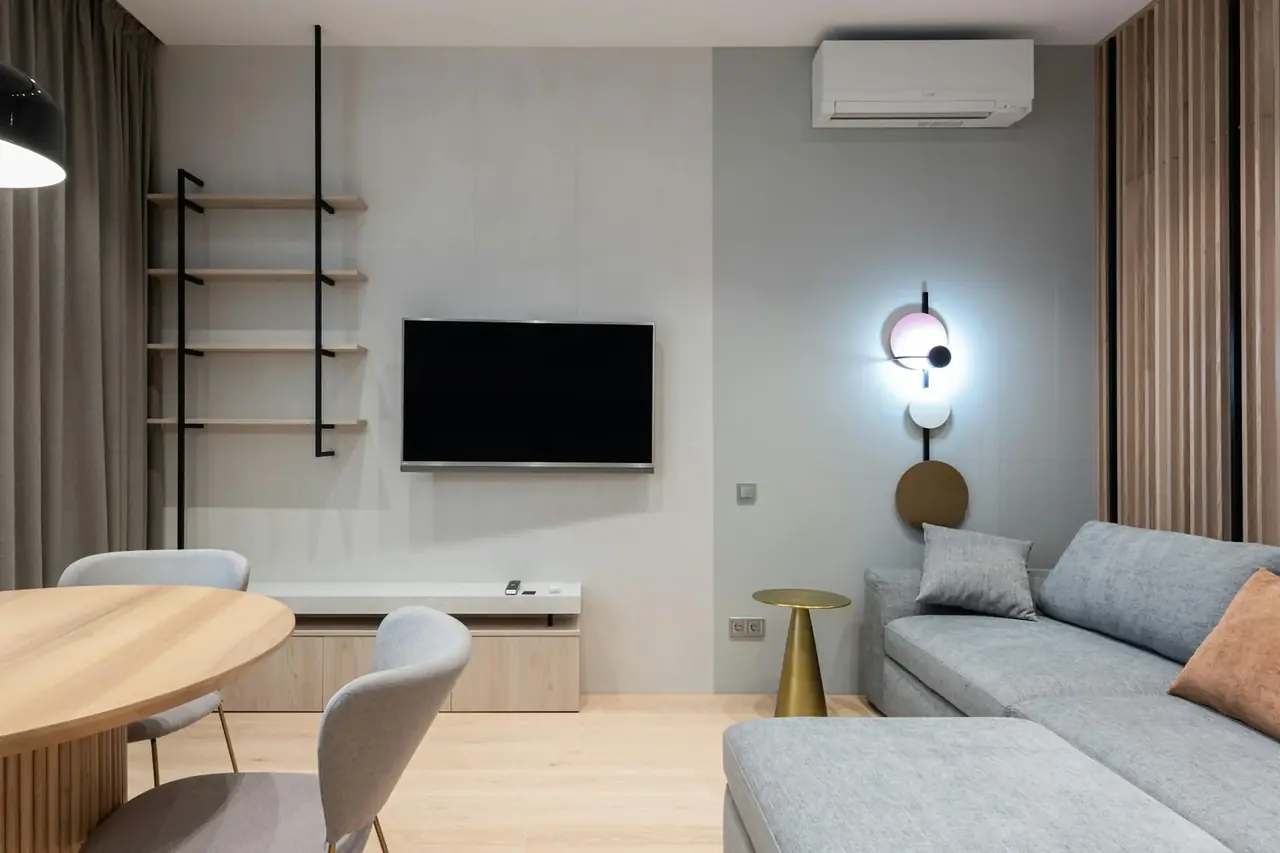
In air conditioning systems, cool is the function that starts the cooling cycle to lower the room temperature. It is the traditional cold mode, even though it may appear in English on remotes and control panels and raise doubts among those who just want cooler air without dealing with symbols or menus. Its logic is simple: the unit takes heat from inside, expels it outside, and leaves a drier, more stable feeling.
The key is not only cooling, but also controlling humidity. That is why the air feels more comfortable even if the thermometer does not drop sharply. In summer, that nuance makes the difference between a room that is simply less hot and one that is truly livable, with less stuffiness and less condensation on walls or glass.
If you have a problem with your air conditioner, you can use our free error code finder. From there, you can find out and solve all errors easily and effectively.
The real meaning of cooling mode in an air conditioner
Cool is not a decorative function or a commercial name without technical substance. In most air conditioners, whether split, portable, multisplit, or window units, it activates the compressor and the circuit that carries refrigerant through the system. That refrigerant absorbs heat in the indoor evaporator and releases it in the outdoor condenser, a continuous exchange that explains why the unit can turn a stuffy room into a bearable space in just a few minutes.
When the panel shows cool, the unit is not just ventilating, nor is it dehumidifying independently. It is genuinely cooling, even though the result also reduces air humidity. That combination produces the feeling of relief that many people associate with well-adjusted air conditioning: less heat, less stickiness, less fatigue.
The term appears in English because many manufacturers standardize their interfaces for different markets. On some remotes it may also be represented by a snowflake. Both mean the same thing: cooling mode. If the goal is to lower the temperature, that is the correct function; if the goal is simply to move air, then fan mode is the appropriate choice, and it does not cool.
How the unit works when cooling is activated
When cool is selected, the compressor starts compressing the refrigerant gas and forces it to circulate through a closed loop. This physical movement changes the gas pressure and temperature, allowing the system to capture heat indoors and expel it outside. The indoor fan distributes the already cooled air throughout the room, while the outdoor unit handles the removal of accumulated thermal energy.
The sensation the user receives depends on several factors: outdoor temperature, home insulation, sun exposure, room size, and even how many people are in it. A living room with large west-facing windows does not respond the same way as a shaded bedroom. That is why two identical units can deliver very different results in apparently similar places.
In modern systems, an internal sensor measures the temperature and the unit adjusts on-off cycles to maintain the selected value. The process is quieter and more efficient when the equipment is properly sized. An air conditioner that is too small works overtime; one that is oversized may cool quickly but leave an uneven feeling, with abrupt changes and poorer humidity control.
When it makes sense to choose cool and when it does not
Cool is the natural choice on hot days, during heat waves, in closed rooms, or in spaces where the sun hits directly for hours. It is also useful in crowded venues, where the human body adds extra heat and the atmosphere becomes heavy. In those situations, cooling mode improves both comfort and the ability to rest or concentrate.
There are situations, however, where it is not necessary to force cooling. If the room temperature is moderate and the main problem is stale air, sometimes a gentle fan or the dehumidification function, depending on the model, is enough. In temperate climates, using cooling mode continuously may be unnecessary and increase consumption without providing a clear benefit.
The practical rule is simple: when the space feels genuinely hot, cool is the right mode. When you only want air renewal or a slight humidity correction, it is worth checking what other functions the unit offers. That distinction avoids energy waste and also reduces wear on components that do not need to work at full capacity all the time.
The ideal temperature and the setting that least affects consumption
Technical literature and everyday practice agree on a reasonable range: between 24 and 26 degrees Celsius usually offers a sensible balance between comfort and energy use in summer. This is not a magic number, but rather a range that avoids excessive contrast with the outside and reduces the compressor’s effort. The more aggressive the temperature difference, the more work the system will require.
The common mistake is to set the control to the minimum thinking the room will cool faster. In reality, in many units the compressor will work just as intensely until it reaches the set point. If a reasonable temperature is set from the start, the system does not need to chase unnecessary extremes or compensate for excess cold that later has to be corrected with internal heating or frequent shutoffs.
It also helps to direct the air intelligently. It is not a good idea to focus it on one person as if it were a stream of ice water. It is better to spread it across the room and let the unit stabilize the environment. That distribution reduces discomfort, avoids direct drafts, and creates a more even sensation, similar to entering a home where the heat has been gradually removed.
Why fresh air feels better when humidity drops
Cooling mode does not only lower the temperature; it also dries the air to some extent. That effect matters just as much as temperature, because high humidity prevents sweat from evaporating easily and makes the heat feel stuck to the skin. A drier environment helps the body dissipate heat more effectively and perceive the space as lighter.
That is why two rooms with the same number on the thermometer can feel different. A room with high humidity feels stifling, while another with less water vapor in the air feels more bearable even at a similar temperature. An air conditioner in cooling mode acts on both fronts at once, and that dual effect explains its real usefulness.
Condensation is another visible clue. When a unit is working normally, the water it removes from the environment is channeled outside or into a drain. That removed moisture does not disappear by magic; it becomes a small drainage flow that confirms the system is doing more than just moving fans.
What sets cool mode apart from fan, dry, and heat
On remotes, the language is brief, almost telegraphic, but each option serves a specific function. Cool actively cools. Fan only circulates air without changing its temperature. Dry prioritizes reducing humidity and may cool slightly, although it is not intended to lower many degrees. Heat, when available, reverses the cycle to warm the room.
Confusing these functions is more common than it seems, especially on units with small icons or unintuitive remotes. A user may think the unit is not cooling when it is actually in ventilation mode, or believe it is working poorly when it is in dehumidification mode. Reading the symbol correctly avoids wrong diagnoses and unnecessary service calls.
There are also models with auto, an option that decides the mode and fan speed on its own according to the internal sensors. It is convenient, but it does not always do what the user expects. On very hot days, setting cool manually usually provides clearer control over the final result.
Signs that cooling mode is not performing as it should
If the air coming out feels warm, the unit takes too long to lower the temperature, or the outdoor unit runs nonstop, several issues may be present. It is not always the compressor; sometimes the cause is simpler, such as dirty filters, open doors, poor thermostat placement, or lack of maintenance. A clogged filter reduces airflow and makes the unit breathe with difficulty, as if it had a scarf in front of it.
There are also symptoms related to the environment. An apartment with heat leaks, blinds open at midday, or a very high thermal load from appliances and electronic devices demands much more from the system. In those cases, the air conditioner is not necessarily broken; it is fighting an invisible enemy coming in through windows, ceilings, and hot glass.
When the problem persists, it is worth checking refrigerant levels, condenser condition, fans, and internal coil cleanliness. The cooling system depends on a precise chain of components. If one fails, the final sensation deteriorates quickly, like a bicycle that loses a single small part and stops rolling smoothly.
The role of maintenance in helping it cool with less effort
An air conditioner in cooling mode works better when the filters are clean, the grilles do not collect dust, and heat exchange remains free of obstructions. Basic maintenance is not a formality; it is the difference between a system that cools smoothly and one that uses more energy to deliver less. In many cases, periodic cleaning restores noticeable performance from the very first use.
Indoor units often collect dust, textile fibers, and particles floating around the house. That layer acts like a coat over the exchange surfaces and slows heat transfer. Over time, the unit takes longer to do its job, makes more noise, and can generate unpleasant odors, especially in humid environments.
The outdoor unit should not be forgotten either. If the condenser is exposed to leaves, dirt, or urban grime, heat is not expelled properly and the entire cycle loses effectiveness. The result is a unit that seems to be working, but never quite delivers the clean, steady cold the user expects when activating cool.
Electricity consumption, comfort, and common sense in summer
Using cooling mode wisely makes life more comfortable without driving up the bill. Consumption depends more on how the unit is used than on the button itself. A properly sized unit, with clean filters, moderate temperature, and closed doors works more steadily than one subjected to constant setpoint changes or to spaces open to the outside.
The idea of turning it on, cooling to extremes, and then switching it off quickly usually ends up being expensive. The compressor needs time to stabilize the environment, and each start involves extra effort. Maintaining a constant, reasonable temperature is usually more efficient than chasing a sudden cold spell that lasts briefly and forces the cycle to repeat again and again.
Comfort, moreover, is not measured only in degrees. Noise, direct airflow on the body, humidity level, and environmental stability also matter. A well-adjusted air conditioner creates a kind of discreet, almost invisible indoor climate; it does not feel like a gust, but like a truce.
What to remember when looking at the remote and choosing the right icon
In practice, cool is the mode that turns an air conditioner into a real tool against heat. Its function is to cool, partially dehumidify, and maintain a more comfortable temperature without improvisation. That is why the snowflake symbol, or the English word, means the order to start active cooling.
Understanding that label avoids simple but costly mistakes: confusing ventilation with cooling, using extreme settings unnecessarily, or assuming the unit is failing when it is actually set to the wrong function. Knowing what each mode does saves time, energy, and frustration, and allows you to read the unit’s behavior more clearly.
In a long summer, the true value of cooling mode is not in the word on the remote, but in the effect it leaves in the room: a drier, fresher, less hostile environment. That is the technical promise behind a short term that, on screen, looks small; in daily life, however, it weighs like an open window in the middle of the harshest August.
Este artículo contiene enlaces de afiliado: si compras a través de ellos, se genera una pequeña comisión sin coste adicional para ti. Más información.


F37 error on a Balay washing machine: meaning and safe solutions

F26 error on a Balay washing machine: meaning and fix

Balay ceramic hob F2 error: causes and safe solution
F2 error on a Balay washing machine: causes and safe solutions

Balay F2 Error With the Hob Off: Causes and Fixes

F18 error on a Balay washer-dryer: causes and fixes

F11 error on a Balay dryer: meaning and safe solutions

F01 error on a Balay washing machine: meaning and action

F0 error on a Balay cooktop: causes and solutions

Balay F0 error on hobs: causes and safe solutions

 Dishwasher7 days ago
Balay dishwasher E15 error: warranty coverage and solution
- Dishwasher7 days ago
Balay dishwasher E16 error: causes and safe solution
- Balay6 days ago
Balay washing machine E2 error: causes and safe solutions
- Dishwasher7 days ago
E17 error on a Balay dishwasher: causes and safe solution
- Dishwasher6 days ago
Balay dishwasher E19: causes and safe solution
- Balay6 days ago
E19 error in Balay dishwasher: causes and solution
- Appliance4 days ago
Smart appliances for a secure connected home
- Dishwasher7 days ago
E15 Error on Balay Dishwasher: Causes and Safe Solution
- Appliance4 days ago
Electrodomésticos con IA: funciones, límites y compra útil
- Appliance4 days ago
Efficient appliances to save water at home
- Balay6 days ago
E21 error on a Balay washing machine: causes and safe fixes
- Balay7 days ago
E18 error on the Balay TW 7412 washing machine: causes and fix


