Magazine
Saunier Duval boiler won’t turn on: causes, error codes, and solutions
Causes, codes, and safe checks to restore ignition and prevent major damage.

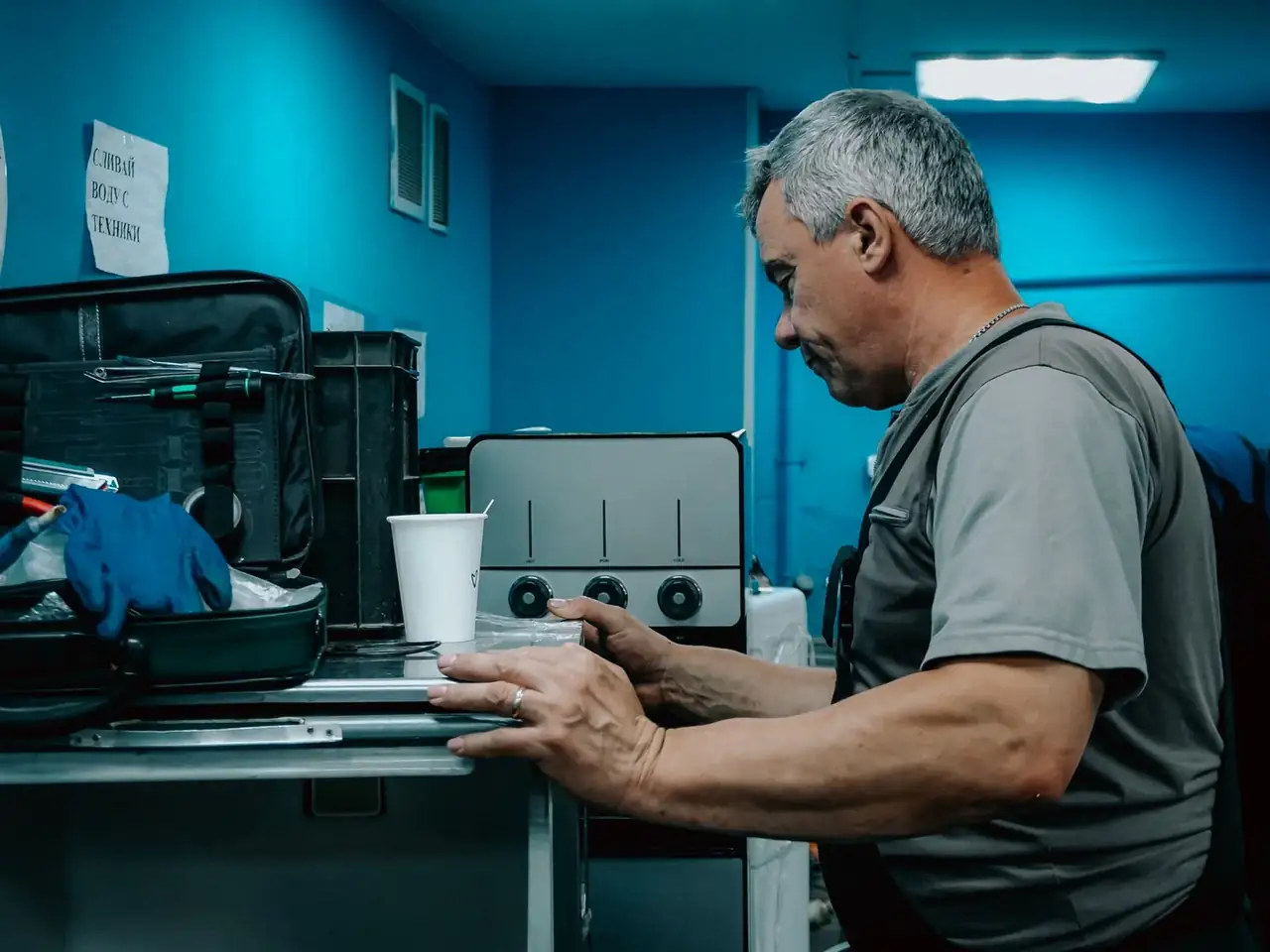
A Saunier Duval boiler that won’t start usually reveals the problem within seconds: a blank display, a spark attempt with no response, a lockout with a red light, or an error code that cuts off service. In most cases, the cause lies in a very specific chain: low pressure, no gas, electrical failure, a blocked pump, or a safety command that prevents ignition.
The key is to read the symptom correctly. A boiler with no power is not the same as a unit that is on but locked out due to low water, and a flame warning is not handled the same way as a shutdown caused by flue gas evacuation. The display, when there is one, does not provide a full diagnosis, but it does point the way; and that path makes it possible to distinguish between a simple check and a fault that already requires tools and experience.
If you have a problem with your boiler, you can use our free error code finder. From there you can discover and fix all errors easily and effectively.
What it really means when the boiler won’t start
In a modern wall-mounted boiler, startup does not depend on a single component. Before there is a flame, the unit checks that there is electrical power, correct water pressure, a heat demand, available gas, and safe flue gas evacuation. If just one condition fails, the system protects itself and either stays silent or locks out partially.
That behavior is not a whim, but a safety measure. The electronics act like a strict doorman: they do not open the door if they detect an anomaly. That is why a boiler that does not ignite can hide anything from something trivial, such as a disconnected plug, to a more serious fault in the board, fan, sensor, or gas valve.
Saunier Duval uses very useful codes to guide the fault diagnosis, although not all of them appear in the most basic user manuals. In domestic units, the warnings most closely linked to startup are usually F.22, F.23, F.24, F.28, F.29, and F.54, as well as others related to ventilation, pressure, or overheating. Reading the appliance’s behavior before touching anything saves time and avoids mistakes.
The most common startup faults in Saunier Duval boilers
Experience from technicians and manufacturers agrees on a simple idea: most boilers that fail to ignite do so for repeated and recognizable reasons. Some are mechanical, others electronic, and others depend on the installation. The pattern tends to repeat far more than it first appears from the outside.
Low pressure takes first place on the list. When the circuit drops below its value, the boiler locks out to avoid running dry. In domestic models, the service pressure is usually around 1 to 1.5 bar when cold, although the exact value depends on the manual and the installation design. If it is below that, ignition is usually prevented.
Another common block is gas-related. A closed valve, a stalled meter, air in the line, a faulty regulator, or a real supply outage are enough for the burner never to light. The symptom may seem electrical, but in reality the problem starts before the spark. Blockages in condensate drains and flue outlets are also common, especially in sealed models.
How to interpret the most recurring codes
Code F.22 usually points to low pressure or poor water pressure detection. In practical terms, the boiler cannot find safe conditions to start the cycle. Sometimes it is enough to refill the circuit with the filling loop and check the pressure gauge; other times the problem lies in the pressure sensor, which is no longer sending proper information to the board.
Codes F.23 and F.24 indicate a temperature rise that is too rapid. That scenario is usually related to a blocked pump, poor circulation, or air inside the circuit. If the water does not move, heat concentrates in one spot and the electronics shut the unit down before the temperature shoots up. Bleeding radiators and checking the pump can be decisive, but not always enough.
The well-known F.28 appears when there is an ignition failure. This group includes several parts and circumstances: no gas, faulty regulator, dirty or damaged electrodes, interrupted wiring, blocked condensate drain, or problems in the electronic board. It is one of the broadest warnings, which is why it should not be interpreted too hastily.
F.29 also points to ignition, but with a more direct cause: no gas. It can be something as simple as a closed valve or as complex as an issue with the regulator or the supply. F.54, for its part, usually accompanies gas pressure that is too low or absent, and in practice confirms that the burner has no fuel to work with.
What to check first without opening the boiler
Before dismantling anything, there is a set of external checks that usually provides an answer within minutes. The first is the most obvious: verify that the boiler is receiving power. A tripped main switch, a loose plug, a tripped circuit breaker, or a fuse in the installation itself can leave the unit completely dead.
The second check is pressure. The gauge should be in the range recommended by the manufacturer, generally above 1 bar when the system is cold. If it has dropped below that margin, the boiler may lock out even if everything else is working. Refilling the circuit moderately and carefully usually clears the lockout if there is no leak.
The third piece of the puzzle is gas. It is worth checking that the shutoff valve is open and that other appliances on the same supply are working normally. If there is gas in the kitchen but not in the boiler, the cut-off may be at the valve on the line itself, the regulator, or an internal blockage. If there is no gas anywhere, the problem is not inside the appliance.
The fourth check is the thermostat or demand signal. A thermostat with dead batteries, badly configured, or switched off can leave the boiler without a start command. It also happens that summer mode, the time program, or a temperature setting that is too low prevents the appliance from activating. Technology does not turn on by intuition, only by command.
When the problem is electrical and when it only seems that way
There is a type of fault that is very misleading: the boiler seems dead, but in reality it has only lost its internal power supply. In models such as Themaclassic or Themafast, for example, a blown fuse, a tired capacitor, or a board with false power supply can prevent the display from lighting up or the system from even starting the cycle.
In some cases, the appliance receives 230 volts at the input, but the internal voltage becomes unstable because of a degraded component. That explains why the boiler may show intermittent life, restart by itself, or switch off shortly after starting. Electronic boards age, and capacitors are often one of the first parts to show subtle symptoms before a complete failure.
When there is no display, no fan noise, and no visible attempt to start, the problem is very likely electrical. Even so, a technician must methodically check whether the fault is in the incoming line, the fuse, the board, the panel, or any safety lockout preventing the system from responding normally.
Water pressure and the domino effect that leaves the boiler stopped
A loss of pressure does not just trigger a warning; it also cuts the boiler’s internal logic. The system understands that it should not heat if the circuit is not full, because doing so could damage the heat exchanger, trigger abnormal temperatures, or leave the whole assembly without circulation. A low gauge reading is a frequent cause of lockout and one of the easiest to detect.
A loss does not always mean a visible leak. Sometimes there is small normal evaporation or a gradual drop that requires periodic topping up. But when pressure falls quickly, we are no longer talking about routine maintenance but about a leak in radiators, valves, connections, the drain valve, or the expansion vessel.
The opposite can also happen: excess pressure. In that case, the safety valve expels water and the system protects itself with another lockout. The result is paradoxical: the boiler will not start because it lacks pressure, but neither will it when there is too much. At both extremes, the electronics act as an automatic brake.
Gas, ventilation, and combustion: the triangle that causes the most lockouts
If the pressure is fine and the electrical supply is correct, attention shifts to gas and flue gas evacuation. Ignition only happens when the board confirms that the combustion circuit can operate safely. If the fan does not start, the pressure switch does not respond, or the chimney is obstructed, the boiler does not give permission to burn.
In condensing or forced-draft units, a dirty condensate drain may seem like a minor detail, but it is enough to disrupt startup. Retained water, a blocked pipe, or dirt buildup along the route breaks the sequence. The boiler protects itself before producing poor or dangerous combustion.
The gas valve is also a common suspect. If it does not open, opens only halfway, or does not receive a command from the board, the burner will never see fuel. And when there is a flame but detection fails, the sequence is interrupted immediately. That is why the same fault can hide electrodes, wiring, valve, regulator, or electronics, all in the same bundle of symptoms.
What the user can do and where it is wise to stop
There are actions that fit within reasonable user maintenance: checking power, inspecting the thermostat, opening the gas valve, resetting the boiler once, refilling the circuit to the recommended value, and bleeding the radiators if there is air. These are simple steps, not repairs, and they help restore normal startup when the problem is minor or temporary.
What is not advisable is forcing the appliance with multiple resets, bypassing safety devices, or opening combustion components without training. A boiler that keeps locking out is warning of a cause that will not disappear through persistence. Persistence often turns a minor issue into a more expensive fault. Correct interpretation is more useful than stubbornness.
If the display shows F.28, F.29, F.54, or a repeated lockout sequence, and pressure, gas, and electrical supply have already been checked, the logical next step is a technical inspection. The boundary between a domestic check and a professional intervention is clear when gas, the electronic board, or flue gas evacuation are involved.
The hidden faults that turn a startup into a false startup
There are less visible faults that also block ignition. A tired fan may rotate but not generate the proper airflow; an NTC sensor may read temperature incorrectly; a broken cable harness may cut communication between the board and the sensors; a dirty heat exchanger may lead to overheating. All of this produces similar symptoms, even though the cause is different.
In practice, the user sees the same result: the boiler does not ignite. However, the machine may have made several previous attempts, the fan may be heard, the valve may open, and then it cuts out because of an abnormal reading. That explains why sometimes the problem is not the ignition itself, but everything surrounding it.
Moisture in connections and terminals also deserves attention. In winter, condensation or a small internal leak can affect sensitive contacts. The fault appears and disappears like a bad household connection, one of those that manifests with irritating reliability: today it starts, tomorrow it doesn’t. When the symptom is intermittent, electronics and wiring come to the forefront.
What a technician does when the lockout will not clear
A proper diagnosis starts by separating power supply, demand, and combustion. First, the technician checks whether the boiler is receiving voltage and whether its protections are correct. Then the real pressure and the sensor reading are checked. Next, it is analyzed whether there is gas, whether the fan responds, whether the pressure switch confirms draft, and whether the electrodes generate a spark and detect flame. That order avoids changing parts blindly.
If the hydraulic circuit is correct, the technician moves on to measuring specific components: pump, sensor, gas valve, board, and wiring continuity. When the fault points to electronics, a simple capacitor can bring down the entire startup sequence, while in other cases the repair involves replacing the whole board. The boiler’s prior behavior usually provides the useful clue.
In poorly maintained units, cleaning also matters. Burners with deposits, a dirty fan, and a blocked Venturi alter the air-gas mix and make the system protect itself. A boiler does not fail to ignite only because of a major fault; sometimes it stops because of the buildup of small internal resistances.
What this type of fault makes clear about the unit’s lifespan
When a Saunier Duval refuses to start, the symptom is usually less mysterious than it seems. There is almost always a clear internal logic: either a basic condition is missing or a control component has decided not to authorize ignition. That logic, when read properly, prevents hasty diagnoses and reduces downtime at home.
The real value of knowing the codes and symptoms is not to guess parts, but to understand the appliance’s language. A boiler that locks out speaks in pressure, gas, temperature, ventilation, and electrical signal. Whoever interprets that language calmly can distinguish between a minor issue and a problem that already requires specialized intervention.
In practice, the most sensible path is simple: check the basics, do not force the appliance, and accept that some faults hide behind very similar symptoms. That is the difference between a one-off stop and a fault that signals wear, lack of maintenance, or a component at the end of its useful life.
Este artículo contiene enlaces de afiliado: si compras a través de ellos, se genera una pequeña comisión sin coste adicional para ti. Más información.


Balay washing machine F4 error: how to restore drainage

Error in a 2013 Balay A++ refrigerator: causes and fixes

Balay induction hob error 22: how to fix it

E17 error in the Balay 3TS60107 washer: causes and fix

Balay washing machine E93 error: causes and safe solution
E9 error on a Balay induction hob: causes and solution
E9 error on a Balay induction hob: causes and solution

Balay E9 error on a freezer: causes and solution

E80 error on a Balay washing machine: meaning and solution

Balay washing machine E80 error: meaning and what to do

 Kitchen plate7 days ago
E Error on Balay Series 900 Hob: Causes and Solutions
- Kitchen plate7 days ago
Balay induction hob E error: causes and solutions
- Balay6 days ago
E05-32 error on a Balay oven: causes and safe solution
- Washing machine6 days ago
Hotpoint washing machine F09 error: what it means and what to do
- Balay5 days ago
E09 error in Balay dishwasher: causes and safe solution
- Dishwasher5 days ago
E15 error on Balay dishwasher: do not tilt it
- Dishwasher5 days ago
E09 error in Balay dishwashers: causes and safe solution
- Balay5 days ago
Balay washing machine E12 error: causes and safe solution
- Dishwasher4 days ago
Balay dishwasher E15 error: warranty coverage and solution
- Balay6 days ago
E0 error on a Balay induction hob: causes and fixes
- Dishwasher5 days ago
E11 error in Balay dishwashers: causes and solutions
- Balay4 days ago
Balay washing machine E2 error: causes and safe solutions