Magazine
Phantom consumption in household appliances: how to detect and reduce it
The energy that is lost at rest can raise your bill more than you imagine. This is how it is identified and cut back.

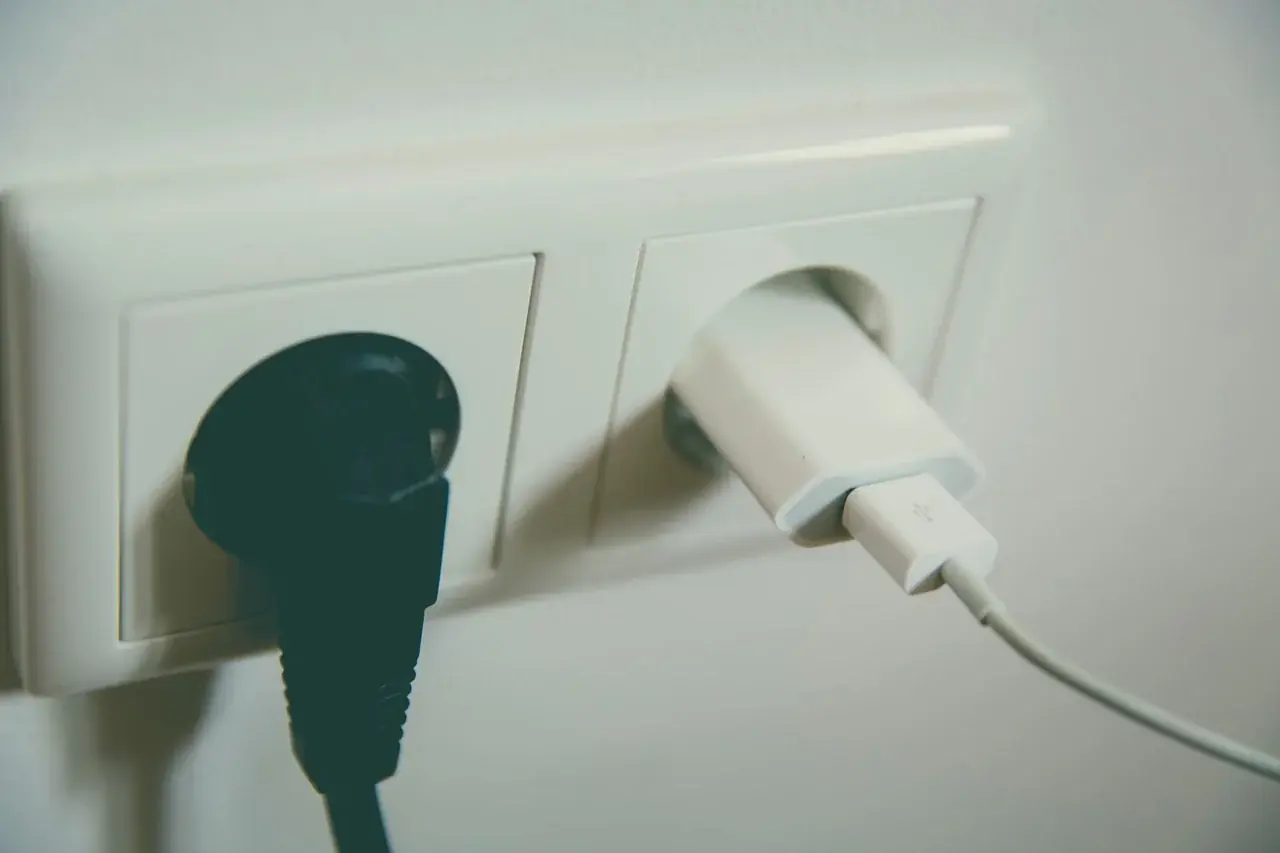
In many homes, the bill does not spike because of one big appliance, but because of dozens of small leaks spread among televisions, chargers, consoles, microwaves, and routers. That silent spending remains active even when everything seems switched off, and over the course of a year it can account for a significant part of the electricity bill. The explanation lies in standby modes, digital clocks, and circuits that never quite go to sleep.
If you have a problem with your washing machine, you can use our free error code finder. From there, you can find out and solve all errors easily and effectively.
The spending that makes no noise, but leaves a trace
Standby consumption does not have the drama of a breakdown or the visibility of an appliance running at full power. It hides in the domestic routine, in that middle ground where the device seems turned off, but remains connected to the grid and powering some minimal function. A red light on, a clock showing the time, a receiver ready to respond to the remote, or an electronic board on watch are enough to keep the current flowing.
The result is a constant drip. It is not usually noticeable in a single afternoon or with a single appliance, but it is when all the household devices are added up over weeks and months. In practical terms, the invisible energy in the home works like a small leak in a pipe: it does not fill a bucket right away, but it eventually drains more water than desired if no one fixes it.
The most cited estimates in Spain place this phenomenon between 7% and 11% of a household’s annual electricity spending. The Institute for Energy Diversification and Saving has noted that, in an average home, around 300 kWh a year may be lost without providing any real use. Translated into money, the impact varies depending on the tariff and the size of the home, but it is not uncommon for it to amount to several dozen euros a year in a context of fluctuating electricity prices.
What happens inside the appliance when it seems asleep
Modern appliances are designed to be convenient, fast, and easy to use. That convenience has a technical cost. Many include internal transformers, memories, circuit boards, and sensors that stay active to preserve settings, respond to the remote control, or display basic information. Even if the device is not performing its main function, part of its inner workings keeps running.
This consumption is concentrated above all in devices with more complex electronics. A smart TV, for example, does not merely receive power: it keeps circuits ready to switch on instantly, preserve connections, remember settings, and sometimes update software. The same happens with consoles, set-top boxes, printers, or soundbars, which combine immediate convenience with a continuous, small but persistent demand.
There are also appliances with a more discreet profile, but which remain plugged in all day out of habit. Chargers with no phone connected, programmable coffee makers, ovens with clocks, microwaves with digital panels, or home speakers all add their share to the meter. The key is not to demonize technology, but to understand that being off does not always mean stopping consumption.
Which appliances and devices weigh most in standby
The list of usual suspects changes little from one home to another. In the living room, televisions, set-top boxes, consoles, and sound systems usually stand out. In the kitchen, microwaves, automatic coffee makers, and ovens with digital clocks. In the home office, desktop computers, monitors, printers, and small connection hubs. In all cases, the pattern is the same: devices designed to react instantly or preserve memory and connectivity.
Entertainment electronics are usually the most visible because they concentrate several peripherals around a single usage point. A TV rarely stands alone; it is accompanied by soundbars, players, game consoles, or decoders. Each one adds its own standby consumption and turns the living room into a kind of always-on port, even in the middle of the night.
There are devices that draw less attention, but can maintain a higher-than-expected continuous demand. Gas boilers with electronic controls, some robot vacuums, voice assistants, and desktop computers often appear among the appliances that consume the most in standby. This is not a universal rule, because the model and age make a big difference, but it is a consistent trend: the more software and connectivity a device includes, the greater the chance it will keep consuming when no one is using it.
It is also worth looking at chargers for phones, tablets, and laptops. Their individual consumption is low, but they are objects that stay connected for hours, days, or even permanently. This habit, widespread for convenience, turns outlets into small stations of invisible losses. And as with drops of water, the damage does not come from one alone, but from the sum of them all.
How much it can cost per year and why it is worth putting numbers to it
Measuring standby consumption helps move from intuition to reality. A device that uses 2 watts for 20 hours a day adds up to about 14.6 kWh per year. If that logic is repeated across several devices, the figure rises quickly. A decoder that consumes 10 watts in standby can exceed 80 kWh a year, and a more complex console or television can add another similar amount depending on its use and configuration.
In a home with two televisions, a console, a desktop computer, a router, several chargers, and small kitchen appliances, the annual range can easily move between 150 and 400 kWh of hidden consumption. The financial cost will depend on the price per kilowatt-hour, but a simple calculation is enough to understand why this phenomenon matters: part of the money paid each month is not being invested in lighting, cooling, or cooking, but in keeping accessory functions awake.
The IDAE reference, along with recent educational studies, points to that wasted energy amounting to between 20 and 70 euros a year in an average home, although the figure can be higher in houses with a lot of connected equipment. In large homes, with several televisions or more home automation, the impact rises even further. The value of putting numbers to it is clear: it lets you decide what to unplug, what to keep, and what deserves a more efficient replacement.
How to detect it without turning the house into a laboratory
The simplest way to check is to observe. If a device keeps a pilot light on, a visible screen, or a permanent clock, that is already a clue. If it also feels warm to the touch despite not being in use, the likelihood that it consumes in standby increases. There is no need for a complex operation to start recognizing the pattern; it is enough to look at the house with an energy accountant’s eyes.
Plug-in power meters are the most accurate tool for this type of home diagnosis. They are placed between the outlet and the device, and record how much it consumes in real time. They are especially useful with televisions, consoles, printers, and computers, because they let you see the difference between operating consumption and idle consumption. For anyone who wants a broader view, the home’s digital meter also offers clues when non-essential devices are unplugged and consumption still keeps moving.
Home automation and smart plugs add another layer of control. Some show consumption by device, others allow scheduled shutdowns, and others simply help cut power when it is not needed. They do not work magic, but they do provide very useful clarity: vague excuses about what happens when no one is watching stop existing.
There is a classic test that still works well. Turn off or unplug all nonessential equipment for an hour, leave only what is indispensable, and check whether the meter continues to add up at a noticeable pace. That reading, even if basic, usually reveals more than any family that has never looked carefully at its baseline consumption might imagine.
What measures really work at home
Unplugging is still the most effective solution for completely eliminating standby consumption, but it is not always the most convenient one. That is why the most sensible strategy combines simple habits with tools that make disconnection easier. Power strips with switches, for example, let you turn off the TV, console, soundbar, and set-top box all at once, without having to reach awkward outlets behind the furniture.
Smart plugs have also gained ground because they offer remote control and scheduling. They can be useful for devices used only in specific time slots, like a coffee maker or a charger, and they are practical in second homes or rooms with occasional use. The real advantage is not sophistication, but the discipline they impose: they turn a forgotten gesture into an automated routine.
The energy label deserves more attention than it usually gets. It does not only inform you about consumption during use; it also helps identify models that manage standby better. When buying a new appliance, it is worth looking at its shutdown, timing, and residual demand functions too. An efficient device is not only one that cools, heats, or washes better; it is also one that leaves less electrical residue when it rests.
In some homes, the key is deciding what should stay connected all the time and what should not. The refrigerator, freezer, or router usually need continuity for obvious reasons. By contrast, secondary televisions, printers, chargers, or sound systems rarely need to remain active all the time. That separation, made with judgment, delivers results without having to give up comfort or technology.
The weight of habit and the trap of convenience
Part of the problem is not technical, but cultural. For years, leaving devices on standby was assumed to be a kind of harmless rest, almost imperceptible. The modern home, full of screens and connectivity, has normalized that permanent red light as if it were the inevitable price of digital life. But habit does not make harmless something that continues to consume.
Immediate convenience usually wins the daily battle. It is easier to press the remote and forget than to open a power strip, just as it is more convenient to leave the charger plugged in than to put it away. The problem is that these small decisions are repeated every day, mechanically, and accumulate until they become an expensive habit. Savings start at home, but end up reflected in the bill and in the environmental burden of the electrical system.
There is also a psychological logic behind invisible waste: when the expense is small and spread out, the brain considers it irrelevant. However, the sum of several low-profile consumptions can easily exceed the cost of an appliance used more intensively for just a few hours. That is the paradox of standby consumption: it seems minimal, but it lives off repetition.
In homes with children, teenagers, or several people sharing space, the phenomenon multiplies. Each room accumulates its own set of devices, and each habit adds a little more. That is why, rather than a general rule, a zone-based logic usually works better: living room, kitchen, office, and bedrooms do not have the same needs, and treating them the same only helps consumption keep flowing when it contributes nothing.
What happens in very well-equipped homes and workspaces
The home office has expanded the map of phantom consumption. Computers, monitors, webcams, speakers, printers, and charging docks spend many hours in standby, often with the idea that they will be used tomorrow anyway. In that context, hidden consumption stops being a living-room anecdote and becomes a structural part of the home’s electricity bill.
In small businesses and offices, something similar happens, though on a larger scale. Equipment remains connected for safety, routine, or simple operational disorder. What in a house may mean a few euros a month, in an office with dozens of devices adds up to much more serious figures. The principle, however, is identical: if continuous power is not needed, keeping it on means paying too much.
Smart technology can help, but it does not replace judgment. Scheduling automatic shutoffs at the end of the day, separating circuits by zones, and checking which peripherals need to stay active are basic decisions that prevent a substantial part of the waste. Real efficiency does not depend only on the device, but on how it is used when the day is over.
The energy bill you cannot see, but do pay
Phantom consumption has a particular trait that makes it persistent: it does not visibly change daily life, so it is harder to correct. It produces no noise, takes up no space, and does not force radical changes in routine. Even so, its effect is felt in the monthly total and, above all, over the year. That slowness is precisely what makes it such an uncomfortable rival to household efficiency.
The best way to deal with it is to treat each device as a decision, not as a permanent backdrop. There are devices that deserve to stay connected all the time and others that do not. There are standby functions that add convenience and others that only add cost. Distinguishing between the two does not require major sacrifices, but it does require something uncommon: seeing electricity as a resource to be managed, not as an invisible flow with no consequences.
Reducing standby consumption does not change a monthly bill by itself, but it does change the yearly balance. And that is the important point. At a time when households are seeking spending stability and greater control over their energy, every small adjustment matters. An efficient home is not one that lives in the dark, but one that stops feeding what no longer needs to stay awake.
The most accurate image is that of a home that learns to close doors without losing comfort. It is not about living glued to the outlet, but about reducing the weight of inertia. When the devices that add no value stop consuming, the bill becomes more honest and energy a little smarter.
A lower bill starts by switching off what is not working
The phantom consumption of appliances is neither a technical oddity nor a problem reserved for highly equipped homes. It is a mix of habits, electronic design, and badly understood convenience. It appears in almost every home and slips in through different corners: the set-top box light, the microwave clock, the TV pilot light, the forgotten charger, or the silent printer.
The advantage is that it can be measured and cut. With power strips, smart plugs, better habits, and periodic checks of connected equipment, part of that spending disappears without affecting comfort. Household efficiency usually wins when it focuses on these small details, precisely because they are the ones that stay off the radar the longest.
In an electricity bill increasingly watched by families, invisible consumption deserves less resignation and more attention. There is no need to turn the house into a battlefield to start saving; it is enough to recognize which devices keep working when no one is using them anymore and decide, with judgment, which ones should truly rest.
Este artículo contiene enlaces de afiliado: si compras a través de ellos, se genera una pequeña comisión sin coste adicional para ti. Más información.


E80 error on a Balay washing machine: meaning and solution

Balay washing machine E80 error: meaning and what to do

E80 Error in Balay Ovens: Safe Causes and Solutions

E63 error on a Balay dryer: causes and safe solutions
E63 error on a Balay washing machine: causes and safe fixes

Balay washing machine E61 error: meaning and what to do

E61 error on a Balay washing machine: meaning and action

E6 PUNP error on a Balay washing machine: meaning and next steps

E56 error on Balay dryer: causes and safe solutions

E56 error on Balay washing machines: meaning and safe solutions

 Kitchen plate7 days ago
E Error on Balay Series 900 Hob: Causes and Solutions
- Dishwasher7 days ago
E25 error in Balay dishwasher: causes and solutions
- Balay7 days ago
E16 Error on a Balay Washing Machine: Causes and Safe Fixes
- Kitchen plate7 days ago
Balay induction hob E error: causes and solutions
- Balay6 days ago
E05-32 error on a Balay oven: causes and safe solution
- Washing machine6 days ago
Hotpoint washing machine F09 error: what it means and what to do
- Balay7 days ago
Balay washing machine E18 error: causes and safe fix
- Balay7 days ago
E21 error in Balay dishwashers: causes and solutions
- Balay5 days ago
E09 error in Balay dishwasher: causes and safe solution
- Balay7 days ago
E61 error on a Balay washing machine: causes and safe fix
- Balay7 days ago
Error E on a Balay hob: what it means and what to do
- Dishwasher5 days ago
E15 error on Balay dishwasher: do not tilt it