Magazine
LG Signature: key features of its premium appliances
LG’s most exclusive line combines minimalist design, AI, and advanced functions for kitchen and laundry.

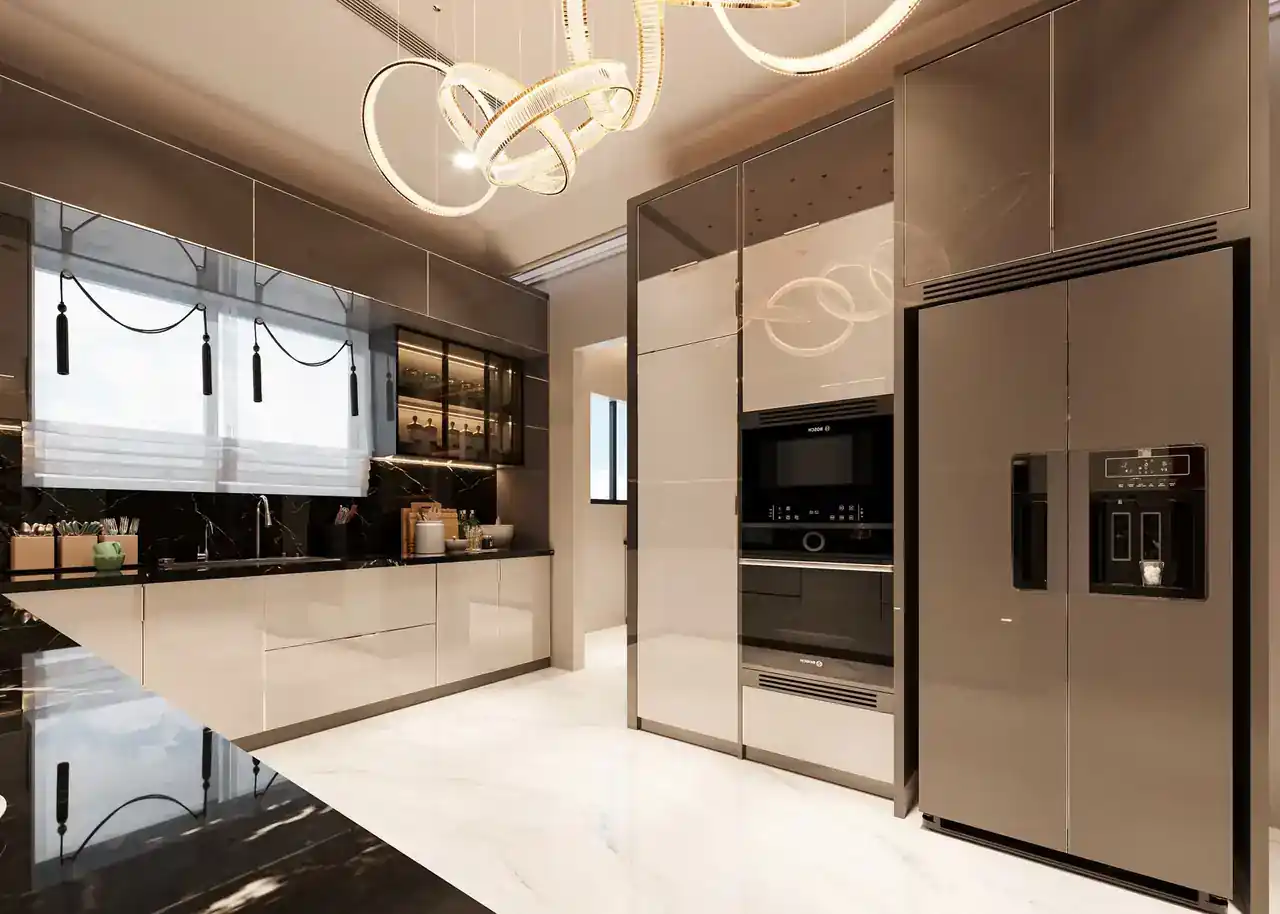
LG SIGNATURE has gone from being a design showcase to becoming a statement of intent: premium appliances with artificial intelligence, meticulously finished surfaces, and functions designed to simplify everyday tasks without disrupting the home’s aesthetics. The brand’s most recent evolution, presented for CES 2026, reinforces that idea with an expanded range and deeper AI integration in refrigeration and ovens, two central pieces of the contemporary kitchen.
If you have a problem with your refrigerator, you can use our free error code finder. From there, you can find out about and solve all errors easily and effectively.
A range designed for understated luxury and real use
The LG SIGNATURE proposal is not based solely on a high-end label. Its identity is built on clean horizontal lines, noble materials, and a minimalist visual language that avoids excess. The goal is clear: the appliance should not look like an intrusive industrial piece, but rather part of a calmer, almost museum-like interior architecture, where every surface interacts with the light and the furnishings.
In its most recent evolution, LG maintains that sober luxury aesthetic, but pairs it with a much more ambitious technological layer. The novelty is not just in the finish; it lies in the way you interact with the device. Artificial intelligence stops being a generic selling point and starts acting on specific tasks: anticipating openings, recognizing food, suggesting recipes, adjusting cooking, or fine-tuning thermal management. In other words, the brand wants the product to think before the user has to step in.
That is the fundamental shift from previous generations. A decade ago, the conversation revolved around materials, transparent panels, or specially opening doors. Today the focus shifts to smart convenience, but without sacrificing visual presence. The premium kitchen is no longer sold only as an elegant place, but as a space where the appliance understands routines, schedules, and preferences with a naturalness that once seemed reserved for software.
The refrigerator as the center of the smart kitchen
The LG SIGNATURE refrigerator takes center stage in the brand’s new phase. Its differentiating value lies in conversational artificial intelligence based on language models, a technology that makes it possible to interact in natural language to receive personalized recommendations. This is not just a voice assistant with rigid commands, but a more flexible interface, capable of responding to household habits and contexts with less friction.
Added to that layer is a new 6.8-inch LCD display, which serves as both a control window and a visual support. From there, food management and the unit’s internal status are monitored, while the AI Fresh function tracks temperature variations according to usage patterns. The system can even pre-cool the interior up to two hours before an expected opening, a discreet but useful solution in homes where the refrigerator door is opened and closed constantly during meals, gatherings, or busy shopping days.
The Smart InstaView model expands this approach with ThinQ Food, a platform that uses an internal camera to identify ingredients, suggest recipes, and propose creative substitutions with what is available in the fridge. The well-known InstaView panel, now with a T-OLED panel, not only lets you see inside without opening the door; it can also display elegant images when not in use. That detail sums up the series’ philosophy well: the appliance does not merely function, it also shapes the atmosphere.
In practical terms, these functions solve a very specific everyday problem: waste and improvisation in the kitchen. Knowing what is inside, receiving usage ideas, and preserving cold better is not an abstract promise. It is a way to reduce unnecessary openings, better organize the weekly shopping, and use ingredients before they lose freshness. Here, technology does not seek to dazzle on its own; it aims to fit into real habits with as little friction as possible.
Oven with cameras, guided recipes, and more precise cooking
If the refrigerator sets the pace for storage, the SIGNATURE oven defines the range’s culinary ambition. LG incorporates Gourmet AI, a feature based on an internal camera that identifies more than 85 dishes and automatically selects suitable cooking settings. The promise is ambitious, but its logic is clear: reduce the uncertainty of temperature and time, two of the variables that most affect an uneven result.
In parallel, the AI Browning function monitors the browning of bread during baking and sends a notification to the ThinQ app when it reaches the expected level. That combination of computer vision and mobile alerts turns the process into something more controlled, especially for those who work with doughs, delicate bakes, or recipes where a few extra minutes completely change the texture. Cooking becomes less tentative and more precise, without requiring constant supervision from the user.
The added value does not end with the closed oven. Smartphone connectivity makes it possible to follow the process in real time and generate a summary when cooking is finished, a feature that fits very well with LG’s connected home ecosystem. In a home where several tasks happen at once, this kind of tracking avoids trips back and forth to the kitchen and reduces the feeling of being tied to the appliance. The oven keeps working, while the app acts as a visual log and silent reminder.
There is also a design reading in these functions. The use of integrated cameras and discreet panels reinforces the idea that the appliance should blend in without intruding. Compared with traditional ovens based solely on knobs and dials, the SIGNATURE version opts for a cleaner, almost invisible experience, where complexity happens inside and the exterior remains restrained. That is, essentially, the series’ signature: sophistication visible only when it adds value.
Minimalist design that does not give up presence
The LG SIGNATURE aesthetic has always been distinguished by a kind of luxury that does not shout. The new products maintain a unified composition of straight lines, sober tones, and gold accents that provide identity without falling into ornamentation. It is a visual language close to that of high-end interiors: continuous surfaces, clean volumes, and a general sense of order that conveys calm even before the appliance is switched on.
That consistency matters because, in the premium category, design is no longer just decoration. A refrigerator, oven, or washing machine can dominate a space if its shape is poorly resolved. LG understands that risk and responds with pieces that seem designed to live alongside custom furniture, warm lighting, and materials such as stone, dark wood, or brushed metal. They are not trying to stand out through loudness, but through balance.
The collaboration with Poliform in immersive spaces reinforces that reading. By placing the appliances inside luxury interiors, LG presents them not as isolated machines, but as part of a broader domestic experience. That is especially relevant in the ultra-premium segment, where the buyer compares not only functions, but atmosphere, aesthetic coherence, and a sense of belonging within the space.
In that context, the brand has proposed three design collections—Seamless, Iconic, and Tailored—to offer different degrees of integration and personality. Although each responds to a different sensibility, they all share one premise: turning the appliance into an architectural element rather than a mere device. The idea works because contemporary luxury is often measured by the subtlety of details, not by the accumulation of effects.
Washing and maintenance: more convenience in invisible tasks
The SIGNATURE line is not limited to the kitchen. In laundry, LG has focused on equipment that combines large capacity, advanced touch control, and fingerprint-resistant finishes, two highly valued aspects in daily use, where aesthetics often deteriorate quickly. In previous generations, solutions such as Twin Wash already stood out, designed to run two different loads at the same time, something especially useful in homes with varied laundry rhythms.
The logic of that format is simple: separate delicate garments from heavily used clothes, or wash small and large loads in parallel without waiting for one cycle to finish before starting another. In an active home, that independence saves time and organizational energy, which ultimately also matters. The washing machine stops being a monofunctional block and starts behaving like a more flexible work station. The benefit is not only technical; it is domestic.
LG has also been adding support and after-sales elements that elevate the complete product experience. In markets where the brand has activated premium services, installation, startup, and initial maintenance are part of the buying story. In a high-value appliance, the experience does not end when you take the box out; it begins when it is properly calibrated at home and integrated with the rest of the house.
That attention to the full cycle sets the SIGNATURE range apart from other proposals that stop at the spec sheet. Here, perceived quality depends as much on the feel of the materials as on ease of use, service continuity, and performance stability. Sophistication is not reduced to a beautiful surface; everything happening behind it has to be equally refined.
AI as the true axis of the new generation
The big change in this stage is not in the decoration or the form, but in the intelligence architecture the brand calls AI Core-Tech. That approach combines generative AI, usage recognition, and contextual automation to adapt appliance behavior to everyday life. It is an important evolution because it moves the premium line away from a simple static luxury catalog and closer to a more alive, more responsive, and more useful experience.
In practical terms, this means the technology works on several layers. It observes opening patterns, adjusts temperatures, identifies foods, recommends recipes, and guides cooking. None of that, on its own, is revolutionary in today’s market. But the sum is when it is integrated into a coherent line, with the same aesthetic criteria and an interface that does not require heavy learning from the user. The intelligence is in the system, not in a single brilliant gesture.
This direction also responds to changing expectations in the premium market. High-end buyers no longer want only visible exclusivity; they expect efficiency, contextual help, and fewer intermediate steps. They want an appliance that adapts to their routine without turning the home into a laboratory. That is why LG insists on a more human, less artificial intelligence, where automation is perceived as a natural extension of everyday use.
The bet also fits a growing demand for connected homes that do not sacrifice design. Many smart home proposals have been useful but visually cold. LG tries to solve that tension by offering a shared language between product, interface, and interior architecture. That combination is a large part of SIGNATURE’s appeal: advanced technology wrapped in very carefully calculated visual calm.
Where LG SIGNATURE stands compared with other ranges
LG SIGNATURE occupies an unusual territory within the home appliance catalog: it does not compete on volume, but on functional prestige. Compared with the brand’s more widespread lines, its role is to show how far LG can go when it prioritizes materials, finishes, and advanced automation over entry cost. It is, in essence, a technological and aesthetic calling card for an audience seeking real differentiation.
Compared with conventional ranges, several clear differences appear. The first is the use of integrated screens and cameras to interact with the product more intuitively. The second is the weight of design as a central argument, something visible in refrigerators with transformable panels and ovens with more sculptural presence. The third is the inclusion of functions that not only simplify tasks, but also anticipate needs before the user takes a specific action.
That positioning has a commercial reading and a cultural one. Commercially, LG strengthens a flagship brand that can coexist with other lines in the house without blending them together. Culturally, it pushes the idea that an appliance can be both a functional piece and an object of design. Luxury is no longer summed up by shine, but by silent precision.
That is why, when talking about LG SIGNATURE features, it is worth looking beyond the spec sheet. Yes, there are displays, cameras, special doors, and refined materials. But what matters is the way these elements combine to reduce friction, improve storage, refine cooking, and make the home environment more elegant. That is the difference between an aspirational line and one that truly changes everyday use.
What the range’s evolution means for the high-end home
LG SIGNATURE’s evolution at CES 2026 confirms a trend that has been maturing for years: the high-end appliance is no longer sold only for power or capacity, but for the quality of the complete experience. That equation includes design, smart assistance, mobile integration, and the ability to coexist with sophisticated interiors without breaking visual harmony.
The brand’s lineup also shows a very keen reading of the contemporary home. The refrigerator organizes, the oven guides, the washing machine simplifies, and all of it is articulated through a uniform aesthetic that avoids visual clutter. Technology does not intrude; it accompanies. And when a company manages to make that feel natural, it is not just selling appliances: it is proposing another way of inhabiting the kitchen, the laundry room, and the home in general.
In the premium segment, that subtlety matters more than it may seem. Details that are not immediately visible are often the ones that matter most when using the product frequently. Smart pre-cooling, a camera that identifies ingredients, an oven that alerts you at the exact point, or a surface that does not stain at first contact end up defining the experience just as much as the outer finish. In the end, the difference lies in the sum of small, well-resolved decisions.
LG SIGNATURE thus consolidates a formula that blends aspiration and utility without falling into excess. Its features are not just a parade of technology, but a precise vision of domestic luxury: cleaner, more connected, and less noisy. In that tension between presence and discretion lies the reason this line remains a benchmark when talking about high-end appliances with their own identity.
Este artículo contiene enlaces de afiliado: si compras a través de ellos, se genera una pequeña comisión sin coste adicional para ti. Más información.


Balay washing machine E80 error: meaning and what to do

E80 Error in Balay Ovens: Safe Causes and Solutions

E63 error on a Balay dryer: causes and safe solutions
E63 error on a Balay washing machine: causes and safe fixes

Balay washing machine E61 error: meaning and what to do

E61 error on a Balay washing machine: meaning and action

E6 PUNP error on a Balay washing machine: meaning and next steps

E56 error on Balay dryer: causes and safe solutions

E56 error on Balay washing machines: meaning and safe solutions

E50 error on Balay dryers: causes and safe solution

 Kitchen plate6 days ago
E Error on Balay Series 900 Hob: Causes and Solutions
- Dishwasher6 days ago
E25 error in Balay dishwasher: causes and solutions
- Balay6 days ago
E16 Error on a Balay Washing Machine: Causes and Safe Fixes
- Kitchen plate6 days ago
Balay induction hob E error: causes and solutions
- Balay4 days ago
E09 error in Balay dishwasher: causes and safe solution
- Balay5 days ago
E05-32 error on a Balay oven: causes and safe solution
- Washing machine5 days ago
Hotpoint washing machine F09 error: what it means and what to do
- Balay6 days ago
E21 error in Balay dishwashers: causes and solutions
- Balay6 days ago
E61 error on a Balay washing machine: causes and safe fix
- Balay6 days ago
Error E on a Balay hob: what it means and what to do
- Balay6 days ago
Balay washing machine E18 error: causes and safe fix
- Dishwasher4 days ago
E15 error on Balay dishwasher: do not tilt it