Magazine
How to make liquid detergent for washing machine: recipe, uses, and care tips
Homemade recipe, correct doses, and tips to keep clothes clean without leaving residue or bad odors.

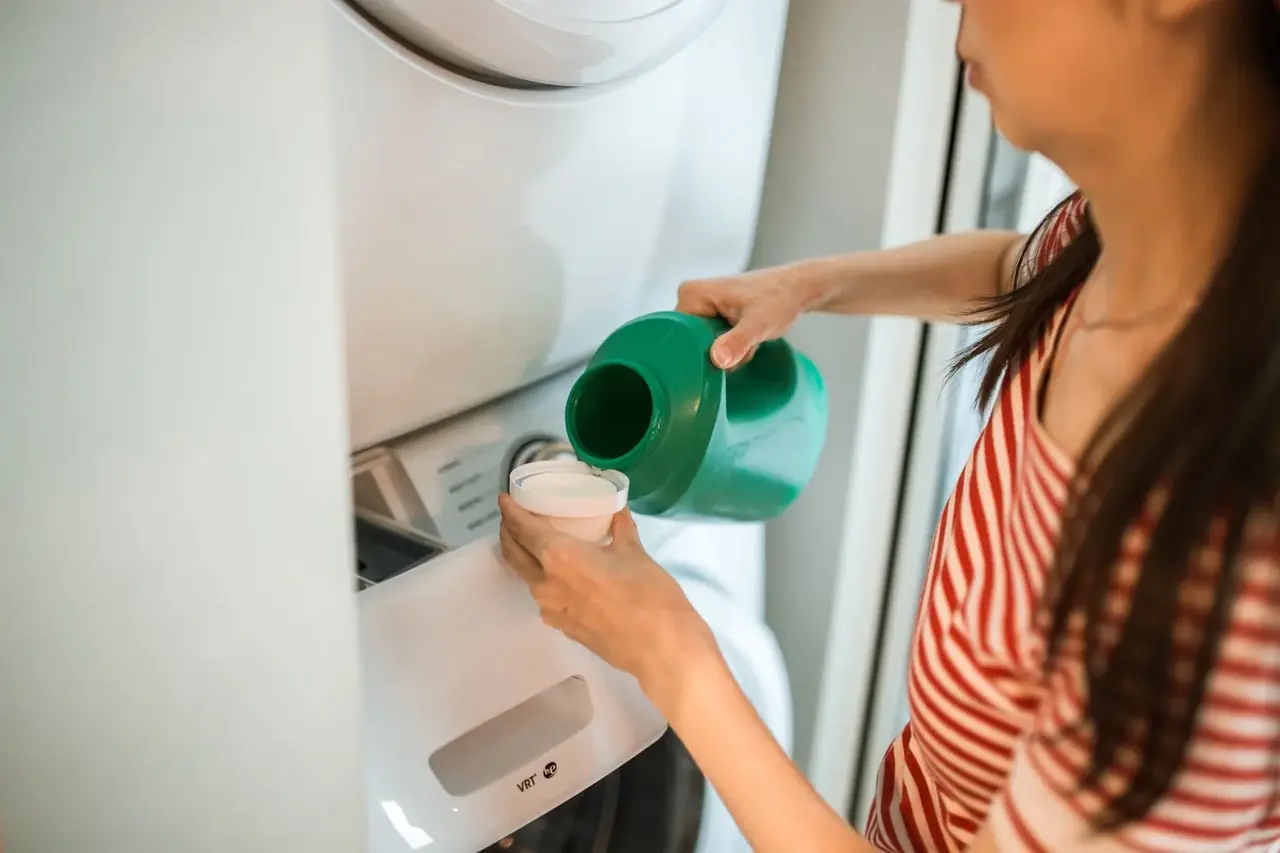
Preparing liquid laundry soap at home is still one of the most sought-after formulas for anyone who wants to cut costs, control ingredients, and avoid unnecessary packaging. The recipe works, but its effectiveness depends on a crucial point: the quality of the base soap and the hardness of the water. That is where almost everything is decided.
The most reliable method starts with natural soap in flakes or grated form, hot water, and a mild alkaline booster such as baking soda or washing soda, depending on the intended use. Done well, it delivers clean laundry and a stable texture; poorly balanced, it can thicken too much, leave residues, or lose power in hard water. The difference is not in the intention, but in the domestic chemistry behind it.
If you have a problem with your washing machine, you can use our free error code finder. From there you can find out and solve all errors easily and effectively.
The base that really cleans: natural soap, water, and an alkaline booster
Most homemade laundry detergents are built on a simple idea: dissolve soap in hot water and strengthen the mixture with ingredients that help degrease, neutralize odors, or soften the water. There is no need to make it more complicated. What matters is understanding that soap does not act only as a fragrance or as showy foam, but as the agent that lifts dirt from the wash and keeps it dispersed in the water.
Among the most commonly used options are Marseille soap, Castile soap, and other plant-based bars without added glycerin or strong fragrances. The purer the soap, the more predictable the result. If a household bar with too many additives is used, the mixture can behave like a sticky mass rather than a stable detergent. In a homemade recipe, the raw material is what matters most.
The second key component is water. With hard water, rich in calcium and magnesium, soap tends to react and form insoluble salts; that is one of the reasons why some loads look clean when they come out and dull a few weeks later. For that reason, the home recipe should not be copied without nuance: it does not perform the same in a house with soft water as in another where limescale leaves its white mark on taps and glass.
Classic liquid recipe with soap flakes
The most widespread version is also the most practical way to start. It produces a liquid that is easy to use, easy to measure, and suitable for the dispenser drawer or the drum, as long as the dose is not exceeded. For about 2 liters of product, you only need 125 grams of natural soap flakes, 2 liters of water, and 2 tablespoons of baking soda. If you want a subtle scent, you can add between 8 and 12 drops of essential oil, but that step is optional and does not change the washing power.
The preparation is straightforward: heat about one liter of water, add the flakes, and stir until they completely disappear. Then add the baking soda and, finally, the rest of the water. The mixture should cool before closing the container, because as the temperature drops it naturally thickens. That change in texture is not a failure; it is part of the process. In many cases it ends up like a light gel, a little thicker than a commercial detergent, but perfectly usable.
The secret is not to force the formula. More soap does not mean more cleaning; sometimes it only means more viscosity and a greater risk of residue building up on clothes. A reasonable amount per wash is usually between half a cup and a small cup, depending on the load, the dirt, and the hardness of the water. For very dirty garments, it is better to pre-treat stains instead of making up for it with an overdose of homemade detergent.
What changes if you use washing soda
When the goal is to boost washing power, baking soda falls short and washing soda comes into play, also known as soda ash. It is more alkaline and has greater capacity to help with grease and stuck-on dirt. Simply put: baking soda supports, washing soda pushes. That is why they should not be swapped without thinking, because they do not behave the same way or are used in the same manner.
A common recipe for those looking for a stronger version mixes natural soap, washing soda, and water in moderate proportions. The effect is especially noticeable on work clothes, garments with persistent odors, and everyday washes for active families. Even so, washing soda is not suitable for delicate fabrics, wool, or silk, where washing needs less aggressiveness and more control. Clothes do not always call for the same approach.
This ingredient also helps counter the feeling of heavy water. In homes with limescale, it can improve how the soap performs and leave laundry less stiff. But its use requires caution: it is an alkaline and irritating product with prolonged contact with the skin, so it is best handled with dry hands or, even better, with gloves if making large batches. Cleaning the home should not turn the sink into an awkward little laboratory.
The oil-free version and why it can sometimes be better
In some households, the word homemade immediately brings to mind used cooking oil and caustic soda, but that is not the only path to a useful detergent. In fact, a simpler alternative is to work directly with ready-made soap flakes and completely leave out both the oil and the lye. It is the formula with the fewest barriers and the one that notably reduces the margin for error.
This option is especially appealing to anyone looking for a quick preparation, without long saponification times or added risks. You dissolve the soap, add the chosen booster, and let it cool. Nothing more. The result is usually enough for everyday use, especially on lightly soiled clothes, sheets, T-shirts, and garments that do not need extreme stain-removal power. It is a reasonable home solution, not a miracle promise.
Also, since no fresh oils or denser mixtures are involved, the product remains more stable if stored in a closed container and shaken before use when needed. That detail matters: the texture can change in the cold, and a little stirring is enough to restore uniformity. In homemade detergent, time and temperature are just as important as the recipe.
White laundry, stains, and the truth about boosters
A load of whites does not stay spotless with soap alone. For light-colored garments, towels, or sheets, it usually works better to include sodium percarbonate as a powdered support or occasional washing booster. This ingredient releases active oxygen in contact with hot water and helps restore whiteness, although its performance improves greatly above 40 C. In cold water, it loses some of its strength.
Percarbonate does not replace soap; it complements it. That distinction matters because many homemade recipes mix up concepts and end up offering an imprecise solution. Soap loosens and lifts; percarbonate helps brighten and tackle organic stains. On white laundry, that combination makes more sense than endlessly increasing the amount of liquid soap.
It is also worth separating stain treatment from the general wash. A grease, coffee, or sweat stain usually responds better to a localized pre-treatment than to increasing the dose across the whole load. Applying a little soap directly to the area, rubbing gently, and letting it sit for a few minutes usually gives better results than overloading the machine. The washing machine washes; it does not work miracles on a stain that has already set.
How to store it so it does not spoil or separate
Storage is one of the least-attended points and, however, it determines much of the product’s usefulness. Homemade liquid soap should be kept in a clean airtight container, preferably thick plastic or sturdy glass, leaving some space if the mixture is still warm. If it is closed too soon, it can trap moisture and alter the consistency.
In cold climates it is normal for the soap to thicken, become gelatinous, or even form a denser layer on top. This is usually not a cause for alarm. Just shake before use or warm the container slightly in lukewarm water, never over direct heat or in the microwave if the container is not designed for it. The mixture, if well formulated, should return to uniformity without difficulty.
If after a few days you notice separation, excessive foam, or an oily film, the recipe is unbalanced. This can happen because of soap that is too greasy, too much water, or mixing incompatible ingredients. In that case, the sensible thing is not to add a stronger fragrance to mask the problem, but to correct the base next time. A good detergent does not need a disguise; it needs balance.
How much to use in each wash
Dosing is the line between a proper wash and a load that leaves residue behind. In a standard household washing machine, for normally soiled clothes, a moderate amount is usually enough, around half a cup to three-quarters of a cup of the homemade liquid. If the load is large or the water is hard, it can be increased slightly, but always within prudent limits. The habit of adding more to wash better usually does not improve anything.
When clothes have mud, grease, or strong odors, the best move is not to fill the dispenser to the top, but to combine pre-treatment, the right temperature, and the correct dose. A homemade detergent has its limits, just like commercial ones. It works very well in routine use, daily dirt, and ongoing maintenance, but falls short if it is expected to solve on its own what requires soaking, rubbing, or a longer cycle.
Temperature also changes the result. Between 30 and 40 C is usually enough for most everyday garments, while for whites and more durable textiles a slightly higher temperature improves the action of the soap and oxygen-based boosters. The point is not to wash hotter out of habit, but to choose just the right heat so the system works with the fiber rather than against it.
Why some homemade detergents leave clothes dull
The most repeated criticism of soap-based detergents is not arbitrary. In hard water, soap can leave mineral residues that gradually build up in the fibers. At first nothing seems out of the ordinary, but over time clothes lose their brightness, feel a bit stiff, and may retain odor. It is the silent effect of a cleaning that seems good at the moment and becomes complicated later.
That problem does not mean all homemade recipes fail. It means they must be read critically. In a house with soft water, a simple formula can work very well. In another with a lot of limescale, the result can be mediocre if it is not corrected with suitable ingredients or if soap that is too greasy is used. There is no universal recipe because the home environment is never identical.
That is why it is worth observing clothes after several washes, not just after the first one. If towels lose fluffiness, if T-shirts look dull, or if a waxy feeling appears, the formula needs adjustment. Sometimes the problem is not the soap, but too much product. Other times, it is the water. And other times, the whole mixture. Laundry tells the truth over time, not in the first cycle.
Which ingredients deserve attention and which are unnecessary
There are recipes loaded with vinegar, essential oils, baking soda, salt, lemon, and other additives in the hope of improving the result. But in household cleaning, more ingredients do not mean more effectiveness. Vinegar, for example, has its place as an occasional softener or support in specific rinses, but it is not advisable to mix it freely with very alkaline formulas because it can neutralize part of the desired effect.
Essential oils add fragrance, not washing power. They can make the detergent more pleasant to use, yes, but they should not be presented as a central ingredient. In many cases, a few drops are enough. More does not clean better, it only smells stronger. And a strong scent does not fix a poor base formula.
By contrast, good-quality soap, water, and the exact measure do change the result. That trio is what supports a solid homemade recipe. Everything else is a fine adjustment. Once this is understood, homemade detergent stops seeming like a kitchen whim and becomes a useful tool in the washing routine.
A simpler wash starts with less noisy formulas
The interest in making liquid detergent at home is not only about saving money, although savings matter. It is also about reclaiming control over what goes into the clothes, the dispenser, and the laundry bucket. In a market saturated with flashy formulas and exaggerated messages, the homemade recipe restores a more sober logic: less artifice, more control.
That sobriety does not make the product perfect or erase its limits. Homemade liquid laundry soap requires testing, adjustment, and attention to the water in each home. But it offers something valuable: transparency. You can see what it contains, understand why it cleans, and correct it if it fails. In times of opaque products and impossible-to-read formulas, that is already an important advantage.
That is why the recipe that works best is not the most loaded or the most eye-catching, but the most balanced. Good natural soap, a well-calculated dose, and a realistic reading of the type of laundry are enough to get through most everyday washes. In that simplicity lies its strength: it cleans quietly, lasts without fanfare, and shows that sometimes the home needs less artifice and more judgment.
Este artículo contiene enlaces de afiliado: si compras a través de ellos, se genera una pequeña comisión sin coste adicional para ti. Más información.


Balay washing machine E80 error: meaning and what to do

E80 Error in Balay Ovens: Safe Causes and Solutions

E63 error on a Balay dryer: causes and safe solutions
E63 error on a Balay washing machine: causes and safe fixes

Balay washing machine E61 error: meaning and what to do

E61 error on a Balay washing machine: meaning and action

E6 PUNP error on a Balay washing machine: meaning and next steps

E56 error on Balay dryer: causes and safe solutions

E56 error on Balay washing machines: meaning and safe solutions

E50 error on Balay dryers: causes and safe solution

 Kitchen plate6 days ago
E Error on Balay Series 900 Hob: Causes and Solutions
- Dishwasher7 days ago
E25 error in Balay dishwasher: causes and solutions
- Balay7 days ago
E16 Error on a Balay Washing Machine: Causes and Safe Fixes
- Kitchen plate6 days ago
Balay induction hob E error: causes and solutions
- Balay5 days ago
E09 error in Balay dishwasher: causes and safe solution
- Balay5 days ago
E05-32 error on a Balay oven: causes and safe solution
- Washing machine5 days ago
Hotpoint washing machine F09 error: what it means and what to do
- Balay7 days ago
Balay washing machine E18 error: causes and safe fix
- Balay7 days ago
E21 error in Balay dishwashers: causes and solutions
- Balay6 days ago
E61 error on a Balay washing machine: causes and safe fix
- Balay6 days ago
Error E on a Balay hob: what it means and what to do
- Dishwasher4 days ago
E15 error on Balay dishwasher: do not tilt it