Magazine
How does a kitchen robot work and what can it do for you
Learn its mechanism, functions, and advantages to cook with less effort and greater precision.

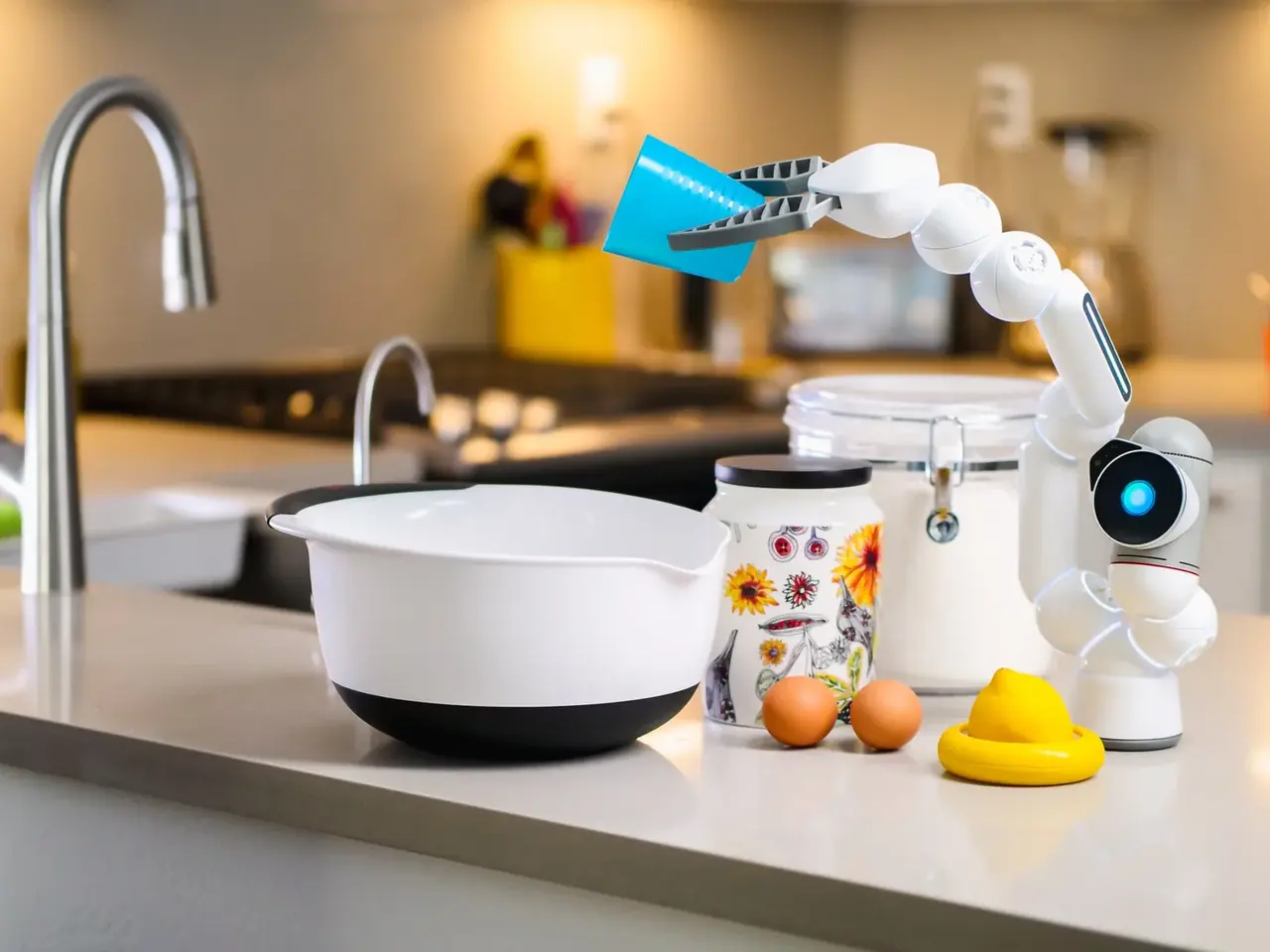
How Does a Kitchen Robot Work and What Can It Do for You?
The kitchen robot has gone from being an occasional helper to a permanent fixture on many countertops. Its value lies not only in saving time, but also in turning scattered tasks into an orderly process: it weighs, mixes, blends, chops, grinds, kneads, emulsifies, steams, and, in many models, also cooks with temperature control. That combination explains why it has become a central piece in small kitchens, families with little time, people who cook frequently, and households looking for more precision without unnecessary complication.
A kitchen robot is used to automate tasks that consume time, attention, and free hands in a home kitchen. Depending on the model, it can prepare a sauté, crush cooked vegetables, knead bread dough, cook a soup, steam ingredients, maintain food at a controlled temperature, or emulsify a sauce. In the most advanced appliances, it can also weigh ingredients, regulate temperature, and mark cooking times with a precision that is difficult to repeat manually every day.
Its real value is not limited to making a purée or sauce faster. The appliance reduces friction in everyday cooking by organizing the process and taking over the most repetitive parts. It does not completely replace the person cooking, but it allows that person to spend less time chopping, stirring, monitoring, and transferring ingredients from one container to another.
If you have a problem with your kitchen robot, you can use our free error code finder. From there, you can find out and solve all errors easily and effectively.
What Is Inside a Kitchen Robot?
The motor and transmission system
The heart of the appliance is the motor. It determines the force with which the blades spin, egg whites are whipped, or a dense dough is worked. Its power is usually expressed in watts and clearly marks the difference between a model designed for light tasks and one prepared for intensive use.
Power is not just about numbers. A more robust motor keeps up better when the mixture is heavy, when dough becomes elastic, or when the blade encounters hard ingredients such as nuts or ice. The motor receives the command to rotate and transmits that energy to a central shaft. From there, the movement reaches the blade or accessory installed in the container.
This mechanism transforms a manual task requiring strength and patience into a stable, repeatable, and fairly predictable mechanical sequence. Depending on the selected speed, the appliance can gently combine ingredients, chop them, whip them, or blend them until they become homogeneous.
The pitcher, bowl, or work container
The pitcher, bowl, or work container is the space where everything happens. Ingredients are added there, and the flow of cutting, mixing, or cooking is concentrated in the same place. The container guides the food toward the blade or accessory and, in cooking models, distributes heat through the preparation.
Size matters more than it seems. A small container forces you to work in batches, while an excessively large one can reduce efficiency if only a small amount is being prepared. Capacity is therefore not a luxury, but a practical measure for everyday use. The right size depends on whether the appliance is intended for one or two people, a family, several portions at once, or frequent batch cooking.
Working in one bowl or jug is also one of the reasons the appliance creates less mess than cooking separately. The number of containers, strainers, bowls, and pans is reduced, and the preparation can often remain in the same vessel from the first step to the last.
Blades and other accessories
The set can include blades, whisks, cutting discs, graters, dough paddles, steaming accessories, and, in some appliances, a heating element or another type of heating system. Each piece serves a specific task. Blades do not perform the same job as a whisking accessory, just as a grating disc does not perform the function of a dough paddle.
This technical division is what turns the robot into a multifunction appliance rather than simply a countertop blender with good looks. A blender mainly crushes, a food processor mainly cuts, and a cooker mainly programs cooking. A kitchen robot brings several of these functions together in a single body and allows preparation and cooking to follow the same flow.
The control panel and automatic programs
The control panel organizes the machinery. It can be manual, digital, or touch-sensitive, but its mission is the same: set time, speed, and, when appropriate, temperature. Some models also allow the user to select reverse rotation, specific accessory settings, or automatic phases in a recipe.
In modern models, automatic programs ease the most mechanical part of cooking. The user adds the ingredients, selects a recipe or mode, and the appliance coordinates the rest with the logic of a silent assistant. Guided cooking systems can indicate the order of the ingredients, the duration of each step, and the required temperature.
For less experienced users, this guidance reduces mistakes and makes the appliance feel less intimidating. For more experienced cooks, it can provide a repeatable structure while leaving room to adjust seasoning, correct the texture, or add a personal finishing touch.
How Does a Kitchen Robot Work Step by Step?
1. The ingredients are placed in the container
The process begins when the ingredients are added to the pitcher or bowl. The order matters. Some programs require liquids to be added first, others ask you to start with the solid ingredient, and others add the fat at the end.
This sequence is not arbitrary. It responds to the way the appliance creates swirls, distributes heat, and pushes food toward the blade. Liquids can help the blades circulate ingredients, while certain solids or fats may need to be added later so they do not interfere with the texture or cooking process.
Good use means respecting this internal logic. Following the suggested order helps the robot work efficiently and can prevent ingredients from remaining stuck to the sides, being insufficiently mixed, or being exposed to heat before the rest of the preparation is ready.
2. The motor transfers movement to the accessory
Once the program or manual command starts, the motor receives the instruction to rotate. Energy passes through the central shaft and reaches the blade, whisk, disc, or dough accessory that has been installed.
The rotation speed can be low when the aim is to gently combine ingredients, medium when the mixture needs to be worked gradually, or high when the food must be crushed and homogenized. This ability to adjust movement is what allows the same appliance to handle delicate creams, dense doughs, chopped vegetables, and whipped mixtures.
3. Time and speed create repeatable results
Precision is one of the kitchen robot’s greatest virtues. By controlling time and speed, the appliance prevents a mixture from being underworked or an ingredient from breaking down more than necessary.
This is especially useful in baking, where over-kneading can ruin dough, and in sauces that require a fine and even texture. The machine does not improvise; it repeats exactly what it is asked to do. Everyday cooking therefore becomes less dependent on the cook’s pulse, attention span, or mood.
That control also reduces common problems such as poorly worked doughs, uneven cooking, split or curdled sauces, and creams with an inconsistent texture. Temperature, time, and speed become variables that are easier to repeat than they are in a traditional preparation.
4. Heat completes the cycle in cooking models
When the appliance includes cooking, the cycle is completed with heat. An electric heating element, or in some models a more advanced heating system, raises the temperature of the container and cooks the contents gradually.
Thermal management makes it possible to sauté, boil, steam, or keep a mixture at a specific temperature without constant supervision. The robot can finish a sauté while another ingredient is being prepared, keep a cream hot without allowing it to stick or overcook, or maintain a steady temperature during a long preparation.
In practice, the robot acts as a small workstation that mixes and transforms food at the same time. Instead of demanding constant attention, it maintains a steady pace, like a methodical helper that does not get distracted or tired.
5. The program completes the preparation
At the end of the programmed time, the appliance stops, changes phase, or alerts the user, depending on the model. In guided systems, the screen or app can then indicate the next ingredient or the next step.
This reduces the need to remember every stage of a recipe. It also makes preparations easier to repeat week after week, because the sequence, temperature, and duration are more clearly defined.
What Can a Kitchen Robot Do?
Chopping, cutting, and grinding
A kitchen robot can chop onions, vegetables, herbs, nuts, and other ingredients. With the appropriate discs or blades, it can also slice, grate, or grind. These tasks are among the most obvious ways to save time because they often require repeated knife work and create several pieces of preparation equipment.
The result depends on the selected speed, the accessory, and the duration. Shorter cycles can leave larger pieces, while longer cycles create a finer texture. The machine therefore allows the user to repeat a desired consistency more easily than when chopping by hand.
Blending and crushing
The appliance is especially useful for blending already cooked foods until they are fine and homogeneous. Vegetable creams, purées, baby food, soft-diet dishes, hummus, compotes, and thick sauces benefit from this controlled movement.
Its advantage over a simple blender is that the container guides the mixture toward the cutting point. The movement of the blade breaks particles with greater control, producing a smoother and silkier surface with fewer uneven pieces.
This makes it valuable in homes with children, older adults, or different dietary needs, where uniform portions and textures may be important. The same base can be adapted to different ages or eating requirements without relying entirely on manual work.
Mixing and emulsifying
The robot can combine ingredients for sauces, fillings, dressings, and other preparations. It can emulsify a vinaigrette, prepare mayonnaise, and mix ingredients that need a stable, even consistency.
Because time and speed can be controlled, the appliance helps reduce the risk of an uneven mixture or a sauce that separates. It is particularly useful when ingredients must be incorporated gradually or worked for a sustained period.
Whipping
With a whisking accessory, the robot can whip cream, egg whites, and other mixtures. The accessory is designed to introduce air progressively and consistently, avoiding the irregular movement that can occur when whisking by hand.
The correct accessory and speed remain important. A blade is not a substitute for a whisk, and each preparation should be made with the piece designed for that function.
Kneading dough
Kneading is one of the functions where the difference is most noticeable. What requires physical effort and patience from a person becomes, for the robot, a constant sequence of rotation and pressure.
The dough gains elasticity evenly, without dry spots or persistent lumps. In breads, pizzas, and brioches, that uniformity later appears in the crumb, texture, and rise. The appliance is also useful for households that prepare homemade doughs regularly but do not want the preparation to occupy their hands for long periods.
Not all models perform equally well with doughs. Motor strength, bowl capacity, accessory quality, and stability affect the result, especially when the mixture is dense or when several portions are prepared at once.
Cooking soups, creams, and stews
Cooking models are particularly effective for moist recipes, soft textures, and preparations that require several linked steps. Soups, vegetable creams, cooked legumes, compotes, stews, and sauces can be prepared with less constant supervision.
The robot can cook the ingredients, mix them, and in some cases blend them in the same container. That combination reduces transfers and helps create a more predictable process from the initial sauté to the final texture.
Steaming
Models with a steaming accessory can cook ingredients with steam while another preparation is being made in the bowl. This is useful for vegetables and other foods where gentle cooking is preferred.
Steaming adds another layer of flexibility, particularly for households that want to prepare complete meals or different textures in the same cooking session.
Keeping food at a controlled temperature
A kitchen robot with temperature control can keep a preparation warm or maintain a gentle cooking point for a specific period. This is useful for creams, sauces, sautéed bases, and other dishes that require attention in a traditional pot.
It can maintain moderate temperatures for long minutes without the user having to keep stirring every so often. The robot does not replace stovetop cooking in everything, but it removes a great deal of the monitoring that stovetop cooking demands.
Which Preparations Benefit Most From a Kitchen Robot?
The appliance works well for cooking styles based on moist recipes, soft textures, and chained processes. Its strengths are most visible when regularity matters more than direct contact with a very hot cooking surface.
- Vegetable creams and purées.
- Soups and stews.
- Cooked legumes.
- Béchamel and other base sauces.
- Mayonnaise, vinaigrettes, and emulsions.
- Hummus and similar spreads.
- Compotes and soft desserts.
- Bread, pizza, and brioche doughs.
- Fillings and chopped vegetable bases.
- Baby purées and dishes for soft diets.
- Sautéed preparations that require continuous stirring.
Where it shines most is in everyday cooking rather than exceptional recipes. It can prepare a dough while the house carries on, leave a soup ready with an almost automatic sequence, or maintain a sauce while the rest of the meal is being finished.
That is one of its most underrated virtues: it turns recipes that once required continuous presence into more predictable processes and, therefore, ones that are easier to repeat week after week.
What Does a Kitchen Robot Not Fully Solve?
The kitchen robot does not replace every culinary gesture, nor does it solve every recipe on its own. There are preparations where manual intervention remains important, especially when looking for a precise level of browning, a very specific reduction, or a delicate visual finish.
It does not always replace techniques that depend on direct heat, contact with a cooking surface, or finer artisanal attention. A quick stir-fry, a piece of meat seared with a pronounced crust, or a dish that requires intense evaporation may not turn out better in a robot.
Its greatest strength is controlled repetition. Where human cooking introduces natural variation, the robot provides consistency. That makes it especially valuable in doughs, creams, sauces, and long-cooking preparations. However, if it is asked to perform a technique outside its range, the result can be less convincing.
Its strength lies in domestic precision, not in imitating all professional cooking. It should therefore be understood as a partial but powerful ally rather than an absolute replacement. It works best as part of a kitchen in which an oven, pan, knife, blender, and robot coexist without competing. Each appliance solves a different stage of the same job.
Why Does a Kitchen Robot Change the Routine at Home?
It saves time and frees up attention
The most visible benefit is time, although that describes only part of its role. A well-used robot reduces the number of intermediate steps and concentrates in a single container what once required a cutting board, knife, bowl, whisk, pot, and spatula.
While the robot stirs or cooks, the person can attend to another task, set the table, prepare the rest of the meal, or simply take a break from constant supervision. In small kitchens, where every minute and every centimeter matter, this ability to delegate part of the process feels almost like freeing up mental counter space.
It is not about cooking less, but about cooking with fewer interruptions. The appliance takes over the repetitive work so the cook can focus on seasoning, checking the final texture, or adding a more creative finishing touch.
It simplifies household coordination
A kitchen robot can be particularly useful in homes where cooking competes with tight schedules. Anyone who gets home late, balances remote work with family life, or cooks for several people every day can understand the value of an appliance capable of doing several tasks without constant supervision.
In families with children, older adults, or different dietary needs, the robot can also help organize meals with different textures and portions. A base preparation can be blended more finely for one person, left with more texture for another, or prepared in several portions without repeating every step manually.
It reduces clutter and washing up
The reduction in utensils translates into less clutter, less washing up, and fewer interruptions from one task to the next. The kitchen suddenly stops looking like a workshop full of loose parts.
By working in the same bowl or jug, the appliance reduces the number of pots, pans, strainers, bowls, and other containers. In a real home, where the dishwasher is not always enough, that detail matters more than it may seem.
Cleaning becomes simpler because many components can be taken apart and washed easily. Some accessories are dishwasher-safe, which further reduces the daily workload. Even so, it is advisable to clean the appliance as soon as possible after cooking, especially if sauces, doughs, or starch-based mixtures have been prepared, since they stick easily when they dry.
It provides consistency
Another less discussed effect is consistency. A recipe repeated several times with the same program tends to come out with very similar quality. This is valuable for anyone who cooks with little time and wants to avoid surprises.
The robot does not replace culinary judgment, but it reduces variability and offers a stable base on which to improvise later. Everyday cooking becomes less dependent on the cook’s pulse or mood and more rooted in a clear routine.
It encourages cooking at home
The kitchen robot can open the door to cooking more often at home. When the appliance performs much of the heavy lifting, preparing a cream, dough, sauce, soup, or sauté stops feeling like an excessively long task.
That can help break the cycle of improvised meals. Having a tool that makes sautés, rice dishes, soups, doughs, or creams easier increases the likelihood of preparing food at home instead of relying on more processed options.
The effect may be subtle, but it matters in weekly organization. The appliance reduces the strain of deciding every day what to make and how to make it, and lowers the barrier to preparing complete dishes.
What Distinguishes a Basic Kitchen Robot From an Advanced One?
Not all kitchen robots work in the same way or offer the same experience. The simplest models usually focus on chopping, mixing, blending, grinding, and kneading. More advanced models may include cooking, an integrated scale, guided programs, steaming functions, automatic temperature control, and connectivity.
This difference affects both the price and the learning curve. A simple appliance may be enough for someone looking for occasional help with preparation tasks. A more complete model works better for intensive use, varied recipes, and households that want to combine preparation and cooking in the same appliance.
Integrated scales
The integrated scale changes the dynamics considerably. It allows ingredients to be weighed directly in the bowl, without dirtying other containers or losing precision when transferring them.
In baking, where a few grams too many or too few can alter the result, this detail can be decisive. It also speeds up daily preparation because it simplifies a sequence that otherwise requires several utensils.
Guided cooking
Models with guided cooking can indicate steps, times, quantities, and sequences. The screen or app acts as a map, showing the user what to add and when to add it.
This guidance reduces uncertainty in preparations that might intimidate someone without much experience. It can provide access to more varied dishes with less technical effort, while still allowing the cook to make final adjustments.
Connectivity
Connectivity adds guided recipes and software updates in some models. It is not essential, but it can be useful for users who prefer to follow exact instructions or discover new ways to use the appliance.
The connected system may also make it easier to organize recipes and reproduce a preparation. However, connectivity should be seen as an aid rather than the fundamental reason to buy a kitchen robot.
Power, capacity, and construction
Power does not explain everything. A very powerful motor is of little use if the accessories are weak, the capacity is insufficient, the appliance is unstable, or temperature control responds poorly.
The quality of a kitchen robot depends on the balance between strength, design, stability, capacity, accessory quality, and ease of use. That balance is the difference between a useful machine and one that ends up taking up space without earning a place in the routine.
When Does a Kitchen Robot Pay Off?
An appliance may seem useful in a store and then end up relegated to the back of a cupboard. With a kitchen robot, that is less likely when the household identifies the repetitive tasks it genuinely wants to ease.
Value does not come from novelty, but from frequency. If a cream, dough, soup, sauce, or sauté appears on the menu every week, the accumulated savings in time, attention, and washing up become tangible.
People who really make use of a kitchen robot are usually those who repeat certain preparations with some regularity. Families that make purées, soups, or creams several times a week can find immediate help. The same applies to people who knead homemade bread, prepare base sauces, or want to make several portions at once.
Another clear profile is someone who cooks for several people with different tastes or dietary needs. The same appliance can blend a base, cook a side dish, prepare a soft texture, or keep a preparation warm while another part of the meal is finished.
Even in homes where people enjoy cooking, the robot has a place because it frees time for the more creative part. While the appliance does the heavy work, the cook can focus on correcting seasoning, adjusting flavors, checking the final texture, or adding a finishing touch. It does not eliminate cooking; it redistributes it.
What Should You Look at Before Buying One?
Buying a kitchen robot makes sense when it responds to real habits rather than abstract expectations. Before choosing a model, it is worth considering the following points:
- Bowl or pitcher capacity: choose a size suited to the number of people and the number of portions normally prepared.
- Motor power: check whether it can handle dense doughs, hard ingredients, or intensive use.
- Accessories: confirm that the model includes the blades, whisk, grating discs, dough accessory, or steaming equipment required for the recipes you actually make.
- Temperature control: cooking functions are more useful when the appliance can maintain stable temperatures over time.
- Program stability: automatic modes should be consistent and suitable for the preparations you intend to repeat.
- Interface clarity: a very complete appliance can still be frustrating if everyday operation is slow or confusing.
- Integrated scale: this can be particularly valuable for baking and for reducing the number of containers used.
- Ease of cleaning: parts that are difficult to remove, wash, or dry can quickly reduce how often the appliance is used.
- Stability: the appliance should remain secure when kneading or processing dense mixtures.
- Connectivity and guided recipes: useful for some users, but not essential if the main need is simple preparation.
The type of recipes made at home also matters. Not all models perform equally well with doughs, long cooking times, or fine blending, and that difference can be more noticeable than product catalogs suggest.
Someone who mainly cooks stews and creams needs something different from someone who often kneads dough or prepares more technical recipes. A household of two does not need the same bowl as a large family, and someone who cooks only occasionally will rarely use all the functions of a high-end model.
The appliance works best when it adapts to the way the household cooks, not the other way around. That is where much of its real usefulness is decided.
Maintenance and Daily Care
Maintenance affects the appliance’s lifespan. Removing leftovers, drying the parts well, and checking seals or lids after each use helps prevent odors, premature wear, and small leaks.
It is advisable to clean the appliance as soon as possible after cooking, especially after preparing sauces, doughs, creams, or starch-based mixtures. Once these foods dry, they can adhere firmly to the container, blades, lids, or seals and make cleaning more difficult.
Many components can be taken apart and washed easily, and some accessories are dishwasher-safe. However, dishwasher compatibility should be checked for each piece rather than assumed. Parts should also be dried properly before storage, especially around seals and connections.
Maintenance is not complicated, but it does require a minimum routine. If taking the appliance apart, washing it, and drying it becomes a burdensome task, usage drops quickly. A good kitchen robot should fit into the routine without turning each recipe into a logistical project.
Like almost everything in cooking, durability depends on daily habits rather than advertisements. Proper cleaning, careful handling of the lid and seals, and using the correct accessory for each task can make the difference between an appliance that remains useful for years and one that is quickly abandoned.
How to Understand Its Limits Without Expecting Miracles
The kitchen robot does not do every recipe on its own. It can organize, measure, program, mix, heat, and repeat a process, but it cannot replace every decision or every cooking technique.
Preparations that require intense browning, direct contact with a pan, pronounced searing, vigorous evaporation, or a delicate visual finish may still need another appliance or manual intervention. In those cases, the robot can help with preparation, but it may not complete the entire dish in the way a traditional pan or oven can.
It is also worth thinking about the actual capacity of use. A household of two does not need the same bowl as a large family, and someone who cooks only occasionally will rarely make use of all the functions of a high-end model.
Knowing these limits avoids frustration and poorly chosen purchases. The robot should be treated as a tool that reduces repetitive work and improves consistency, not as a substitute for culinary judgment or for every other appliance in the kitchen.
An Appliance That Reorganizes the Way You Cook
More than a technological whim, the kitchen robot represents a different way of distributing work in the kitchen. It brings together in one body tasks that once forced you to chain together tools, steps, and idle time.
That concentration of effort is like moving from a bicycle to a city car: it does not do everything for you, but it takes you farther with less fatigue. Its real impact lies in the sum of small savings: minutes saved while chopping, less noise from utensils, fewer chances of error, less cleaning, less constant supervision, and more consistency in the result.
The appliance does not impress because of a single function, but because of the coherence of several functions working together. It can prepare ingredients, cook them, maintain temperature, and sometimes guide the entire recipe without requiring the cook to remain involved in every repetitive stage.
That is why understanding how a kitchen robot works is not just about knowing that it has blades and a motor. It means recognizing its working logic: organize, measure, program, and let the appliance perform repetitive effort with a level of precision that is difficult to achieve by hand every day.
Its usefulness is answered better in everyday cooking than in theory. It serves to cook with more order, repeat results, save time, simplify cleanup, and reduce the strain of tasks that are performed over and over again. Its strength lies in making the invisible work of cooking less noisy: the work that consumes attention, hands, and patience before food reaches the plate.
It does not solve everything, replace culinary judgment, or work miracles. It does, however, turn an important part of the routine into a cleaner, calmer, and more predictable sequence. In an era when dinner often competes with the clock, that kind of help has practical weight.
In daily life, a kitchen robot serves a very concrete and very human purpose: eating better with less friction. That is usually the most honest measure of its usefulness.
Este artículo contiene enlaces de afiliado: si compras a través de ellos, se genera una pequeña comisión sin coste adicional para ti. Más información.


Balay washing machine E80 error: meaning and what to do

E80 Error in Balay Ovens: Safe Causes and Solutions

E63 error on a Balay dryer: causes and safe solutions
E63 error on a Balay washing machine: causes and safe fixes

Balay washing machine E61 error: meaning and what to do

E61 error on a Balay washing machine: meaning and action

E6 PUNP error on a Balay washing machine: meaning and next steps

E56 error on Balay dryer: causes and safe solutions

E56 error on Balay washing machines: meaning and safe solutions

E50 error on Balay dryers: causes and safe solution

 Kitchen plate6 days ago
E Error on Balay Series 900 Hob: Causes and Solutions
- Dishwasher7 days ago
E25 error in Balay dishwasher: causes and solutions
- Balay7 days ago
E16 Error on a Balay Washing Machine: Causes and Safe Fixes
- Kitchen plate6 days ago
Balay induction hob E error: causes and solutions
- Balay7 days ago
Balay washing machine E18 error: causes and safe fix
- Balay7 days ago
E21 error in Balay dishwashers: causes and solutions
- Balay5 days ago
E09 error in Balay dishwasher: causes and safe solution
- Balay5 days ago
E05-32 error on a Balay oven: causes and safe solution
- Washing machine5 days ago
Hotpoint washing machine F09 error: what it means and what to do
- Balay6 days ago
E61 error on a Balay washing machine: causes and safe fix
- Balay6 days ago
Error E on a Balay hob: what it means and what to do
- Dishwasher4 days ago
E15 error on Balay dishwasher: do not tilt it