Magazine
Dishwasher doesn’t dissolve the tablet: water, cycle, or dispenser at home
Discover the most common causes and key checks to stop finding the detergent tablet intact at the end of the wash.

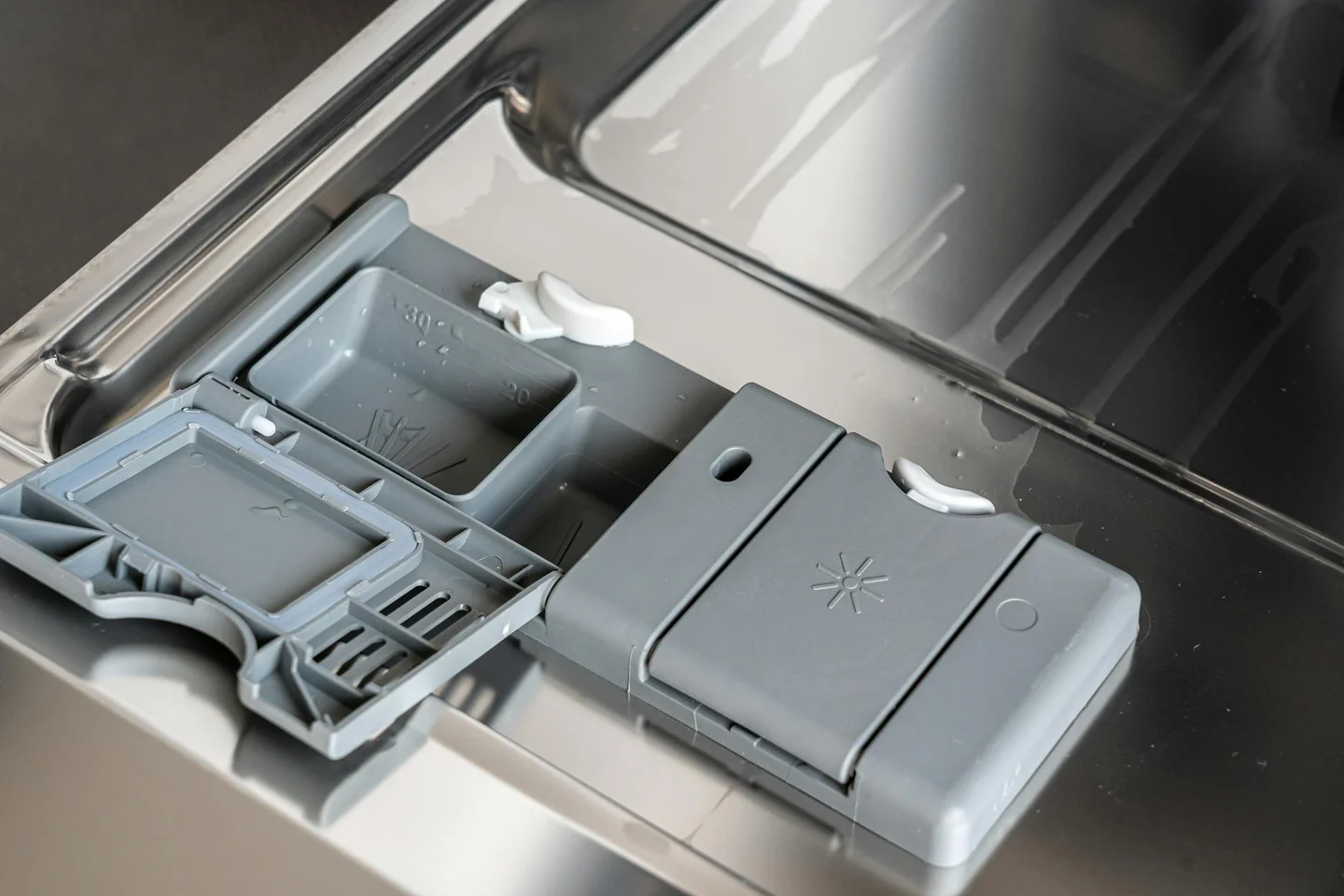
Finding the tablet intact when opening the dishwasher is often the clearest clue that something has gone wrong in the cycle, even though the appliance may still seem to be working normally. Sometimes the problem is the dispenser; other times, it is water pressure, an uneven load, or something as simple as a spray arm blocked by a handle or a poorly placed knife. The important thing is not to stop at the surface: an undissolved tablet does not always point to a serious fault, but it does deserve an orderly check to avoid poor washing results, food residue, and unnecessary wear on the appliance.
Dishwasher does not dissolve tablet appears frequently in searches because the symptom is very visible and easy to interpret. The good news is that, in many cases, the cause can be solved with cleaning, better loading, or a program change; the bad news is that, if it keeps happening, it can reveal a water inlet fault, a dispenser-opening problem, or even a weakened pump. The following lines explain what to check first, which signs distinguish a minor blockage from a technical fault, and which habits help the detergent work where it should: inside the cycle, not stuck to the dispenser or the bottom of the tub.
If you have a problem with your dishwasher, you can use our free error code finder. From there, you can identify and solve all errors easily and effectively.
Why a tablet can remain whole at the end of the cycle
Detergent dissolution depends on three factors at the same time: enough water, the right temperature, and correct release from the compartment. If one of those elements fails, the tablet may end up half-melted, stuck to the dispenser, or drop too early inside without ever working as intended. In a modern dishwasher, everything happens with almost choreographed precision, but a small interference is enough to break the sequence.
One of the most common scenarios is the dispenser that does not open at the right time. The spring may be fatigued, the lid may be jammed by residue, or a tall utensil may prevent it from opening freely. In that case, the tablet does not come into contact with the main spray when the water circulates with the most force and temperature, which is exactly when it should start dissolving. The way the tablet is placed also matters: in many models it should lie flat, not upright, so it falls correctly into the catch tray.
Another common pattern is quick or low-temperature cycles. These programs save time and energy, but they do not always allow enough time for a tablet to dissolve completely, especially if the water starts out cold. In those cases, liquid detergent or capsules designed for short cycles may perform better than a classic tablet. It is not just a matter of brand; it is a matter of compatibility between product, program, and temperature.
The detergent dispenser and the tablet’s correct path
The detergent compartment has a more delicate function than it seems: it opens at an exact point in the wash and allows the tablet to fall into a tray or collection area where the water will gradually break it down. If the lid is stuck, the hinge is dirty, or the inner opening is blocked by the handle of a saucepan, the tablet may remain trapped like a stone in a safe. The tablet does not dissolve where the water cannot reach it, and that idea explains much of the apparent trouble.
It is also worth checking the condition of the compartment itself. Moisture buildup in the dispenser can cause the tablet to stick too early, soften on one side, and adhere to the lid or the dispenser wall. It is a simple detail, but very common in kitchens where the dishwasher is used several times a day. Drying the inside of the dispenser before loading the detergent prevents the product from starting to break down in the wrong place. The tablet needs to leave the compartment clean and dry, not be pinned there by a film of water or grease.
The layout inside the appliance also matters. A long spatula, a tray placed diagonally, or a large pot positioned badly can lever against the dispenser and block it from opening. The dishwasher does not see objects; it only detects space or interference. That is why an overly tight load often results in uneven washing and wasted detergent. The solution is often not to change products, but to give the water back the path it needs.
Spray arms: the silent mechanism that usually reveals the fault
Spray arms are the visible engine of the wash. Although they turn discreetly, they distribute water throughout the tub and are responsible for dissolving the tablet and removing dirt from plates, glasses, and cutlery. If the nozzles are partially blocked by food residue or limescale, the spray loses force and the detergent receives a weak, uneven, or insufficient wash. The result can be a tablet only partly touched and dishes with dried grease along the edges.
The check is straightforward, but it does require attention. You need to make sure the arms spin freely, do not rub against trays that are too high, and have no cracks or warping. In some models, it is enough to remove them, rinse them under the tap, and clean the holes with a toothpick or a fine needle. The goal is to restore the water flow, not just remove a single patch of dirt. If a spray arm rotates badly, the problem may return even if the tablet is of good quality.
Limescale also plays a role. In areas with hard water, the outlet holes gradually close up with mineral deposits and the spray comes out like a weak rain. This explains why the dishwasher can start performing worse without having shown dramatic signs before. Regular cleaning of the arms, together with proper use of regenerating salt, helps keep the spray system in shape and reduces the risk of finding unused detergent at the end of the cycle.
Temperature, program, and detergent chemistry
Tablet detergent is designed to work within a specific temperature range. Many manufacturers place effective dissolution in cycles ranging from 45 to 65 °C, although the actual behavior varies depending on the formula and the selected program. When washing is done with lukewarm or cold water, the tablet takes longer to break apart and may still be intact by the rinse stage. That does not necessarily mean the appliance is faulty; sometimes it simply means the program was not right for that load.
Short cycles are especially sensitive to this phenomenon. They have less soaking time, less heating, and less margin for the water to penetrate the tablet’s coating. By contrast, intensive or automatic programs, with higher temperatures and longer phases, usually favor complete dissolution. The tablet does not fail on its own: it needs a favorable context. That is why it is worth reading the appliance manual and checking which type of detergent is recommended for each wash mode.
Water quality also matters. In areas with very hard water, limescale can interfere with overall washing performance and require more salt or a different adjustment of the internal water softener. That excess mineral content not only leaves white marks on glasses and dishes; it can also affect tablet performance, since it dissolves less well in a less favorable environment. Detergent, salt, and rinse aid form a technical triangle that works best when each part is properly calibrated.
Salt, rinse aid, and water hardness: what you cannot see also counts
Dishwasher salt does not wash, but it prepares the ground. Its role is to soften the water and help prevent the internal system from being coated with limescale over the course of the cycles. The reservoir is usually at the base of the appliance, under the lower basket, and it is best to fill it with salt specifically made for this type of appliance, never with ordinary table salt. When filling it for the first time, some models require you to add water before pouring in the salt; after that, you only need to top it up when the indicator shows it or when signs of hard water appear on the dishes.
Water hardness adjustment is another key point. Many dishwashers allow you to set the water hardness level for your area, and that should not be treated as a minor formality. If the appliance believes the water is softer than it really is, the regeneration cycle will be too short. If it thinks the water is harder than it is, it may over-dose. An incorrect setting alters the internal balance and, with it, wash efficiency and detergent dissolution.
Rinse aid, for its part, helps water drain better and reduces the number of droplets left on the dishes. It does not solve an intact-tablet problem by itself, but it is part of the overall system maintenance. When there is not enough salt, there is too much limescale; when there is too much limescale, washing loses effectiveness. Sometimes the user looks only at the tablet, when the root cause is spread across the water, the pipes, and the support products.
The interior load can sabotage washing without making a sound
A dishwasher may look neatly loaded and yet still be blocking the hydraulics. The placement of plates, trays, and cutlery changes the direction of the water and, if the rotation of the arms is prevented, the tablet stops receiving the main spray. The problem is not always visible right away; it appears as spots, food residue, and detergent undissolved in the lower compartment or in the catch tray.
Long handles, pan grips, spatulas, or badly distributed cutlery can act as small barriers. The same happens when the upper basket is overloaded with tall glasses or containers with very narrow walls. The flow becomes fragmented, the water does not enter with the same energy, and the tablet loses effectiveness. It is no coincidence that many manuals insist on leaving space between items: the dishwasher works better with gaps than with tight packing.
There is another silent mistake: putting in dishes with large solid leftovers. Although the appliance is designed to handle normal kitchen dirt, it is not prepared for large pieces of stuck rice, bones, labels, or thick layers of dried grease. That residue can end up in the filter, the pump, or the arms and cause a slow decline in performance. What begins as an undissolved tablet often ends as weak washing, faint water movement, and a tub that takes longer to dry.
When to clean filters, tubs, and pipes to prevent the problem from coming back
Regular cleaning of the dishwasher is more preventive than cosmetic. The filter, the dispenser area, the spray arms, and the inside of the tub collect grease, limescale, and tiny residue that is not always visible at first glance. When that buildup grows, the water circulates more poorly and the detergent begins to lose effectiveness sooner than normal. That is why a seemingly healthy machine can start to fail without any sudden breakdown having occurred.
For the filter, the practical recommendation is to check it regularly, ideally every two weeks if use is heavy. In the tub and detergent compartment, a light weekly clean can prevent sticky layers from forming and later jamming the dispenser door. Maintenance is more valuable than late correction, because a clean appliance needs less effort to dissolve the tablet and let water pass through with steady force.
Drainage pipes also deserve attention. If the water does not drain properly, the cycle becomes disordered and the wash loses pressure or is interrupted at unfavorable moments. A bent hose, a partially blocked drain, or a tired pump can result in detergent barely touched and dishes with a greasy film. In these cases, the fault is no longer in the product but in the internal water circulation.
When the tablet stays whole and no longer seems like a simple oversight
If the problem repeats across several cycles and with different detergents, the fault becomes more serious. A dishwasher that does not fill properly, does not drain, does not open the dispenser on time, or cannot move the spray arms normally may be signaling an electrical, mechanical, or hydraulic fault. The wash pump, the dispenser opening system, or the internal softener itself may need technical inspection. At that point, changing brands or adjusting the program is no longer enough.
It is also worth paying attention to secondary signs: strange noises, unusually long wash times, dishes that are cold at the end of the cycle, or water left at the bottom. These are clues that help distinguish a loading or detergent issue from a real fault. The sooner the source is identified, the less wear the appliance accumulates. A machine forced to wash with insufficient pressure ends up damaging parts that should last for years.
The best reading of this symptom is cautious and practical. An intact tablet is not a disaster in itself, but it is a warning that the balance between water, temperature, load, and internal cleaning has been disrupted. Checking the dispenser, the arrangement of the dishes, the spray arms, and the water hardness usually solves a significant share of cases. If not, the appliance is no longer asking for patience: it is asking for diagnosis.
A small symptom that reveals a lot about the condition of the appliance
The tablet that does not dissolve works like a household thermometer. It does not measure human fever, but it does measure the health of the dishwasher. When the wash is working well, the detergent disappears at the right moment, the dishes come out clean, and the inside of the appliance stays fairly neutral. When something gets stuck, the fault is usually visible, repetitive, and easier to decode than it seems. The appliance does not speak, but it leaves very precise traces.
That is why it is worth looking at this problem calmly and methodically, not as an isolated oddity. There are models that are more sensitive to the type of tablet, homes with especially hard water, and interior loads that strain the mechanics without anyone noticing. Behind a whole tablet there is usually a specific detail, and that detail, once found, is usually easier to correct than to imagine. After all, the dishwasher rewards regularity: cleaning, space, correct salt, the right program, and free-flowing water. When those pieces fit together, the tablet stops being a problem and goes back to doing its job in silence.
Este artículo contiene enlaces de afiliado: si compras a través de ellos, se genera una pequeña comisión sin coste adicional para ti. Más información.


Balay washing machine E80 error: meaning and what to do

E80 Error in Balay Ovens: Safe Causes and Solutions

E63 error on a Balay dryer: causes and safe solutions
E63 error on a Balay washing machine: causes and safe fixes

Balay washing machine E61 error: meaning and what to do

E61 error on a Balay washing machine: meaning and action

E6 PUNP error on a Balay washing machine: meaning and next steps

E56 error on Balay dryer: causes and safe solutions

E56 error on Balay washing machines: meaning and safe solutions

E50 error on Balay dryers: causes and safe solution

 Kitchen plate6 days ago
E Error on Balay Series 900 Hob: Causes and Solutions
- Dishwasher6 days ago
E25 error in Balay dishwasher: causes and solutions
- Balay6 days ago
E16 Error on a Balay Washing Machine: Causes and Safe Fixes
- Kitchen plate6 days ago
Balay induction hob E error: causes and solutions
- Balay5 days ago
E05-32 error on a Balay oven: causes and safe solution
- Washing machine5 days ago
Hotpoint washing machine F09 error: what it means and what to do
- Balay6 days ago
E21 error in Balay dishwashers: causes and solutions
- Balay4 days ago
E09 error in Balay dishwasher: causes and safe solution
- Balay6 days ago
Error E on a Balay hob: what it means and what to do
- Balay6 days ago
Balay washing machine E18 error: causes and safe fix
- Balay6 days ago
E61 error on a Balay washing machine: causes and safe fix
- Dishwasher4 days ago
E15 error on Balay dishwasher: do not tilt it