Magazine
Spare parts for household appliances: rights to repair at home
Learn how to identify the correct part, compare qualities, and avoid mistakes when repairing your home appliances.

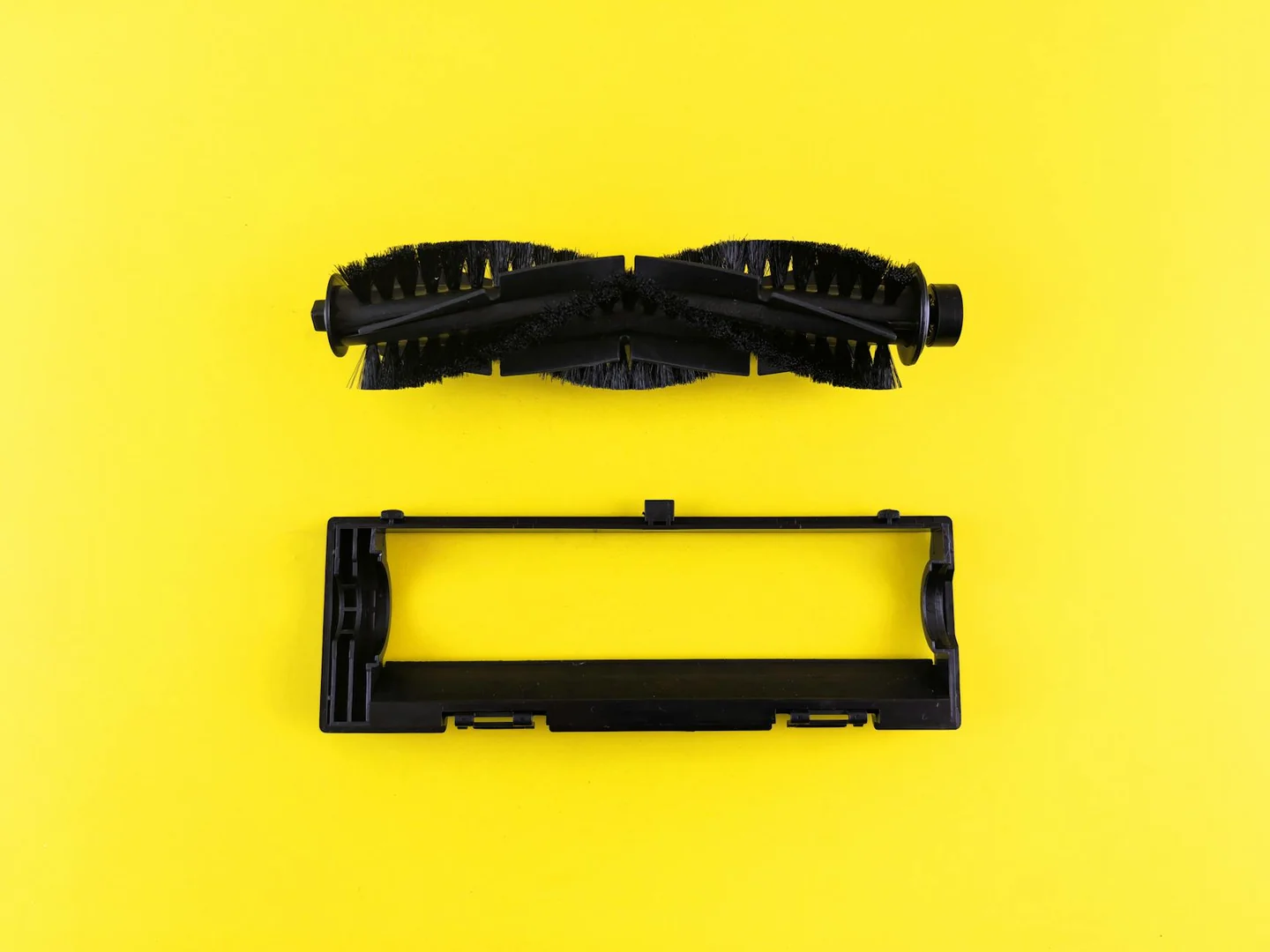
A washing machine that won’t spin, an oven that heats unevenly, or a refrigerator that is losing its cold do not always require replacing the appliance. In many cases, the repair involves locating the exact part, checking compatibility, and fitting a reliable replacement. That market ranges from small wear items, such as seals or filters, to more sensitive components, such as motors, heating elements, pumps, thermostats, or electronic modules. The value lies not only in replacing what is broken, but in doing so with technical judgment and without improvisation. If you have a problem with your appliance, you can use our free error code finder. From there, you can find out and resolve all errors easily and effectively.
The right spare part prevents a bigger breakdown
Buying spare parts for appliances is not about finding something that seems to fit. The difference between a solid repair and a pointless expense often lies in small details: the model code, the appliance series, the component position, and, sometimes, the manufacturer’s specific revision. A refrigerator handle may change by just a few millimeters; a washing machine drain pump may vary in connectors, power, or mounting; an oven heating element may look visually identical and still not work properly in a different unit.
That margin for error explains why specialized distributors insist on precise identification. The customer arrives with a broken part in hand or with a blurry photo, but the real spare-parts catalog works by references, exploded diagrams, and equivalents. Compatibility matters more than intuition. And that applies to large appliances as well as to small devices: coffee makers, vacuum cleaners, irons, food processors, or dryers. The logic is the same, even if the scale changes.
It is also worth looking at the usage context. Replacing a door seal in a washing machine with five years of service is not the same as changing the motor in a vacuum cleaner that has accumulated fine construction dust or pet hair for months. The right part improves performance, but the overall condition of the appliance still matters. In repair, the spare part is one piece of the system, not an isolated miracle.
Which parts are requested most often and why they fail
Some components wear out more because they work at the limit or because they depend on heat, moisture, and continuous movement. In washing machines and dishwashers, drain pumps, door latches, hatch seals, solenoid valves, filters, and pressure switches appear frequently. These are parts exposed to water, pressure, and repeated cycles. When they fail, the symptom is usually clear: leaks, water not entering, the drum not turning, or programs stopping before completion.
In refrigerators and freezers, wear is usually concentrated in thermostats, temperature sensors, gaskets, bottle racks, drawers, fans, condensers, and compressors in the most serious cases. The user first notices a domestic detail, such as a door that does not seal properly or a cracked shelf, and then the thermal problem appears. A deformed seal can send electricity consumption soaring and force the unit to work more hours than necessary. What looks like a minor fault ends up leaving a mark on the bill.
Ovens and cookers have their own wear patterns: heating elements, thermostats, controls, hinges, seals, trays, burners, injectors, and electronic modules. Here, heat is a harsh judge. Materials fatigue, connections dry out, and grease speeds up deterioration. In water heaters and boilers, diaphragms, thermocouples, microswitches, heating elements, and magnesium anodes perform critical functions. These are small parts that govern complex equipment, almost like switches in a domestic control center.
How to identify a part without wasting time or money
The starting point is the appliance label. On many appliances, that rating plate appears on the door frame, behind the front panel, on the back, or on a hidden side. It contains codes that may be called model, type, E-Nr, PNC, service number, product code, or similar references, depending on the brand. Those details are usually enough to narrow down the correct spare part and avoid unnecessary returns.
When the label is not visible or has become illegible, the old part provides useful clues. A motor, belt, filter, or pump often has engraved numbers, specific connectors, or a quite particular mounting shape. A photograph of the dismantled component helps a lot, especially if it is accompanied by measurements, number of poles, plug type, or connection positions. A well-taken image can save hours of searching, especially in appliances with several factory versions.
In some cases, it is also worth paying attention to the symptom, not just the reference. A dishwasher that does not drain may need a pump, but it could also have a clogged filter, a bent hose, or a faulty pressure switch. A refrigerator that does not cool properly may have a damaged sensor, a stopped fan, or a defrost problem. The visible part is not always the guilty part, which is why services with technical support provide real value: they interpret the fault before selling the spare part.
Original, compatible, or adaptable: the differences that matter
Not all spare parts play in the same league. An original replacement usually comes from the manufacturer or its authorized network and maintains exact specifications. A compatible part is made by a third party to work with the same appliance or with several equivalent models. An adaptable part solves a specific need, although it sometimes requires minor mounting changes. None of these categories is inherently good or bad; the criterion depends on the use, the budget, and availability.
Original parts usually offer peace of mind when the component belongs to a delicate system, such as an electronic module, a complex valve, or a heating element with precise geometry. Compatible parts, on the other hand, usually gain ground in commonly worn items, such as filters, seals, gaskets, brushes, handles, or trays. The key is to ask for traceability and clear equivalence. If the seller cannot explain which model it fits or which code it replaces, the risk increases significantly.
In home repairs, the word cheap should not be read on its own. A very inexpensive spare part that does not last long ends up costing more than a slightly pricier but stable one. And there is another practical nuance: time. Waiting for a second purchase because the first one did not fit is expensive in convenience and lost hours of use. That is why, when comparing spare parts for appliances, it is worth looking at price, yes, but also warranty, availability, delivery time, and technical support.
Brands, appliance families, and broad catalogs
The most useful catalogs are organized not only by price, but by brands and product families. Washing machines, dishwashers, refrigerators, ovens, extractor hoods, dryers, vacuum cleaners, coffee makers, water heaters, boilers, and air conditioning units do not fail in the same way nor do they share the same part formats. A specialized center that groups hundreds or thousands of references by family allows for more precise navigation, especially when the user does not have deep technical knowledge.
In the sector, reference names abound such as Balay, Bosch, Siemens, Teka, Fagor, Edesa, Whirlpool, Ignis, Bauknecht, Electrolux, Zanussi, AEG, Samsung, LG, Beko, Whirlpool, Indesit, Ariston, Saunier Duval, Junkers, Vaillant, Nilfisk, Rowenta, Braun, Krups, or Philips. Each brand uses its own codes, measurements, and exploded diagrams. Even within the same family there may be small variations by year of manufacture, market, or design update.
That is why a serious catalog does not stop at listing parts. It adds useful descriptions, cross-references, compatibility information, and, when possible, real product photos. In some cases, it also includes exploded diagrams or views, because they help show the exact place of each component inside the appliance. That domestic map turns searching into a more precise and less frustrating task.
The role of technical advice in a purchase that seems simple
Expert support still makes a difference in an increasingly digital market. Buying online is fast, but repairing an appliance is not always solved with a click. Some parts require checking voltage, dimensions, connections, mounting position, or model version. A good advisor does not sell blindly: they ask, compare, interpret, and, if necessary, rule out options. That conversation saves mistakes that a product sheet alone cannot detect.
In a physical store, the added value is even more noticeable. The customer can show the component, take measurements over the counter, and compare the reference with someone who has seen that fault dozens of times. Technical experience turns a shelf of spare parts into a light diagnostics workshop. It does not replace an authorized service center, but it solves many common household faults quickly and without needing to replace the entire appliance.
It is also useful for those who repair things themselves. A well-informed hobbyist can replace a belt, filter, simple thermostat, or door gasket, but will appreciate guidance when the fault involves electricity, gas, water, or sealed parts. The boundary between what is accessible and what is delicate is real. And the right spare part, well chosen, reduces risks and avoids unnecessary handling.
Prices, lead times, and the hidden value of repairing
The price of a replacement part is usually much lower than replacing the entire appliance. A seal, heating element, pump, or handle can cost a fraction of the full appliance, and in many homes that makes the difference between repairing or discarding it. The decision depends not only on the immediate budget, but also on the remaining lifespan of the unit, its consumption, and the difficulty of the intervention.
Some parts fall into modest price ranges, such as filters, switches, or small seals, while others reach higher amounts, such as compressors, electronic boards, or motors. The useful figure is not just the price, but the total repair cost: part, shipping, labor if any, and waiting time. A spare part in stock, with fast shipping, can save an appliance that still has several years left. By contrast, a cheap part that arrives too late may not be worth it if the appliance remains out of service for too long.
Repair also has an economic and environmental side that is gaining importance. Extending the useful life of an appliance reduces waste electrical and electronic equipment and lessens the need to produce new equipment before its time. That invisible saving does not always show up at the register, but it does in the kitchen, laundry room, or storage room, where an appliance once again does its job without background noise or premature replacement.
Signs that the fault is in a specific part
Some symptoms point quite clearly to the damaged component. If the washing machine fills with water but does not spin, the cause may be the belt, motor, brushes, or control module. If the dishwasher makes noise but does not expel the water, the pump or drainage system comes under first suspicion. If the oven turns on but does not reach temperature, the heating element or thermostat is usually at the center of the scene.
In refrigerators, unusual ice buildup, uneven temperature, or a fan that does not start point to the sensor, defrost system, or seal. In vacuum cleaners, loss of suction usually comes from saturated filters, blocked hoses, worn seals, or fatigued motors. A fault is rarely abstract; it leaves physical signs, sounds, smells, and repeating patterns. Knowing how to read them simplifies spare-part purchases and avoids replacing parts by elimination.
It is also worth distinguishing between wear and accident. A hinge broken by continuous use does not behave the same as a part snapped by a blow. Wear is usually accompanied by looseness, noise, or progressive deformation; an accident, by sudden breakage. That difference guides the search and helps decide whether it is enough to replace one element or whether it is worth checking neighboring parts that may have suffered the same stress.
Where a specialized store fits in the repair landscape
The spare-parts store remains the meeting point between the user and a possible repair. It does not matter whether the customer arrives with a seal, a photo on their phone, or an incomplete reference. A good store combines stock, experience, and search capability. That triangle is what solves everyday needs: a refrigerator hinge, a bottle rack, a wash pump, an oven heating element, a HEPA filter, or a seemingly minor vacuum part.
In cities with commercial and technical tradition, such as Valencia, that service gains extra value through proximity. Quick pickup, in-person consultation, and direct guidance reduce waiting time and make it possible to check the part before taking it home. For someone dealing with a breakdown in the middle of everyday routine, that combination of access and judgment is worth more than an endless catalog without context.
Home repair is no longer a rarity. More and more users understand that replacing a part extends the life of the appliance, protects their wallet, and prevents a minor fault from turning into a major expense. The right replacement, chosen methodically rather than impulsively, is almost a form of smart maintenance. And in appliances, practical intelligence starts with a properly read reference.
What to remember before buying a replacement part
An appliance is not saved by luck, but by a combination of identification, compatibility, and part quality. The best result comes when the reference is clear, the part matches the exact model, and the seller offers support to validate the choice. In that scenario, repair stops being a gamble and becomes a sensible, visible, and measurable solution.
The right purchase is not always the fastest or the cheapest, but the one that prevents the fault from happening again. That is why spare parts for appliances should be treated as technical components and not as ordinary accessories. The difference between fixing and patching lies in the detail. And in a home where everything revolves around water, heat, cold, and movement, that detail can extend the useful life of an appliance that still has a lot to give.
Este artículo contiene enlaces de afiliado: si compras a través de ellos, se genera una pequeña comisión sin coste adicional para ti. Más información.


Balay washing machine E80 error: meaning and what to do

E80 Error in Balay Ovens: Safe Causes and Solutions

E63 error on a Balay dryer: causes and safe solutions
E63 error on a Balay washing machine: causes and safe fixes

Balay washing machine E61 error: meaning and what to do

E61 error on a Balay washing machine: meaning and action

E6 PUNP error on a Balay washing machine: meaning and next steps

E56 error on Balay dryer: causes and safe solutions

E56 error on Balay washing machines: meaning and safe solutions

E50 error on Balay dryers: causes and safe solution

 Kitchen plate6 days ago
E Error on Balay Series 900 Hob: Causes and Solutions
- Dishwasher6 days ago
E25 error in Balay dishwasher: causes and solutions
- Balay6 days ago
E16 Error on a Balay Washing Machine: Causes and Safe Fixes
- Kitchen plate6 days ago
Balay induction hob E error: causes and solutions
- Balay5 days ago
E05-32 error on a Balay oven: causes and safe solution
- Washing machine5 days ago
Hotpoint washing machine F09 error: what it means and what to do
- Balay6 days ago
E21 error in Balay dishwashers: causes and solutions
- Balay4 days ago
E09 error in Balay dishwasher: causes and safe solution
- Balay6 days ago
Error E on a Balay hob: what it means and what to do
- Balay6 days ago
Balay washing machine E18 error: causes and safe fix
- Balay6 days ago
E61 error on a Balay washing machine: causes and safe fix
- Dishwasher4 days ago
E15 error on Balay dishwasher: do not tilt it