Magazine
Air conditioning regulations for apartment communities: permits and key points
Permits, façade, noise, and licenses: what the law sets out for installing air conditioning in a community without conflicts.

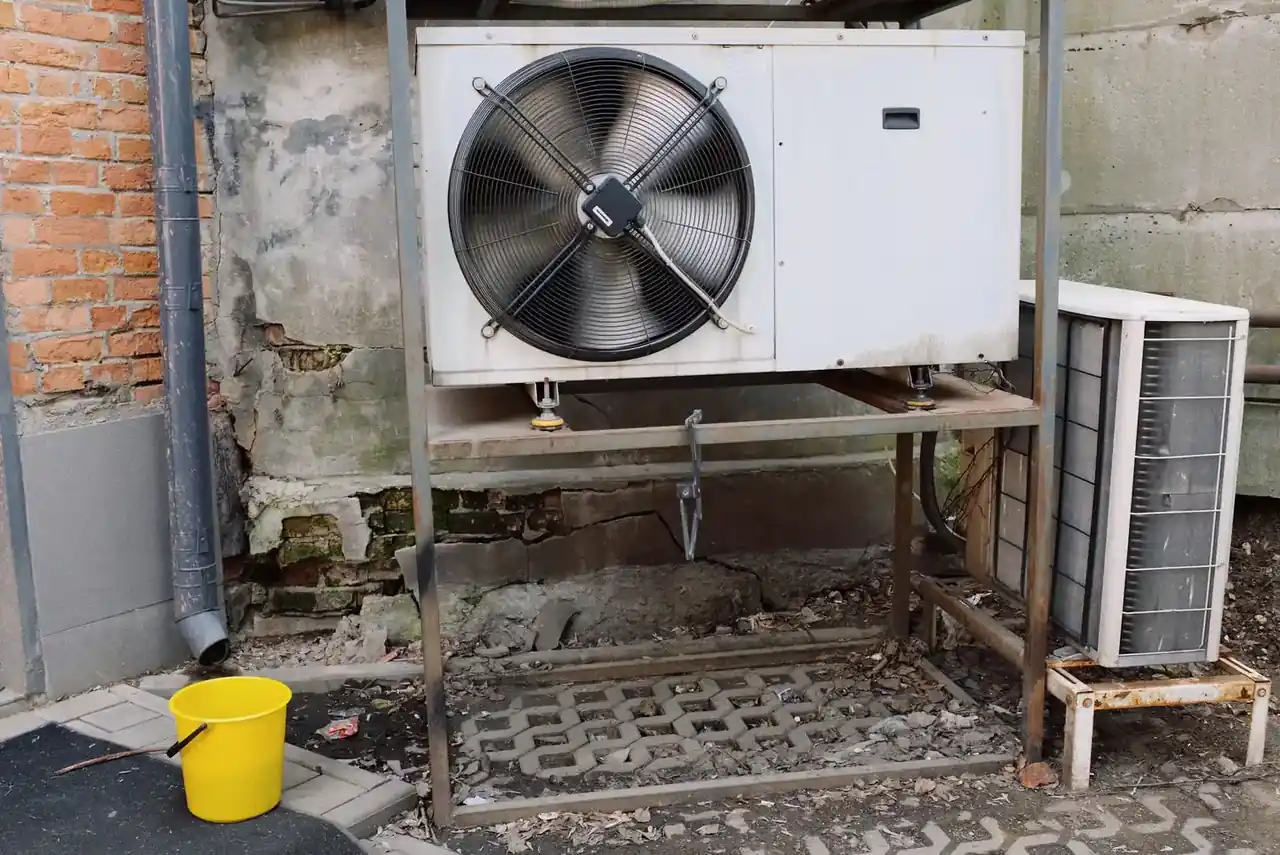
Installing an outdoor unit on a façade, a courtyard, or a roof is not a simple household task: it affects common elements, alters the building’s appearance, and can open the door to noise, dripping, and arguments in the stairwell. In a homeowners’ association, that detail completely changes the legal landscape and requires looking at three layers at once: the Horizontal Property Act, the internal bylaws, and the municipal ordinance.
If you have a problem with your air conditioner, you can use our free error code finder. From there you can find out and solve all errors easily and effectively.
What the law really allows in a community
The main reference is the Horizontal Property Act, but it does not act alone. Article 7 of the HPA protects common elements and, at the same time, allows each owner to use their home without harming the structure, safety, exterior appearance, or the rights of others. When a machine is visible on the façade or takes up a common space, we are no longer dealing with a purely private decision.
That nuance explains why two buildings with similar situations can end up applying different rules. In a property with detailed bylaws, the installation may already be guided in advance; in another, where the issue is unregulated, the debate usually goes through the meeting and the specific way in which the building envelope is affected. There is no automatic authorization by default when the outdoor unit alters a community element.
It is also worth distinguishing between installing inside the home and placing the equipment outside. An indoor split unit, without drilling or visible occupation of common areas, usually creates less legal friction. But once the condenser is anchored to the façade, rests on a community terrace, or discharges onto a shared courtyard, the installation enters much more sensitive territory. At that point, comfort alone no longer rules: coexistence and protection of the building do.
Community approval and the majorities that usually apply
The most prudent approach, and the one that avoids lawsuits later, is to request express authorization before installing. If the bylaws say nothing and the work affects a common element, the community must decide in a meeting. The exact majority can vary depending on the case, the interpretation of the agreement, and the scope of the alteration, but in practice the debate usually revolves around the general rule of unanimity when the title deed or the private use of a common element is modified, and qualified majorities when it is a matter of regulating use without depriving others of their rights.
In simple terms, the more visible, permanent, or invasive the installation is, the stricter the agreement will need to be. Fixing a unit in a building-approved area is not the same as drilling into a main façade in a community with no precedent. The existence of already installed units also matters: if the property previously tolerated similar installations without challenging them, an argument of unequal treatment may arise that softens the opposition, although that does not turn authorization into an absolute right.
The president or administrator should not receive only an informal request. The sensible thing is to submit a written application with the planned location, a technical sheet for the unit, the condensate drainage method, and a clear explanation of why there will be no harm to the building’s aesthetics or use. Prior transparency greatly reduces conflict, because it prevents the meeting from voting on an abstract idea and forces it to assess a concrete project.
Bylaws, internal rules, and municipal ordinances: the decisive triangle
The community bylaws work like a kind of internal map. They may prohibit installation on the façade, allow it only at certain points, impose a uniform aesthetic line, or require that pipes and wiring be kept hidden. If the text is clear, its weight is enormous. If it is silent, the solution usually comes from the HPA and from the agreement the community adopts for that specific case.
The next filter is municipal. This is where noise, projections, urban aesthetics, façade protection, and, in some municipalities, special restrictions if the building is in a historic center or a listed area come into play. A community permit does not cure an urban planning violation. That is one of the most common traps: the board approves, but the town hall may still require corrections, a permit, or even removal.
The third piece is the technical installation rules. The Regulation of Thermal Installations in Buildings requires the installation to be carried out by qualified personnel and for the system to meet the applicable safety and efficiency requirements. If the equipment results in a poor installation, neither neighborhood approval nor summer urgency will solve the problem. Legality does not end with the community vote; it also depends on professional execution and municipal requirements.
Common locations and why some create more conflict than others
The façade is the most delicate point because it is visible from the street and changes the building’s appearance. That is why it attracts most complaints. Many communities prefer to move the outdoor unit to interior courtyards, rooftops, roofs, or technical areas already intended for that use. When that alternative exists, conflict usually decreases and the legal fit improves significantly.
Private terraces are not always a free solution. Even if they are for the owner’s use, there may be common elements, overhang limits, easements, or aesthetic restrictions. In buildings with a uniform appearance, visual criteria weigh as much as technical ones. A badly placed unit can look like an out-of-place lump, like a metal appendage in the middle of a carefully maintained façade; it not only looks awkward, it also complicates the defense of the agreement.
The key is not only where the unit physically fits, but where it fits without harming ventilation, maintenance, or other people’s rest. An outdoor unit needs to breathe, expel heat, and operate without recirculating hot air. If it is too close to a wall or enclosed in a recess, performance drops and consumption rises. What is cheap during the work later turns into an electricity bill and extra noise.
Noise, vibration, and dripping: the complaints that most often reach the meeting
In a community, complaints rarely stop at aesthetics. The compressor hum, vibration transmitted to the slab, and water that falls uncontrolled onto a terrace or the sidewalk usually disturb coexistence faster than any legal debate. The Horizontal Property Act, in article 7.2, prohibits annoying, unhealthy, harmful, dangerous, or unlawful activities when they damage the property or contravene general rules.
Noise is especially sensitive at night, when tolerance is lower and any hum is amplified. Local ordinances usually set decibel limits according to time slots, and although the exact values depend on the municipality, the logic is the same: the equipment must not disturb the others’ rest. An efficient unit that is poorly installed can be louder than a technically worse one fitted with proper insulation and supports.
Free dripping also creates serious conflicts. It is not just a visual nuisance. Water falling onto façades, courtyards, or walkways causes dampness, stains, and, over time, deterioration of the exterior finish. The correct solution is to channel the condensate to a suitable drainage point, never let it fall by gravity where it ends up splashing onto third parties. Poor water drainage leaves a mark and usually leads to claims.
Meeting approval and the documentation that usually convinces
The homeowners’ meeting should not become an improvised plebiscite. The more precise the information, the easier it is to assess whether the installation is reasonable. A simple sketch, a photo of the location, the unit’s power rating, the declared noise level, the route of the pipes, and the drainage outlet all help ensure that the agreement is serious and not merely a subjective impression.
In large buildings, a uniform guideline often works well too. If several units share the same façade area or the same technical solution, the community reduces the visual impact and avoids the feeling of patchwork. Aesthetic uniformity is a form of legal prevention: when everyone follows the same criterion, there is less room for grievances and challenges.
If the community authorizes it, that agreement should be clearly recorded in the minutes, indicating the permitted location, the technical conditions, the obligation to comply with municipal regulations, and the need for the work to be carried out by a qualified installer. An ambiguous approval, without limits or details, usually creates problems later. The paper matters because it is the document the annoyed neighbor, the administrator, and, if necessary, the judge will end up looking at.
What happens when the installation is done without permission
Installing the unit first and asking afterward can be expensive. The community may require removal, demand restoration of the original condition, and claim damages arising from the work. If there is also noise or water discharge, neighborhood pressure usually increases quickly and the problem stops being technical and becomes a matter with several fronts: the community, the town hall, and sometimes the courts.
Administrative sanctions depend on the municipality and the type of offense, but it is not unusual for planning or noise fines to range from moderate amounts to much higher sums if there is disobedience or repeat offending. On top of that, there is the real cost of dismantling the unit, repairing the façade, repainting, and returning everything to how it was. Removal almost always costs more than doing the paperwork properly from the start.
In addition, an irregular installation can complicate home insurance coverage if there are damages linked to faulty installation. It can also make a future sale more difficult, because a buyer or appraiser may require the unit to be legalized before closing the deal. What seemed like a quick fix ends up casting a long shadow over the home and coexistence.
Case law and practical criteria in buildings with a history
Courts usually look closely at two elements: the real impact on common elements and the existence of prior authorization or established tolerance. When there is a clear alteration of the façade or an installation that breaks the building’s uniformity, decisions tend to protect the collective interest, especially if there was no express community agreement. In protected or listed buildings, the requirement can be even stricter.
But case law is not limited to punishing. It also considers context. If the community has allowed similar installations for years, with no order or common standard, the discussion changes. In those situations, an owner may try to argue that this is not an individual exception but an established practice. The reality of the building weighs almost as much as the wording on paper.
That does not mean anything goes by inertia. Old tolerance does not make a harmful installation lawful. If the noise exceeds what is reasonable, if the drainage stains the façade, or if the machine compromises public safety, the community still has tools to request corrections or cessation. Neighborly consensus helps, but it does not erase basic safety and property-respect obligations.
How a properly done installation is arranged from the start
The best installation is usually the least visible, the quietest, and the one that leaves the smallest mark on the work. That requires choosing the location carefully, checking the bylaws before buying the unit, and asking the installer to anticipate the drainage solution, anti-vibration supports, and pipe runs. In air conditioning, small details matter more than they seem: a bad anchor transmits noise like a resonant box, a poorly routed pipe breaks the façade, and a badly solved drain gives rise to the simplest and most persistent complaint.
It is also worth thinking about efficiency. A poorly ventilated unit works harder, consumes more, and lasts less. Sometimes the community rejects a visible location for aesthetic reasons and the resident tries to solve it with a forced placement that leaves the condenser with insufficient air. What is technically clumsy ends up being legally weak, because it creates more nuisance and offers less defense if another owner challenges it.
Prior communication remains one of the best prevention tools. Warning, explaining, and documenting usually lowers the tone of the conflict. It does not eliminate disagreements, but it turns them into a discussion about concrete facts rather than a fight over suspicions. In a property, that is already a lot: a community that understands what will be installed, where, and how has less chance of turning a home improvement into a neighborhood dispute.
The balance between comfort, aesthetics, and coexistence still sets the tone
Air conditioning is no longer a frivolous luxury in many homes, but its installation in a community still requires a kind of fine choreography: permission where applicable, compliance with the bylaws, respect for the municipal ordinance, and professional execution. Individual comfort does not disappear; it is simply framed within a shared building where every screw can have visible consequences.
That is why the regulations on air conditioning in residential communities are better understood as a discipline of balance than as a rigid list of prohibitions. The goal is not to prevent cold air, but to stop it from arriving together with common damage. When the installation is planned in advance, summer becomes more bearable and the stairwell stops being the scene of the next argument.
At that border between the private and the common, almost everything is decided: the location, the noise, the water, the appearance, and the record that proves the agreement. Whoever respects that order not only reduces sanctions; they also protect the value of the home and the building’s peace, which in the end is another very real asset, even if it does not appear on the invoice.
Este artículo contiene enlaces de afiliado: si compras a través de ellos, se genera una pequeña comisión sin coste adicional para ti. Más información.


Balay washing machine E80 error: meaning and what to do

E80 Error in Balay Ovens: Safe Causes and Solutions

E63 error on a Balay dryer: causes and safe solutions
E63 error on a Balay washing machine: causes and safe fixes

Balay washing machine E61 error: meaning and what to do

E61 error on a Balay washing machine: meaning and action

E6 PUNP error on a Balay washing machine: meaning and next steps

E56 error on Balay dryer: causes and safe solutions

E56 error on Balay washing machines: meaning and safe solutions

E50 error on Balay dryers: causes and safe solution

 Kitchen plate6 days ago
E Error on Balay Series 900 Hob: Causes and Solutions
- Dishwasher6 days ago
E25 error in Balay dishwasher: causes and solutions
- Balay7 days ago
E16 Error on a Balay Washing Machine: Causes and Safe Fixes
- Kitchen plate6 days ago
Balay induction hob E error: causes and solutions
- Balay6 days ago
E21 error in Balay dishwashers: causes and solutions
- Balay4 days ago
E09 error in Balay dishwasher: causes and safe solution
- Balay5 days ago
E05-32 error on a Balay oven: causes and safe solution
- Washing machine5 days ago
Hotpoint washing machine F09 error: what it means and what to do
- Balay6 days ago
Balay washing machine E18 error: causes and safe fix
- Balay6 days ago
E61 error on a Balay washing machine: causes and safe fix
- Balay6 days ago
Error E on a Balay hob: what it means and what to do
- Dishwasher4 days ago
Balay dishwasher E15 error: warranty coverage and solution