Magazine
32-inch smart TV: complete guide to choosing well
Keys to choosing a compact model with good image, sound, and system, without overpaying.

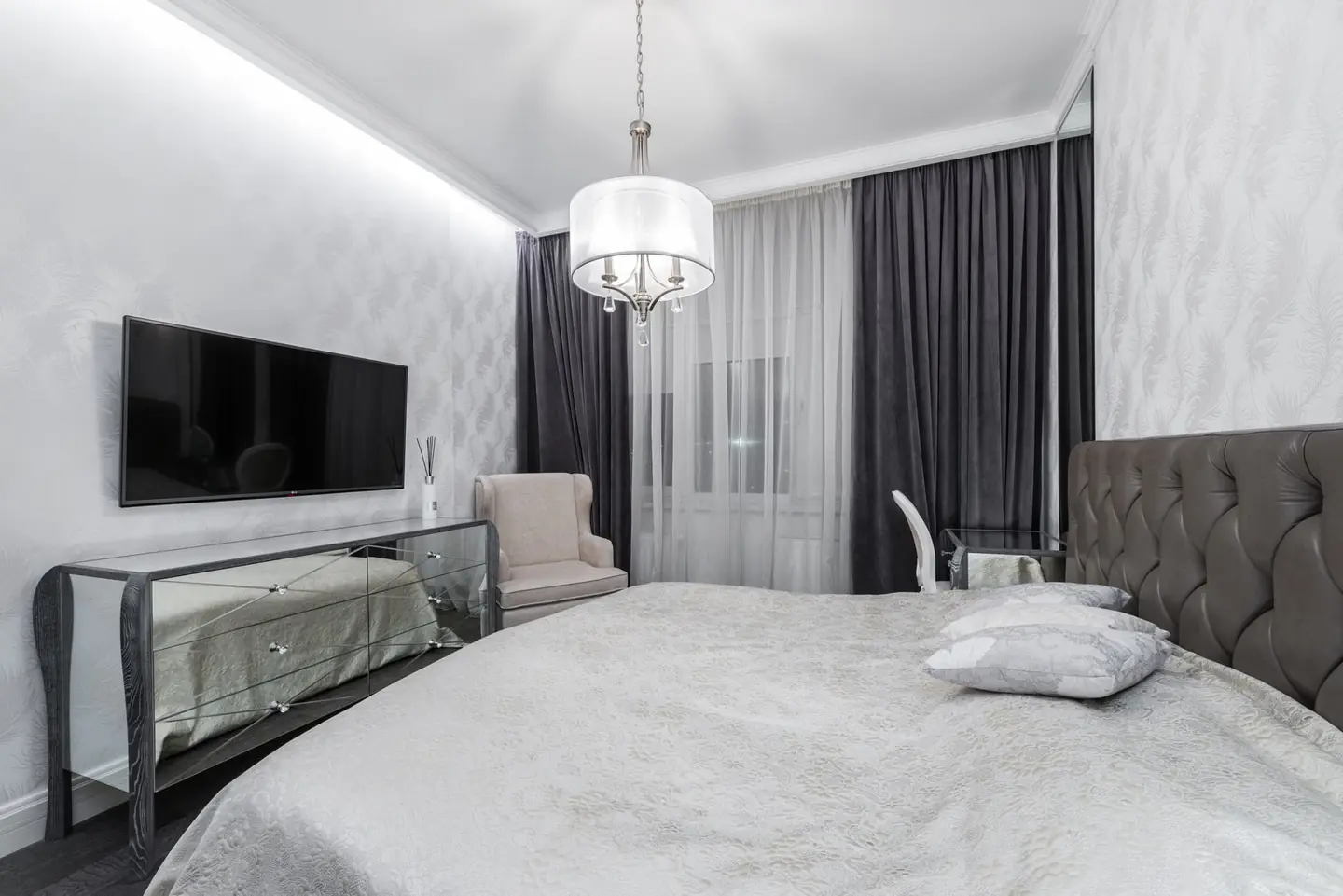
The compact TV market has changed shape: the 32-inch size no longer means giving up modern features, and in this segment connectivity, the operating system, and panel quality matter almost as much as the diagonal. Product sheets from the main sellers show a clear trend: Full HD dominates the mid-range, although HD, QLED, and platforms such as Google TV, webOS, VIDAA, Tizen, Fire TV, or Titan OS still coexist.
In practice, that places this format in a very useful spot for kitchens, bedrooms, second homes, and small apartments, where a large set feels out of place and a basic one falls short. Current offerings start at around 129.89 euros for simple models and easily exceed 230 euros when improved panels, more ports, voice control, or finer image processing come into play.
If you have a problem with your TV, you can use our free error code finder. From there you can find out and fix all errors easily and effectively.
What a 32-inch format really brings to the table
The popularity of this size does not depend solely on taking up little space. A 32-inch set offers a comfortable balance between visual presence and discretion, especially in rooms where the viewing distance is around 1.2 to 2 meters. At that scale, a well-resolved screen avoids the feeling of being stuck to a glowing wall and, at the same time, does not eat up the space on a dresser, shelf, or countertop.
In the current range, the biggest leap is not in inches but in the user experience. What used to be a secondary TV can now be a streaming hub, a screen for lightweight consoles, an auxiliary monitor, or a living-room device with built-in apps. That is where brands like LG, Hisense, TCL, Philips, Samsung, Haier, Toshiba, or Blaupunkt compete with a combination of picture, sound, and direct access to platforms that would have been unthinkable in this size a few years ago.
There is also a design nuance worth noting. Thin bezels, dual-position stands, and bezel-less finishes have turned many compact models into more sober and cleaner objects, almost like black frames suspended on the wall. In a small room, that visual lightness matters as much as the screen’s brightness.
Resolution matters, but it does not tell the whole story
Two worlds coexist in this segment. On one hand, HD televisions still appear, with resolutions around 1366 x 768 or 720p, and they remain valid for basic use, DTT, and less demanding content. On the other hand, Full HD at 1920 x 1080 pixels has become the most sensible standard for anyone who watches series, sports, and video platforms frequently.
The difference is more noticeable up close than from afar. On a 32-inch screen, Full HD provides a cleaner image structure, better subtitle definition, and softer contours. That is why models such as the LG 32LR60006LA, TCL 32SF560, Hisense 32A5S, or TD Systems PRIME32FC22TIZEN have gained visibility in commercial listings: they not only add connectivity, they also deliver a sharper image at a size where definition still matters a great deal.
QLED or Hi-QLED offerings add an interesting layer. They do not turn this format into a premium large-living-room TV, but they do improve color vibrancy, perceived contrast, and the sense of depth. In listings such as those for the TCL 32V5C or Hisense 32A5Q, that technology helps give a bit more air to dark scenes, night sports, and streaming movies where color is almost everything.
The operating system now matters as much as the screen
Buying a 32-inch TV is no longer just a matter of checking whether it has a tuner or HDMI. The ecosystem is what matters. Google TV, Android TV, webOS, VIDAA, Tizen, Fire TV, and Titan OS define how you browse, which apps come preinstalled, how content is searched, and even how quickly the remote responds. On a small screen, a clumsy interface does more damage than a slight lack of brightness.
Google TV and Android TV often stand out for their wide catalog and integration with Chromecast or Google Cast, something useful if the user lives between phone, tablet, and TV. webOS, in LG models, offers a nimble and straightforward experience, with easy access to popular apps, compatibility with Apple AirPlay in several recent versions, and fairly clean navigation. VIDAA, present in Toshiba, Hisense, and Nilait in some models, opts for a direct environment, quick startup, and a more restrained design.
Fire TV, which appears in TCL’s more eye-catching models in the segment, introduces a logic very centered on Alexa and Amazon content, while Titan OS, in several recent Philips models, moves toward a lightweight interface focused on everyday use. Tizen, for its part, remains a reference in Samsung and in some TD Systems models with associated licensing or integration, with the advantage of very stable navigation and a fairly polished home-oriented approach.
Sound: the weak point that is starting to improve
For years, the main compromise in this format was audio. A small TV, simply by physics, has less room for large speakers and generous acoustic chambers. Even so, the landscape has improved. Today there are plenty of sets with Dolby Audio, Dolby Digital Plus, Dolby Atmos, DTS Virtual:X, or AI Sound, and that changes the final result quite a bit in an open kitchen, a bedroom, or a modest living room.
This does not mean the built-in sound will compete with a dedicated soundbar. But it does allow you to watch a series, a news program, or a match with clearer voices and a less metallic soundstage. Models like the TCL 32SF560, Hisense 32A5S, LG 32LR60006LA, or Haier H32K85FFX show that the format has stopped resigning itself to flat, distant audio.
In this area, the nuances matter. A 16- or 20-watt system may be enough for a small room, but quality depends as much on processing as on rated power. That is why a spec sheet with fewer watts and better bass handling can sound more convincing than a louder, hollower one. The technical label guides you; the final result does not always.
Connections and compatibility that are worth checking carefully
The back of a compact TV may seem like a minor area, but that is where much of its useful life is decided. HDMI, USB, Bluetooth, Wi‑Fi, and, in some cases, Ethernet are the connections that determine whether the device adapts to real use or forces you to rely on adapters from the first month. On 32-inch models, two HDMI ports are already a good starting point; three or four provide a much more comfortable margin.
The most complete sheets include compatibility with Apple AirPlay, Miracast, Google Cast, or voice control with Alexa and Google Assistant. That lets you send video from your phone, play family photos, mirror screens, or control the TV without going through long menus. There are also practical details such as USB ports useful for external storage, Bluetooth for headphones or soundbars, and triple tuners in some models aimed at the European market.
There is a usage detail that often goes unnoticed: the stand position. Some sets, such as certain Hisense models, offer a dual-position stand, something very handy when the furniture is narrow or when you want to leave space for a soundbar. In a small living room, a few centimeters can decide whether the installation looks clean or cramped.
Brands that dominate the showcase and what they bring
Competition in 32 inches is intense, but not all brands are playing the same game. LG is usually associated with webOS, good app integration, and very balanced image handling. In its recent models, you will find a5 Gen 5 or Gen6 processors, HDR10, HLG, and HGiG improvements, and an overall experience that is fairly mature for users who value smoothness and compatibility.
Hisense, meanwhile, has established itself as an aggressive value-for-money brand. Its Hi-QLED and QLED proposals in 32 inches bring Dolby Atmos, AirPlay, game mode, and smart home compatibility into the mix. TCL follows a similar line, although with a stronger lean toward Google TV or Fire TV, giving it a personality heavily centered on streaming and voice assistant use.
Philips adds the appeal of Ambilight in certain references, a rarity in this size that changes the room’s atmosphere with backlighting synchronized to the image. Samsung, although less common in this segment than in larger sizes, retains weight thanks to its ecosystem, Knox security in some models, and its Tizen-focused approach. Haier, Toshiba, and Blaupunkt round out the picture with interesting options in price, connectivity, and ease of use.
What you are really paying for in 2025
Prices help organize the market quite clearly. At the entry level, you will find sets like the anexa SMART32C02FG, around 129.89 euros, or the Engel LE3266T2, close to 129 euros in some stores. These are models aimed at users who prioritize a functional device, with Smart TV and basic connectivity, without high-end ambitions.
Between 149 and 170 euros, much of the most competitive offer is found: TCL 32SF560, Blaupunkt 32QBG6000S, Hisense 32A4S, or some straightforward Smart Tech and JVC models. In that range, you already start to find a reasonable combination of smart system, improved resolution, and decent sound, with variations depending on the store and the specific promotion.
Above 190 euros, things get more refined. Philips 32PFS6900, LG 32LQ63806LC, LG 32LR60006LA, or Hisense 32A5S enter that bracket where the user pays for a more solid package: better panel, better processing, greater ease of use, and, often, better voice and streaming options. When you move up to the 230 or 250 euro range, extras such as Ambilight, QLED, better audio, or more mature software tend to appear.
Where the difference is noticeable in everyday use
Real experience is not measured in the spec table, but in daily routine. A 32-inch TV with an agile system powers on quickly, connects to Wi‑Fi without hiccups, and lets you open Netflix or YouTube without waiting forever. That detail, repeated day after day, matters more than a pretty number on the box. Ease of use is the true luxury in this segment.
Interface clarity also matters when the TV is shared among several people. In a home where older adults, children, or less technical users live together, a clean menu avoids frustration. Platforms like webOS, VIDAA, or Titan OS often score points precisely for that reason: fewer distractions, more direct access. By contrast, Android TV and Google TV can be more powerful in terms of catalog, although they sometimes require a bit more patience.
For casual gaming, 60 hertz remains the norm across almost the entire segment. This is not territory meant to compete with gaming monitors, but it is suitable for casual consoles, sports streaming, and media playback. If the user values that versatility, the presence of HDR10, game mode, or noise reduction adds more than it might seem in day-to-day use.
The sensible decision is based on space, not on the catalog
The most common mistake is looking at a 32-inch showcase as if all the options were equivalent. They are not. A bedroom calls for smoothness, quick startup, and friendly sound; a kitchen needs good readability, correct viewing angles, and a simple interface; a second home appreciates a triple tuner, stable Wi‑Fi, and low maintenance. The best purchase is the one that fits the room and the real use, not the one that piles up the most acronyms.
In terms of value, Full HD remains the most sensible choice for anyone who regularly watches streaming content. HD still works for basic uses and tight budgets, but the difference in sharpness is noticeable from day one. If, on top of that, you get a mature platform, two or three HDMI ports, Bluetooth, and compatibility with voice assistants, the device gains a longer useful life and a more comfortable coexistence.
That is why the 32-inch segment is so interesting: because it is no longer a lesser solution, but a very fine balance between size, price, and features. In 2025, that balance has become more sophisticated. The user is no longer buying just a screen; they are buying a way to enter streaming, organize the room, and solve a small space with the same naturalness as placing a lamp on a table.
A small size that now competes with much larger models
The paradox of this market is that the more refined it gets, the less size matters on its own. A good 32-inch TV can offer a more satisfying experience than another much larger but clumsy, slow, or poorly resolved one. Advances in smart systems, the leap in connectivity, and improvements in processing have made this format stop being a second option by default.
In an era when the living room has fragmented into screens, apps, and devices, the compact TV has regained prominence. It is no longer about filling a wall, but about using space intelligently. And in that field, the right 32-inch model can be as practical as it is elegant, as domestic as it is technological, without asking for more square footage than is available.
The market confirms it with figures, brands, and very specific references: the entry range remains affordable, but the mid-range already offers features that until recently seemed reserved for larger diagonals. That is the key to this size, a small silent giant that fits real homes, real budgets, and real uses.


Balay washing machine E80 error: meaning and what to do

E80 Error in Balay Ovens: Safe Causes and Solutions

E63 error on a Balay dryer: causes and safe solutions
E63 error on a Balay washing machine: causes and safe fixes

Balay washing machine E61 error: meaning and what to do

E61 error on a Balay washing machine: meaning and action

E6 PUNP error on a Balay washing machine: meaning and next steps

E56 error on Balay dryer: causes and safe solutions

E56 error on Balay washing machines: meaning and safe solutions

E50 error on Balay dryers: causes and safe solution

 Kitchen plate6 days ago
E Error on Balay Series 900 Hob: Causes and Solutions
- Dishwasher6 days ago
E25 error in Balay dishwasher: causes and solutions
- Balay7 days ago
E16 Error on a Balay Washing Machine: Causes and Safe Fixes
- Kitchen plate6 days ago
Balay induction hob E error: causes and solutions
- Balay6 days ago
E21 error in Balay dishwashers: causes and solutions
- Balay4 days ago
E09 error in Balay dishwasher: causes and safe solution
- Balay5 days ago
E05-32 error on a Balay oven: causes and safe solution
- Washing machine5 days ago
Hotpoint washing machine F09 error: what it means and what to do
- Balay6 days ago
Balay washing machine E18 error: causes and safe fix
- Balay6 days ago
E61 error on a Balay washing machine: causes and safe fix
- Balay6 days ago
Error E on a Balay hob: what it means and what to do
- Dishwasher5 days ago
E09 error in Balay dishwashers: causes and safe solution