Boiler
Vaillant F33: what it means and how to act safely
F33 on a Vaillant boiler is usually related to the air pressure switch and the flue gas outlet.

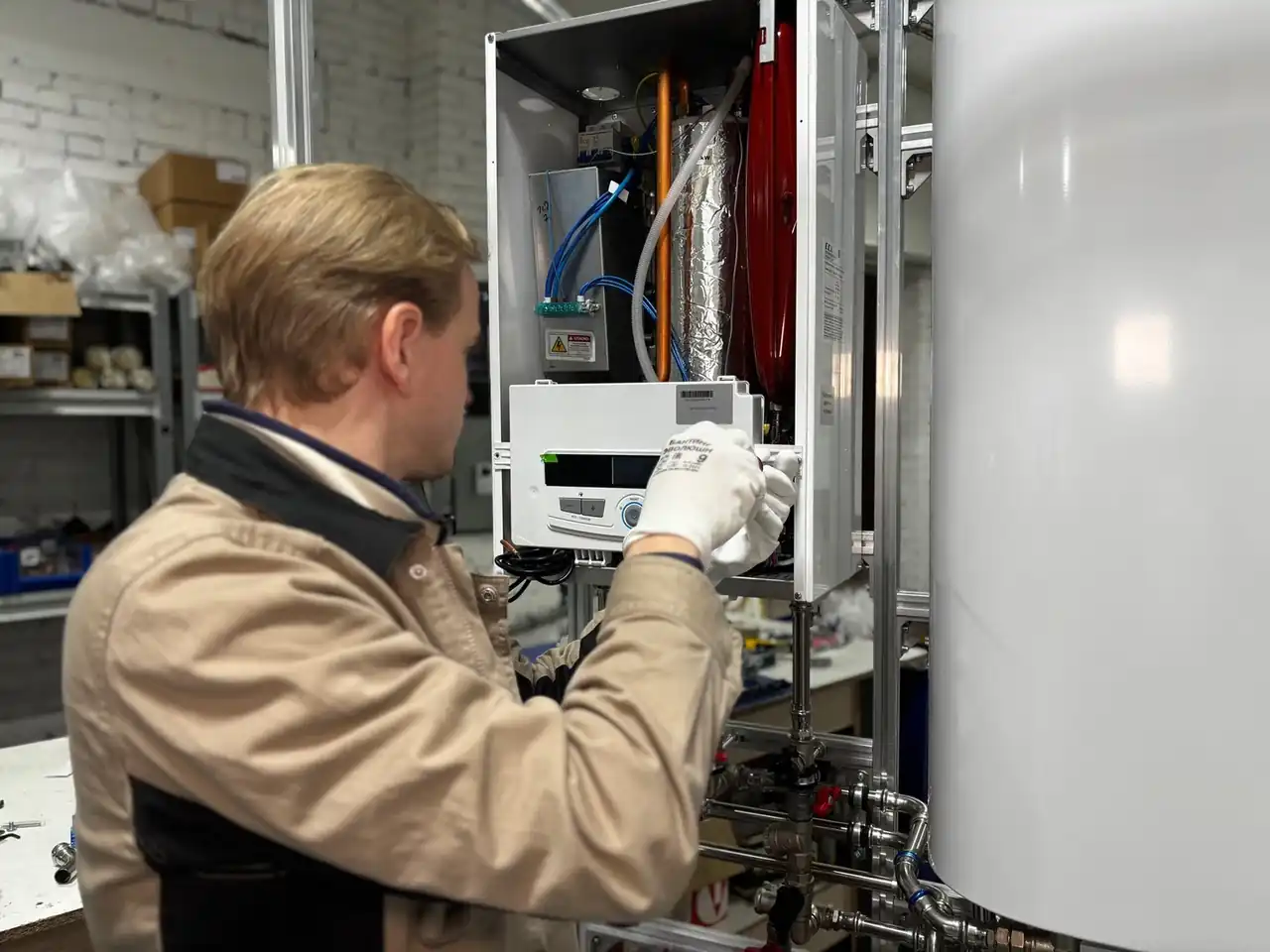
The F33 code on a Vaillant boiler usually appears when the unit does not correctly confirm the airflow required to start or maintain combustion. In practice, this may be due to the air pressure switch, a problem with the fan, an obstruction in the flue gas exhaust, or an ignition fault that prevents the sequence from ending normally.
The fault does not always mean a serious breakdown, but it does require caution. In many cases the boiler locks out for safety and cuts off heating and hot water service until it detects stable conditions. A reset may help clear a temporary lockout, although if the warning reappears the sensible thing is to check the installation, the flue outlet, and the gas supply with technical judgment and without improvising.
If you have a problem with your boiler, you can use our free error code finder. From there you can quickly and effectively find out and solve all errors.
What the F33 really indicates on a Vaillant
On Vaillant sealed-chamber, forced-draft models, F33 points to the circuit responsible for checking that combustion air is circulating properly. It is not a decorative warning; it is the electronics’ way of saying that something is interrupting the normal sequence between the fan, pressure switch, and exhaust. If that control fails, the boiler does not consider itself authorized to light the burner.
The signal may appear on a cold start, after several failed attempts, or even intermittently, like a mechanical ghost that appears and disappears depending on demand. In some homes, it shows up just in the early hours of the morning, when the unit goes back to work after hours of inactivity. In others, it appears when heating is requested intensively or hot water is drawn for a long time, moments when the system pushes internal ventilation closer to its limits.
The underlying reason is not always in a single part. Insufficient air intake, a duct with dirt, ice, nests, leaves, or moisture, a worn pressure switch membrane, or an unstable fan reading can all produce the same symptom on the display. That is why an accurate diagnosis requires looking at the whole system, not just the code.
The most common causes behind the warning
The most repeated cause is the air pressure switch, the component that verifies that the fan is creating the negative pressure needed to evacuate combustion gases. If that sensor is dirty, worn, or responds too late, the board interprets that the air flow is insufficient and blocks ignition. Sometimes the problem is not the sensor itself, but the small silicone tubes connecting it to the air chamber, where condensation or dirt accumulates.
Another frequent source is the fan. If it turns slower than expected, makes noise, jams, or has an irregular electrical supply, the system cannot complete the pre-ignition test. It may also happen that the flue gas outlet is partially obstructed. In winter, an external terminal exposed to wind, snow, or a layer of ice can alter the internal pressure enough to trigger the error.
The gas supply is also part of the picture. Although F33 is mainly associated with the air circuit, a flame that does not ignite or goes out immediately can end up causing an incorrect chain reading. If gas pressure is low, a valve is closed, or there is a fault in the valve, the boiler tries to start, cannot stabilize combustion, and ends up locking out for safety. At that point, the visible fault seems to be air-related, but the real origin lies in ignition or combustion.
What the user can check without opening the boiler
Before touching anything internal, it is worth observing the immediate surroundings. The external flue outlet should be clear of leaves, cobwebs, ice, or anything covering it. You do not need to dismantle the appliance to check whether the terminal is blocked or whether the wind has left any loose part around it. A cautious look from the outside already rules out many false alarms.
The circuit pressure also deserves attention, even though F33 is not a pure low-pressure warning. The boiler generally works best with a cold pressure between 1 and 1.5 bar. If the system is very low, operation can become erratic and favor safety lockouts that are confused with other faults. When pressure drops frequently, there is usually a leak, air in the system, or an expansion vessel that needs checking.
A reset can be useful, but in moderation. One attempt is enough to rule out a momentary lockout after a power interruption or a temporary combustion variation. Repeatedly trying to ignite, on the other hand, can make the situation worse and hide the real pattern of the problem. If the unit shows F33 again after one or two starts, the fault is no longer a coincidence.
When the fault points to ventilation or flue gas exhaust
In many installations, F33 is the footprint of a flue gas exhaust problem. The boiler needs the fan to generate the expected pressure difference so the pressure switch can confirm it. If the duct is dirty, poorly assembled, deformed, or subject to unusual outside pressure, that balance breaks down. What looks like a simple lockout to the user is, for the electronics, an unsafe combustion condition.
Short chimneys, horizontal outlets in inner courtyards, or terminals that are very exposed to the wind require extra attention. A strong gust can alter the pressure switch reading just as much as a partial obstruction. In older buildings, the combination of condensation, dust, and small debris in the duct can also create a resistance invisible to the naked eye, enough to stop the boiler from passing its ventilation test.
When the problem lies there, the symptom usually repeats at specific times. Ignition fails more often in the morning, after a cold night, or on windy days. It may also start and then stop shortly after, as if the boiler were struggling to breathe. That intermittent behavior points more toward ventilation, the pressure switch, or exhaust issues than toward a purely electronic fault.
The relationship between F33 and ignition failures
A unit may show F33 even if the root cause is an incomplete ignition sequence. If the gas does not arrive properly, the electrode does not detect flame, or combustion starts weakly, the board may interpret that the air circuit has not properly validated the process. The safety reading is cumulative: fan, gas, internal pressure, and flame work like a row of dominoes. When one falls, it brings the others down with it.
That is why some technicians find the origin in elements that do not seem connected to air, such as the gas valve, the ionization electrode, or the electronic board. In an older boiler, a fatigued solder joint or an irregular signal is enough for the pressure switch not to receive a coherent reference. The user sees F33, but proper diagnosis requires reading the full start-up sequence, not just the last message left on the display.
This point is especially important in units that have gone through several resets in a row. Repeated attempts leave a trail of cross-faults and, if the exact behavior is not noted, diagnosis becomes more confusing. An appliance that starts, stops, and starts again with unusual noises is not asking for patience; it is asking for inspection.
Why the air pressure switch is so sensitive
The pressure switch acts like a guard who cannot see the flame but can check whether the path to it is clear. It does not need to measure heat or flame; it only needs to detect the correct pressure difference in the ventilation circuit. That sensitivity makes it very useful and, at the same time, delicate. Small variations in flow, moisture, or dirt can change its response.
When it fails, it may do so because of internal wear, a hardened membrane, poorly connected tubes, or accumulated condensation. In some cases the boiler starts for a few minutes, shuts off, then works again and later falls back into error. That instability is typical of sensors that still respond, but no longer with the precision needed for safe combustion.
It is important not to confuse sensitivity with capricious fragility. The pressure switch does not cause problems by chance: it reacts to a cause. The challenge is to discover whether the cause is in the switch itself, the fan, the chimney, or the ignition system. Replacing a part without checking the entire system can leave the source of the fault untouched and prolong the breakdown for weeks.
Signs that a certified technician is needed
There are symptoms that leave no room for trial and error. Smell of gas, repeated sparking with no flame, strange noises at startup, or the unit shutting down every time heating is demanded indicate that you should not keep resetting it. In a gas boiler, safety always outweighs immediate convenience. If the system does not complete the ventilation test, professional intervention is no longer optional.
A recurring F33 after cleaning the external outlet or checking the pressure also deserves attention. When the problem persists after the basics have been checked, diagnosis usually requires instruments and access to the internal part of the unit. That is where pressures, fan response, pressure switch tube continuity, and electronic behavior are measured. It is not a fault to open at random, because the correct reading depends on the order of checks.
In boilers that have been running for years, the combination of accumulated wear and irregular maintenance can turn an apparently simple fault into a chain of incidents. First F33 appears, then weak ignition, later more frequent lockouts. That progression usually reveals that the unit had been asking for service even before the code became visible.
How it is professionally diagnosed
The proper process begins by confirming the start-up behavior. The technician listens to the fan, checks the pressure switch response, verifies the condition of the ducts, and observes whether the ignition sequence is interrupted before the flame appears. The order matters: a boiler does not fail the same way if it locks out at the start as it does if it ignites and then goes out immediately.
Next, the air and exhaust line is inspected. Obstructions, condensation, tube deformities, loose connections, and dirt around the fan or venturi area are sought. If the pressure switch does not change state when it should, its operation is checked with measurements and, if necessary, replaced. At the same time, combustion is evaluated to rule out insufficient gas supply or an unstable flame signal as the real cause.
In modern units, electronics also come into play. A faulty board can misread a correct signal, like a translator changing the meaning of a sentence because one word was read incorrectly. It is not the most common cause, but it happens. That is why a full diagnosis does not simply replace the pressure switch; the full set of signals is compared before closing the case.
What maintenance reduces the chance of F33
The best prevention is much less glamorous than an emergency repair: annual servicing, internal cleaning, and checking the external exhaust. A clean, well-ventilated boiler works with less effort, ignites better, and is less affected by pressure variations. Dirt, by contrast, acts like a blanket over the system and forces it to breathe with difficulty.
It also helps to inspect the installation at the start of the cold season. After months of non-use, small blockages, air in the circuit, or moisture residues can accumulate in the pressure switch tubes. Proper radiator bleeding, a pressure check, and a visual inspection of the flue outlet significantly reduce the risk of lockouts on the first strong start of winter.
Continuity matters as much as the condition at a given moment. An appliance that receives regular maintenance not only lasts longer; it also gives clearer clues when something begins to drift. The technician then finds a readable system, not a puzzle of tired parts. And that difference shows in diagnosis time, safety, and final cost.
What to remember before assuming the boiler is broken
F33 does not usually announce the end of a boiler, but rather an anomaly in air and combustion verification. Often the source is an obstruction, a tired sensor, an irregular fan, or an ignition problem that ends up dragging down the entire start-up sequence. In other words: the message is serious, but not necessarily terminal.
The right way to act combines calm and method. A single reset, checking the pressure, inspecting the flue outlet, and observing the repetition pattern provide more information than several consecutive attempts without criteria. If the error returns, if the flame does not stabilize, or if there is a smell of gas, the case has already moved into technical inspection territory.
On a Vaillant, as in any modern boiler, the code is only the tip of the iceberg. Beneath it are usually air, gas, electronics, condensation, or dirt playing their own game. Reading F33 correctly avoids unnecessary replacements, prevents unsafe handling, and helps restore the unit to normal operation with the least possible wear.
Este artículo contiene enlaces de afiliado: si compras a través de ellos, se genera una pequeña comisión sin coste adicional para ti. Más información.


Error in a 2013 Balay A++ refrigerator: causes and fixes

Balay induction hob error 22: how to fix it

E17 error in the Balay 3TS60107 washer: causes and fix

Balay washing machine E93 error: causes and safe solution
E9 error on a Balay induction hob: causes and solution
E9 error on a Balay induction hob: causes and solution

Balay E9 error on a freezer: causes and solution

E80 error on a Balay washing machine: meaning and solution

Balay washing machine E80 error: meaning and what to do

E80 Error in Balay Ovens: Safe Causes and Solutions

 Kitchen plate7 days ago
E Error on Balay Series 900 Hob: Causes and Solutions
- Kitchen plate7 days ago
Balay induction hob E error: causes and solutions
- Balay6 days ago
E05-32 error on a Balay oven: causes and safe solution
- Balay5 days ago
E09 error in Balay dishwasher: causes and safe solution
- Washing machine6 days ago
Hotpoint washing machine F09 error: what it means and what to do
- Dishwasher5 days ago
E09 error in Balay dishwashers: causes and safe solution
- Dishwasher5 days ago
E15 error on Balay dishwasher: do not tilt it
- Dishwasher4 days ago
Balay dishwasher E15 error: warranty coverage and solution
- Balay5 days ago
Balay washing machine E12 error: causes and safe solution
- Balay5 days ago
E09 error in Balay dishwasher 3VS503IA: causes and fix
- Dishwasher4 days ago
Balay dishwasher E16 error: causes and safe solution
- Balay6 days ago
E0 error on a Balay induction hob: causes and fixes