Magazine
Where is the coldest spot in a frost-free refrigerator, and how can you take advantage of it?
The cold distribution is not the same throughout the interior: there are colder areas, milder ones, and tricks to avoid problems.

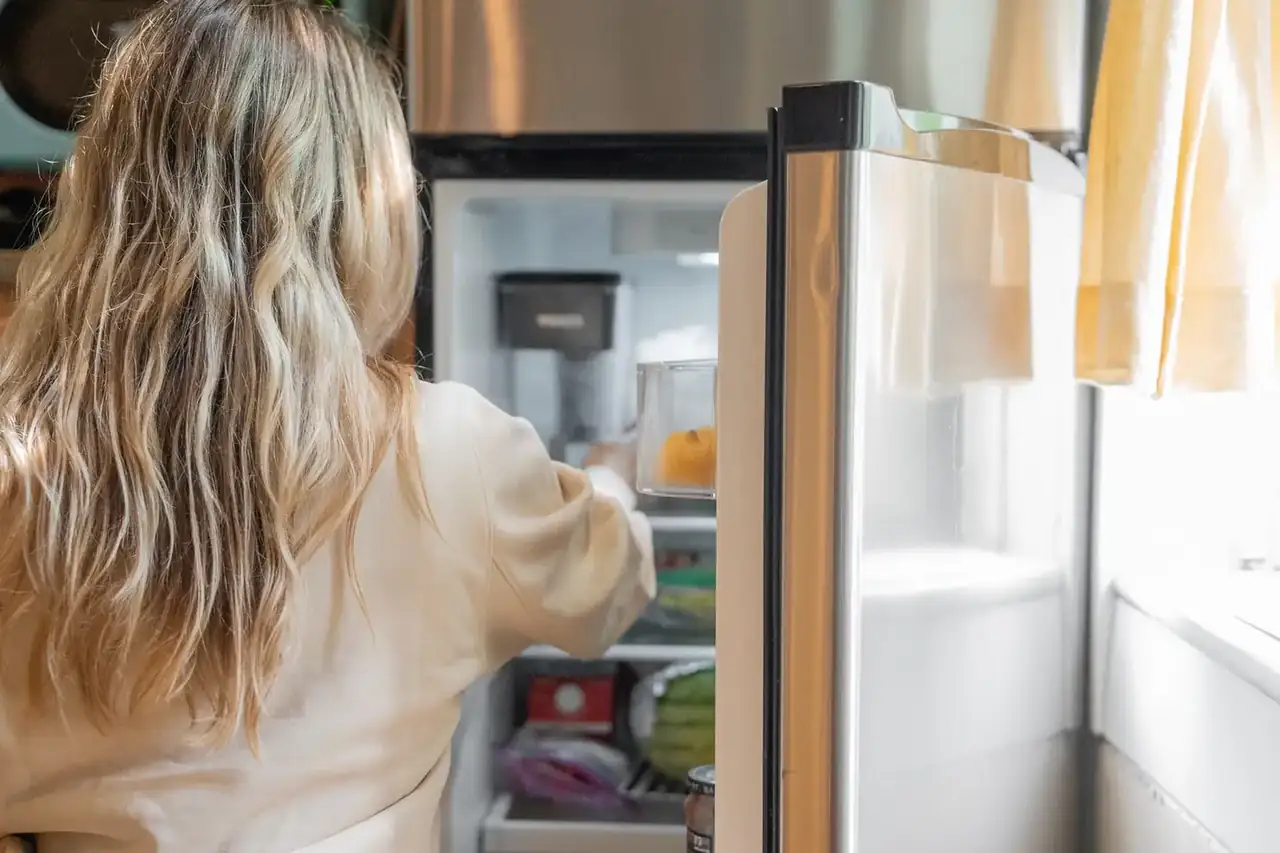
In a frost-free refrigerator, the cold is not distributed arbitrarily: it enters through ducts, circulates with a fan, and leaves a very precise footprint on each shelf. The coldest area is usually at the lower part of the compartment, just above the vegetable drawer, while the door and the upper section maintain a milder temperature. That internal map explains why some foods harden near the back wall and others spoil sooner if left in the wrong spot.
The key is understanding that not all frost-free refrigerators cool the same way. In many models, the dry, forced air makes the difference between zones more pronounced than in a traditional cycling refrigerator. That requires more careful organization, especially if food tends to dry out, freeze too much, or lose freshness before its time.
If you have a problem with your refrigerator, you can use our free error code finder. From there you can find out about and solve all errors easily and effectively.
The coldest zone is at the bottom, but not all of the lower section cools equally
The short answer is clear: the lower part of the refrigerator cools more, especially the lowest shelf in the cooling compartment. That is usually where already cooled air reaches first before rising and mixing with the rest. For that reason, the most delicate foods are placed in that area, such as meat and fish, always in closed containers and, even better, inside trays or shelves designed to keep them at a low temperature.
Now, that general rule has nuances. In many frost-free models, the back wall receives the direct flow of cold air. If a bottle, a food container, or a yogurt cup is left against that wall, they may become colder than intended, and can even begin to freeze around the edges. It is not unusual to see lettuce with ice crystals or water bottles with a layer of ice at the bottom when the interior is too full or the thermostat is set to maximum.
The lower section cools more, but the exact coldest point is usually the back of the lower shelf. That difference, which seems minimal, makes a big change in preservation. A piece of soft cheese does not need the same treatment as leftover rice or a tray of raw chicken. Cold, like wind in a narrow street, does not arrive with the same force everywhere.
Why a frost-free refrigerator distributes cold differently
A frost-free refrigerator uses an internal ventilation system that pushes cold air and reduces frost buildup. Unlike more classic models, where cooling is more static, here the air moves continuously. That helps maintain a more even temperature, but it also dries food surfaces more and creates clearly differentiated zones along the air path.
That design has obvious advantages. It avoids manual defrosting, stabilizes the temperature better after the door is opened, and, when used properly, keeps food fresh for longer. But it also requires more conscious organization. If the appliance expels air through the back wall, the logical thing is not to block that outlet with large containers or stack food until it touches the back. When circulation is interrupted, contrasts appear: one icy corner, another warm one, and in between, poorly preserved food.
Internal ventilation changes real-life preservation. A dry frost-free refrigerator cools quickly, but that speed can also punish foods sensitive to dehydration. That is why it is not enough to simply lower the temperature. You have to think about each product’s natural moisture, its wrapping, and how much contact it has with the circulating air. That combination matters more than any isolated number on the panel.
What to put in each zone to really take advantage of the cold
The upper section is the least cold part of the compartment, and it is best reserved for cooked foods, opened products that need to be kept refrigerated, cured meats, dairy products, and jars you have already started using. It is not the ideal area for raw meat or fresh fish, because those foods need a lower and more stable temperature. It is also a good place for properly sealed leftovers, as long as they are already cold before going into the refrigerator.
The middle zone works as a balanced area. There you will often find yogurts, cheeses, prepared dishes, and drinks that do not require the harsher temperature of the lower section. If the refrigerator interior is well organized, this area helps distribute volume better and lets air circulate without obstacles. An overfilled drawer or a hot container in that position can disturb the balance of the whole appliance.
The lower section is the reserve of the most intense cold. That is where meat, fish, and the most perishable foods should go. The 0-degree drawer, when it exists, goes one step further: it is designed to extend the shelf life of fresh products such as fillets, seafood, or fish without freezing them. Not all refrigerators include it, but when it is present, it is usually the most technical and most useful corner of the appliance.
The lower drawers for fruits and vegetables deserve special attention. They are there for a reason: that area usually has a slightly milder temperature and more favorable humidity for leafy greens, carrots, apples, or peppers. By contrast, potatoes, onions, and tomatoes keep better outside, as long as the kitchen environment is not excessively warm. Putting them in the drawer out of habit often makes their texture worse.
The door is not a display case for delicate foods
The door receives the most repeated thermal shock. Each time it opens, kitchen air enters and the temperature in that area fluctuates more than anywhere else. That is why sauces, jams, butter, water, juices, and some drinks are better kept there. They are products that tolerate those fluctuations better and do not suffer as much from a small change in temperature.
Eggs and milk, despite many people placing them in the door out of habit, are usually better on a more stable interior shelf. The reason is simple: the door does not maintain such an even cold, and in a frost-free refrigerator with strong ventilation, those changes are even more noticeable. The fewer the fluctuations, the lower the risk of condensation, loss of texture, or premature spoilage.
The door is the least cold and also the least stable zone. That does not make it useless; it makes it specific. It is meant for things that tolerate small, repeated changes, not for what needs a stricter cold chain. That difference is what separates a well-used fridge from one that works hard and preserves little.
When food freezes without going into the freezer
One of the most annoying effects of a poorly adjusted frost-free refrigerator is that certain foods freeze in the refrigerator section. It happens with water, soda, soft fruit and, sometimes, even yogurts or eggs when they are too close to the air outlet. It usually happens because of a mix of factors: temperature set too low, overloading, containers stuck to the back wall, or poor internal distribution.
In those cases, the problem is not always a breakdown. Often it is enough to move products away from the wall, leave space between shelves, and check the settings. It is also a good idea to let cooked food cool down before putting it in. Putting in a very hot pot increases the thermal load, makes the compressor work harder, and may cause the appliance to compensate abruptly afterward, with excess cold in some areas.
If food freezes, the cold is reaching where it should not. The solution is usually more about organization than repair. Even so, if the refrigerator changes temperature by itself, flickers for no reason, or does not recover its balance after several hours, then it is no longer just an issue of distribution but a possible fault in the sensor, ventilation, or door seals.
The correct temperature matters more than the number shown on the panel
Digital panels can create the impression of absolute precision, but in reality they show the selected temperature, not always the actual temperature inside. That detail explains why a refrigerator can show 4 degrees Celsius and yet have an area where everything comes out almost frozen. The display reading is a reference, not an exact picture of the air on each shelf.
In most household refrigerators, the useful range for the refrigerator compartment is between 1 and 4 degrees Celsius under intensive conditions, although many manufacturers recommend 4 degrees for normal use. In frost-free models, lowering it a bit more can be useful in summer or when the kitchen is very hot, but it is not always wise to turn the setting to minimum. Colder does not mean better preservation if food hardens, dries out, or freezes where it should not.
The useful temperature is the one that preserves without damaging. A steak does not improve by freezing at the edges, and a salad does not benefit from drying out in the fan’s airflow. The best setting is the one that maintains freshness, texture, and safety at the same time. In that sense, the accuracy of the household thermometer matters less than the real behavior of each zone.
Why the internal order changes how long food lasts
A refrigerator filled any old way works worse than one that is well organized. The air needs gaps to circulate and reach every corner. If the outlets are blocked or containers are piled up, the cold gets trapped in some areas and disappears from others. The result is a kind of uneven map where fresh food lasts less and accidental freezing appears without warning.
Organization also helps reduce the risk of cross-contamination. Raw meat should always go in a lower, closed area so that any drips do not reach other foods. Cooked leftovers, for their part, should be stored once they are cold and in airtight containers. The principle is simple: separate, cover, and let the appliance breathe.
A tidy interior preserves more and better. It also makes it easier to open the door for less time, because you know where everything is. That tiny speed, repeated every day, matters much more than it seems for thermal stability. A refrigerator does not just cool; it also responds to how you use it.
What happens when the appliance works too hard
If the compressor turns on too often, if the fan sounds louder than usual, or if the alarm appears frequently, the refrigerator is trying to compensate for a load it cannot stabilize. It may be due to ambient heat, doors not closing properly, worn seals, or a buildup of ice in areas that should remain clear. In frost-free models, the ice is not always visible where the problem starts.
The appliance’s location also matters. A refrigerator placed next to a heat source, such as an oven or a wall that receives direct sunlight, has to work harder than necessary. That extra effort alters the internal distribution and can make some areas get too cold while others fall short. In other words, the appliance is running a race with a weight attached.
Excessive workload alters the distribution of cold. When that happens, the visible symptom is not always a lack of cold, but rather that the cold is concentrated where it is not needed. The lower section becomes too severe, the door too mild, and the middle stays at an in-between point that fools the eye but not the food.
The signs that show the internal distribution is not right
A partially frozen bottle in the door, wilted lettuce in the drawer, yogurts harder than normal, or vegetables with frost on the surface are clues that something is not right. The appliance does not need to stop cooling for there to be an imperfect operation. Sometimes it cools too much in some spots and too little in others, which is a quieter kind of problem.
Another sign is the difference between compartments. If the freezer is working well but the refrigerator compartment is not recovering its cold, there may be an obstruction in the airflow, a bad sensor reading, or a sealing problem. On the other hand, if the entire interior seems excessively cold even though the setting is moderate, the arrangement of food may be interfering with the appliance’s reading.
The most useful clue is usually in the food, not on the panel. The behavior of the food tells the real story of the refrigerator. Condensation on plastic, hardened fruit, or fish that is too frozen speaks before any indicator light does.
What to remember when looking for the coldest point
The coldest area in a frost-free refrigerator is usually at the bottom, near the back, and often above the vegetable drawer or in the 0-degree compartment, if there is one. The door is for less sensitive products, and the upper section for cooked or opened foods that do not require maximum cold. That distribution is not just a theoretical label: it is the difference between preserving well and ruining food through excess.
The advantage of frost-free technology is that it circulates air without frost buildup, but that same technology requires order. The more open the air outlets are and the more logical the placement, the fewer surprises will appear in the form of soft ice creams, frozen fruit, or watery sauces. The cold’s best ally is not maximum power, but free circulation.
The most efficient fridge is not the coldest one, but the best organized. That simple, everyday detail explains why two identical refrigerators can give very different results in different homes. In one, the cold falls like a well-distributed mist; in another, it gathers like a gust in the wrong corner. That is the difference that matters.
Este artículo contiene enlaces de afiliado: si compras a través de ellos, se genera una pequeña comisión sin coste adicional para ti. Más información.


Error in a 2013 Balay A++ refrigerator: causes and fixes

Balay induction hob error 22: how to fix it

E17 error in the Balay 3TS60107 washer: causes and fix

Balay washing machine E93 error: causes and safe solution
E9 error on a Balay induction hob: causes and solution
E9 error on a Balay induction hob: causes and solution

Balay E9 error on a freezer: causes and solution

E80 error on a Balay washing machine: meaning and solution

Balay washing machine E80 error: meaning and what to do

E80 Error in Balay Ovens: Safe Causes and Solutions

 Kitchen plate7 days ago
E Error on Balay Series 900 Hob: Causes and Solutions
- Kitchen plate7 days ago
Balay induction hob E error: causes and solutions
- Balay6 days ago
E05-32 error on a Balay oven: causes and safe solution
- Balay5 days ago
E09 error in Balay dishwasher: causes and safe solution
- Washing machine6 days ago
Hotpoint washing machine F09 error: what it means and what to do
- Dishwasher5 days ago
E15 error on Balay dishwasher: do not tilt it
- Dishwasher5 days ago
E09 error in Balay dishwashers: causes and safe solution
- Balay5 days ago
Balay washing machine E12 error: causes and safe solution
- Dishwasher4 days ago
Balay dishwasher E15 error: warranty coverage and solution
- Balay6 days ago
E0 error on a Balay induction hob: causes and fixes
- Dishwasher5 days ago
E11 error in Balay dishwashers: causes and solutions
- Balay4 days ago
Balay washing machine E2 error: causes and safe solutions