Magazine
Built-in combi refrigerator, 2 meters: key tips for choosing well
Measurements, actual capacity, consumption, and key technologies to get it right with a paneled kitchen two meters high.

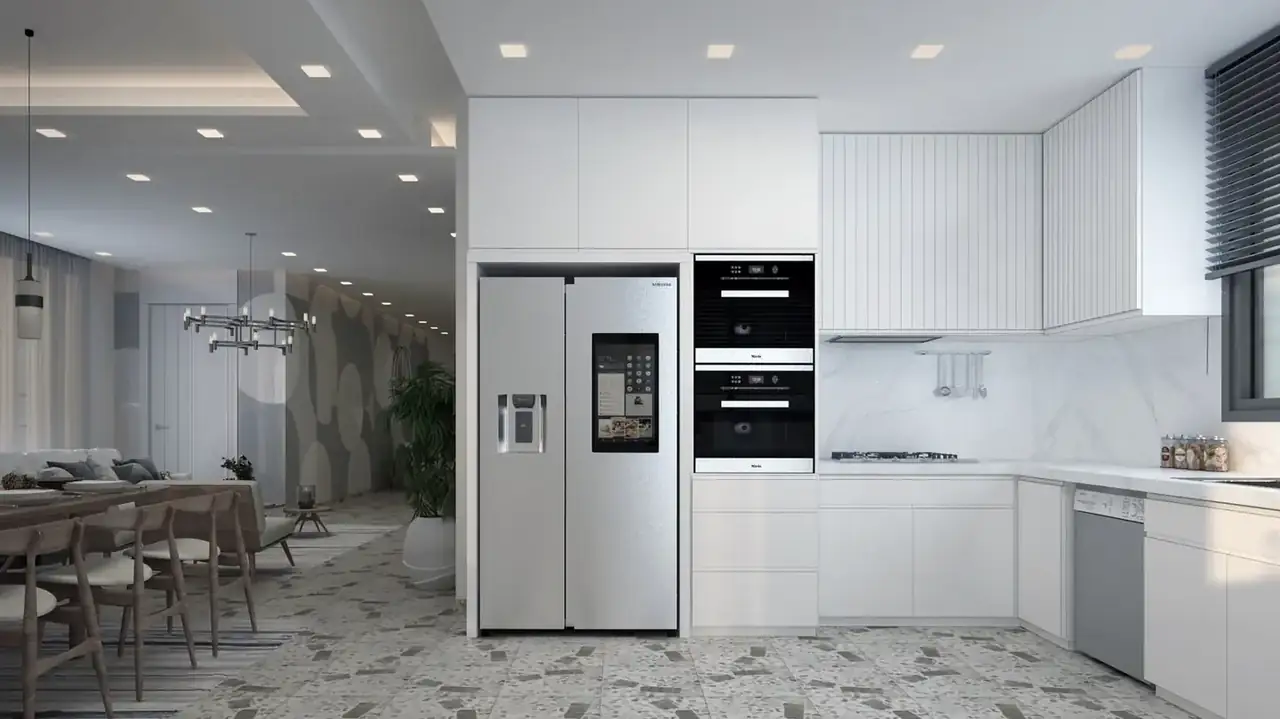
A 2-meter integrated combi fridge combines the clean look of a fitted kitchen with the capacity that an active family usually needs. In that format, every centimeter counts: the extra height translates into more usable shelves, better-used drawers, and a layout that avoids the clutter that appears in shorter models.
The key is not just that it measures around 200 cm tall. It also matters how it distributes the cold, what integration system it uses on the door, how many real liters it offers, and whether its power consumption fits intensive daily use. In this segment, a good choice is obvious at first glance, but above all you notice it every day when you open the door for years.
If you have a problem with your fridge, you can use our free error code finder. From there you can quickly and effectively find out and solve all errors.
What a 2-meter integrated combi really offers
The great advantage of this format is vertical. By reaching 2 meters, the fridge gains usable space without taking up more width, which is crucial in kitchens where the available gap is very precisely measured. Compared with 177 or 180 cm models, the jump is noticeable in the freezer, in the fresh-food area, and in the comfort of organizing large shopping trips without stacking as much.
In an integrated kitchen, the difference is also visual. The appliance is hidden behind the cabinet panel, so the room keeps a uniform and calmer look. That clean effect is one of the reasons many renovation projects opt for full integration, especially in open-plan homes or those with minimalist finishes.
That said, it’s not all about aesthetics. A combi of this height usually offers capacities ranging from approximately 330 to more than 390 liters, depending on the internal design and wall thickness. The best-designed models make use of every corner with deep drawers, adjustable shelves, and XXL or SpaceMax-style solutions that stretch the interior without increasing the external size too much.
Dimensions, built-in space, and door: where the purchase is won or lost
For this type of fridge, the first thing to check should not be the brand but the floor plan. A 2-meter integrated model usually needs a space of around 193 to 203 cm in height, with a typical width of 54 to 56 cm in standard formats and wider options in XL or XXL versions. You also need to look at the depth, rear ventilation, and the space the hinges require when opening.
The integration door completely changes the installation. The most common systems are fixed door and sliding door. The first provides a more solid connection between cabinet and appliance, while the second makes the relative movement of both doors easier. There is no universal solution: it depends on the cabinet, the manufacturer, and the opening type planned in the kitchen project.
It’s also worth considering the 90-degree opening, because many kitchens look spacious on paper and then end up tight when the door starts to swing open. A well-chosen model should let you remove drawers, trays, and bottles without awkward maneuvers. That seemingly minor detail ends up shaping the daily experience more than a flashy feature in the technical sheet.
Usable capacity: more liters does not always mean better use of space
Real usable capacity matters more than the marketing figure. A 2-meter integrated combi may advertise 360, 370, or 380 liters, but the internal layout is what determines whether those liters are convenient or just a statistic. A well-designed fridge offers strong glass shelves, sturdy door balconies, clear drawers, and areas with more stable temperatures for meat, fish, and vegetables.
Models that include VitaFresh, Humidity Fresh, Optimal Fresh+ or Fresh Zone drawers show just how far modern preservation has moved away from being uniform. Cooling alone is no longer enough. The value lies in maintaining the right humidity for vegetables, near-0 °C conditions for delicate foods, and an airflow that doesn’t dry out the contents like an overly direct fan.
For households of three or four people, the 2-meter format usually fits very well because it combines spaciousness and order. The fridge doesn’t feel as cramped as compact models, and at the same time it doesn’t force you to move up to a side-by-side or a multidoor, which take up more width and require a different kitchen layout. For those who cook every day and shop weekly, that balance is usually the sweet spot.
Technologies that really make a difference in everyday use
In this category, No Frost is almost a basic requirement. It prevents frost buildup, reduces maintenance, and improves temperature stability. In an integrated model, where the appliance is enclosed by cabinets, removing moisture and ice is even more important, because it protects both performance and the durability of the whole unit.
Air circulation systems also matter a lot, such as Multi Airflow, All-Around Cooling, Air Surround, or DynamicAir. Each brand names them differently, but the idea is the same: distribute cold air evenly so that the top section does not stay warmer than the bottom, or the back drier than the door. That consistency is what best preserves the flavor and texture of food.
Another increasingly valued component is the inverter compressor. It adjusts its speed according to demand and does not always work at the same pace, which helps contain noise and reduce electricity use. In real use, that smoothness feels like a discreet hum instead of a sudden start-up. In an integrated kitchen, that silence matters more than it might seem.
Energy consumption, noise, and running cost
The European Union energy label ranges from A to G, and in two-meter integrated fridges it is common to find E and D classes, and in more efficient models, C or even A in certain ranges. The category should not be read on its own: two appliances with the same letter can consume differently depending on capacity, insulation, ventilation, and compressor technology.
The fridge is one of the appliances that stays on the longest, so any improvement in consumption has an accumulated impact. Lower consumption not only eases the electricity bill; it is also usually linked to more stable operation and less temperature fluctuation inside. That balance supports food preservation and reduces long-term wear.
Noise is another key point, especially in open kitchens. In this segment, many models fall between 33 and 39 dB. The difference between those two extremes may seem small on paper, but in everyday life it feels like the difference between an almost invisible appliance and one that accompanies the home with a more noticeable hum. In an integrated kitchen, silence is worth almost as much as space.
Representative models and what they reveal about the current market
The current market shows several clear paths. Samsung offers solutions such as SpaceMax and AI-driven energy management modes, aiming for more interior capacity within a compact outer body. Bosch and Siemens, meanwhile, strengthen preservation with VitaFresh or hyperFresh drawers, along with very precise temperature control and quiet operation.
Other brands, such as Haier, Hisense, Candy, Midea, and Cecotec, have pushed hard on capacity, airflow distribution, and the price-to-performance ratio. There are models with 390 liters, others close to 414 liters, and simpler versions that give up premium features to lower the final cost. That variety makes it possible to match the purchase to real use, which in the end matters more than an endless list of extras.
In integrated models, there is also an important difference between ranges. Some models prioritize the combination of space and silence; others, Wi-Fi connectivity and mobile control; and others, fresh-food preservation with specialized drawers. The best one is not the one that stacks up the most technical terms, but the one that best suits the kitchen layout, shopping habits, and routines of each household.
How to tell good internal design from merely apparent design
There are fridges that look spacious from the outside and then force you to fit everything like a puzzle. The difference is usually marked by adjustable shelves, balcony height, drawer width, and the way the freezer is divided. If the space is well planned, a tall bottle does not force a complete reorganization and a large tray does not require dismantling half the interior.
Quick-access drawers, like those used in some Haier models, avoid opening the freezer door more than necessary. That helps reduce cold loss, makes the contents easier to see, and speeds up everyday use. At the same time, humidity-controlled compartments for fruit and vegetables extend the life of fresh produce without turning the fridge into a professional storage chamber, which is neither the goal nor necessary.
The interior finish also deserves attention. LED lighting, smooth panels, and transparent compartments are not just aesthetic whims. They make it easier to see the contents at a glance, avoid shadows, and reduce the time the door stays open, which is ultimately one of the simplest ways to waste energy without realizing it.
Installation, ventilation, and details that prevent later problems
An integrated model requires more precision than a freestanding one. You can’t just push it into the gap and call it a day. You need to respect the clearances specified by the manufacturer, check rear ventilation, and make sure the kitchen panel fits without tension. A tight installation can affect performance, generate more heat, and shorten the compressor’s lifespan.
The reversible door is very useful when the kitchen layout requires changing the opening direction. The same goes for movable shelves and height-adjustment systems. They provide small margins of maneuver that, in a real kitchen, prevent wall knocks, poor accessibility, or awkward opening in front of an island or a tall unit.
Before finalizing the purchase, it’s worth measuring three times, not once: height, width, and depth, but also the opening path and the distance to nearby plinths, ovens, or columns. In a 2-meter integrated fridge, millimeter mistakes are not theoretical; they turn into a drawer that doesn’t fully come out or a door that rubs against the cabinet every time it opens.
Which user profile gets the most out of this format
This size works especially well in homes that really cook. Families who shop weekly, couples who store prepared meals, homes with children, or households that keep a lot of fruit, vegetables, and frozen food will find this a well-balanced format. The extra height makes it easier to separate food groups and reduces the feeling of overcrowding so common in shorter fridges.
It also fits renovation projects where the kitchen needs to look continuous, without visually dominant appliances. Integrating the fridge behind the cabinet gives an almost architectural feeling, as if the appliance disappeared behind the joinery. That doesn’t improve the food, of course, but it does improve the sense of space and order, which in a home used every day matters a lot.
On the other hand, someone who buys very little, lives alone, or needs a narrower space may find this format unnecessary. A 2-meter integrated model makes sense when the extra height turns into real use. If not, part of the advantage remains unused space, like an oversized cupboard in a kitchen without a pantry.
The place it occupies in the modern kitchen
The rise of the 2-meter integrated combi fridge has a clear explanation: it meets the needs of the contemporary home, which demands more capacity without giving up visual continuity. The kitchen is no longer just a work area; it has become a visible room, often shared with the living room, where every line matters and every noise is heard more clearly.
That is why this format has gained ground over bulkier or smaller alternatives. It offers enough capacity, maintains a sober appearance, and adapts to current shopping habits, with large weekly baskets, backup frozen goods, and fresh food that needs good preservation. It is a practical response, not a catalog gimmick.
The final decision comes down to a fine balance between exact dimensions, preservation technology, silence, and integration quality. Those who get those four points right usually end up with an appliance that causes no problems, preserves food better, and ages well as part of the kitchen as a whole. In this category, a good purchase is not just visible on the first day; it is confirmed every morning, when everything is still in place, cold, and tidy.
Este artículo contiene enlaces de afiliado: si compras a través de ellos, se genera una pequeña comisión sin coste adicional para ti. Más información.


Balay washing machine F4 error: how to restore drainage

Error in a 2013 Balay A++ refrigerator: causes and fixes

Balay induction hob error 22: how to fix it

E17 error in the Balay 3TS60107 washer: causes and fix

Balay washing machine E93 error: causes and safe solution
E9 error on a Balay induction hob: causes and solution
E9 error on a Balay induction hob: causes and solution

Balay E9 error on a freezer: causes and solution

E80 error on a Balay washing machine: meaning and solution

Balay washing machine E80 error: meaning and what to do

 Kitchen plate7 days ago
E Error on Balay Series 900 Hob: Causes and Solutions
- Kitchen plate7 days ago
Balay induction hob E error: causes and solutions
- Balay6 days ago
E05-32 error on a Balay oven: causes and safe solution
- Washing machine6 days ago
Hotpoint washing machine F09 error: what it means and what to do
- Balay5 days ago
E09 error in Balay dishwasher: causes and safe solution
- Dishwasher5 days ago
E15 error on Balay dishwasher: do not tilt it
- Dishwasher5 days ago
E09 error in Balay dishwashers: causes and safe solution
- Balay5 days ago
Balay washing machine E12 error: causes and safe solution
- Dishwasher4 days ago
Balay dishwasher E15 error: warranty coverage and solution
- Dishwasher5 days ago
E11 error in Balay dishwashers: causes and solutions
- Balay4 days ago
Balay washing machine E2 error: causes and safe solutions
- Balay5 days ago
E09 error in Balay dishwasher 3VS503IA: causes and fix